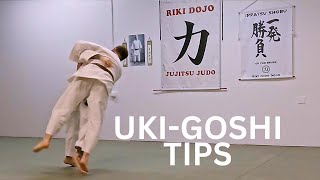
Definition and Hip Mechanics
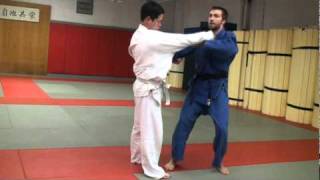
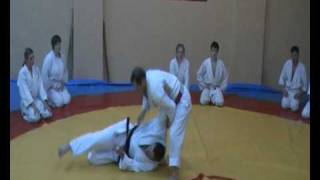
Koshi guruma, or hip wheel, is a judo throw that shares structural similarities with o goshi but employs a different grip. Rather than grasping around the waist, the practitioner grips around the opponent's neck and shoulder area. The throw relies on significant hip movement and rotation, with the hip serving as the mechanical center around which the opponent's body is rotated and lifted.
Balance Breaking and Entry
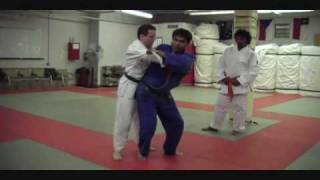
The technique begins by breaking the opponent's balance in the same manner as o goshi. The practitioner grips around the neck area while preparing to rotate their hips underneath the opponent's center of gravity. Proper entry requires the practitioner to turn and load the opponent onto their hip while maintaining an upward pulling motion.
Grip Distinction from O Goshi
Koshi guruma differs fundamentally from o goshi through its neck-area grip rather than waist grip. This higher grip point makes the technique advantageous for taller practitioners, as it eliminates the need to reach lower around the opponent's waist. The mechanical execution remains similar, but the altered grip placement changes the angle and leverage of the throw.
Hip Wheel Mechanics and Axis
The technique is termed 'hip wheel' because the practitioner's hip acts as the central axis, or hub, around which the opponent's body rotates. The practitioner must position their hips directly in front of the opponent and pull their opponent's front side onto the back of their hips. The upward and forward pulling motion, rather than downward pulling, is essential to maintaining proper mechanical structure.
Common Error: Downward Pulling
A frequent mistake in koshi guruma is pulling the opponent downward into the practitioner's body rather than lifting them upward and over the hip. This misapplication reduces leverage and compromises the throw's mechanical efficiency. Proper technique requires continuous upward pressure combined with hip rotation to execute a clean throw.
Hand Role Differentiation
The neck grip hand serves primarily to lock the opponent to the practitioner's body, while the pulling hand (hiki te) provides the critical lifting force. The pulling hand is responsible for lifting the opponent upward and over the hip during rotation. Understanding this hand role distinction is fundamental to executing koshi guruma effectively.
Technical Classification
Koshi guruma is recognized as one of the fundamental hip throws in judo and serves as a foundational technique for learning additional throwing variations. The throw's relatively straightforward mechanics combined with its effective leverage make it an essential element of judo training. Its technical clarity and mechanical elegance have established it as a core skill across judo practice.
KOSHI GURUMA BASICS
Key Takeaways
- •Definition and Hip Mechanics
- •Balance Breaking and Entry
- •Grip Distinction from O Goshi
- •Hip Wheel Mechanics and Axis
Koshi Guruma (Hip Wheel Throw) is one of the core skills of Judo, Jujitsu and Sambo. It is an ideal throw for beginning students but is used at all levels of competition. This video shows the basic skills, including a lot of the details about the throw. View hundreds of videos of judo, freestyle judo, Shingitai Jujitsu, sambo, submission grappling and sport jujitsu on our Youtube channel at http://youtube.com/user/welcomematstevescott. The Welcome Mat Judo-Jujitsu Club was founded in 1969. Please subscribe to our Youtube channel if you have not done so already. Visit our web sites at http://www.WelcomeMatJudoClub, http://www.judoblackbelt.com and visit our online store at http://www.WelcomeMatStore.com. Join our premium channel at http://www.grapplingcoach.us. Thank you for watching our video.
Frequently Asked Questions
What does this video teach about koshi guruma?
This video covers definition and hip mechanics, balance breaking and entry, grip distinction from o goshi. It provides detailed instruction from welcomematstevescott.
How long does it take to learn koshi guruma?
The basic mechanics can be understood in a single session, but developing reliable execution requires consistent drilling over weeks of practice. This 7-part breakdown helps structure your training by isolating each phase of the technique.
What are the key details for finishing koshi guruma?
The neck grip hand serves primarily to lock the opponent to the practitioner's body, while the pulling hand (hiki te) provides the critical lifting force. The pulling hand is responsible for lifting the opponent upward and over the hip during rotation. Understanding this hand role distinction is fundamental to executing koshi guruma effectively.