Relationship to O Goshi
Koshi guruma shares identical kazushi (off-balancing) and hip placement with o goshi. The critical distinction lies in arm positioning rather than hip mechanics. Proper hip exposure is essential to prevent the opponent from stepping over the technique.
Arm Positioning and Grip
The arm wraps around the opponent's neck rather than across the back or shoulders. The grip should be established either before or during the hip insertion, with the pulling action preceding arm placement. A secure neck grip prevents slippage even if the opponent pulls their head downward.
Initial Setup and Entry
The thrower steps in to establish kazushi around the opponent's neck, then pivots to position the sukui (hip) at the base. The foot placement forms the apex of a triangle, with the thrower maintaining a tight grip and upright posture to prevent falling backward.
Grip and Stance Foundation
The thrower secures a tight grip at the neck and assumes a shoulder-width stance with feet positioned in the direction of the throw. The grip may be pulled toward either hip, provided it remains secure. Gripping the back of the opponent is explicitly discouraged as it compromises technique integrity.
Execution Through Shoulder Rotation
From the established position, the thrower executes the throw by rotating the shoulders while maintaining tight control and forward gaze. The legs remain stationary during the final rotation; lifting or raising the legs is unnecessary. This shoulder-driven rotation produces a secure, controlled throw.
Nomenclature and Translation
Koshi guruma translates to 'hip wheel' in English, with koshi meaning hip and guruma meaning wheel. The term is interchangeable with goshi, both referring to hip-based techniques. The name reflects the mechanics of the technique, distinguishing it from shoulder wheel throws like kata guruma.
Koshi Guruma
Key Takeaways
- •Relationship to O Goshi
- •Arm Positioning and Grip
- •Initial Setup and Entry
- •Grip and Stance Foundation
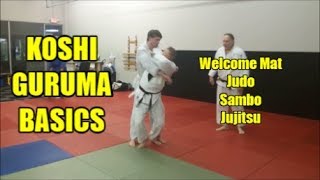
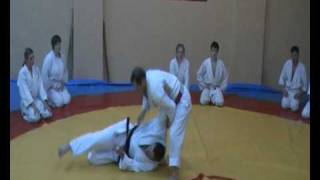
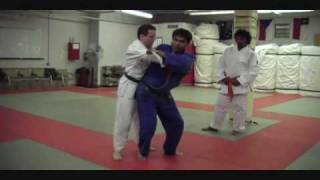
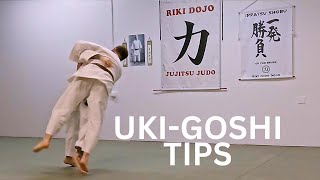
Fundamentals of Koshi Garuma (Hip Wheel) Throw as demonstrated by Sensai Max.
Frequently Asked Questions
What does this video teach about koshi guruma?
This video covers relationship to o goshi, arm positioning and grip, initial setup and entry. It provides detailed instruction from WINNING.
How long does it take to learn koshi guruma?
The basic mechanics can be understood in a single session, but developing reliable execution requires consistent drilling over weeks of practice. This 6-part breakdown helps structure your training by isolating each phase of the technique.
What are the key details for finishing koshi guruma?
From the established position, the thrower executes the throw by rotating the shoulders while maintaining tight control and forward gaze. The legs remain stationary during the final rotation; lifting or raising the legs is unnecessary. This shoulder-driven rotation produces a secure, controlled throw.