Prerequisites and Progression
The flying sidekick requires mastery of foundational techniques executed in a specific sequence. Practitioners must first master the basic sidekick, then the sidekick with the back leg, followed by the jumping sidekick, before progressing to the flying sidekick.
Foundational Sidekick Mechanics
The basic sidekick begins with a step behind the body to pre-pivot the stance. This positioning aligns the hips toward the target with the heel pointing in the correct direction, allowing the practitioner to lift and extend the leg in a direct outward motion.
Back Leg Sidekick Technique
The back leg sidekick involves lifting the rear leg with significant hip rotation, positioning the knee in front of the body before extending it outward. This variation requires greater rotational control and leg elevation than the standard sidekick.
Jumping Sidekick Development
The jumping sidekick combines back leg sidekick mechanics with vertical elevation. The practitioner simultaneously jumps and executes the kick using arm assistance for additional height, with both legs leaving the ground during the technique.
Flying Sidekick Integration
The flying sidekick synthesizes elements from all prior techniques: hip alignment from the basic sidekick, back leg mechanics, and mid-air orientation from the jumping sidekick. The distinguishing factor is executing the turning and kicking motion while both feet remain off the ground.
Flying Sidekick Execution
The technique begins with a step before jumping upward while driving the knee to chest height. As the practitioner becomes airborne, the hips rotate while the rear leg extends outward in the kick, with the standing leg tucking inward toward the body during impact.
Common Errors and Safety Considerations
A frequent mistake involves running and executing a jumping sidekick rather than a true flying sidekick, where the attacking foot maintains contact with the ground. For safety and control, practitioners may keep the supporting leg extended rather than fully tucking it, though the aesthetically refined technique involves complete leg retraction.
Flying Side Kick
Key Takeaways
- •Prerequisites and Progression
- •Foundational Sidekick Mechanics
- •Back Leg Sidekick Technique
- •Jumping Sidekick Development
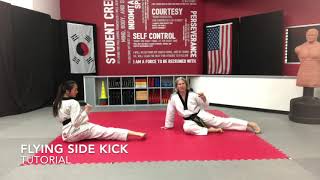
The Flying side kick is a classic martial arts kick commonly demonstrated when breaking boards. I recommend mastering a few kicks that increase in difficulty that will help in transitioning into the flying side kick. First walking side kick, next is side kick with the back foot, then is jumping side kick, and finally the flying side kick.
Related Techniques
Frequently Asked Questions
What does this video teach about flying side kick?
This video covers prerequisites and progression, foundational sidekick mechanics, back leg sidekick technique. It provides detailed instruction from Angel Ochoa.
How long does it take to learn flying side kick?
The basic mechanics can be understood in a single session, but developing reliable execution requires consistent drilling over weeks of practice. This 7-part breakdown helps structure your training by isolating each phase of the technique.
What are the key details for finishing flying side kick?
The technique begins with a step before jumping upward while driving the knee to chest height. As the practitioner becomes airborne, the hips rotate while the rear leg extends outward in the kick, with the standing leg tucking inward toward the body during impact.