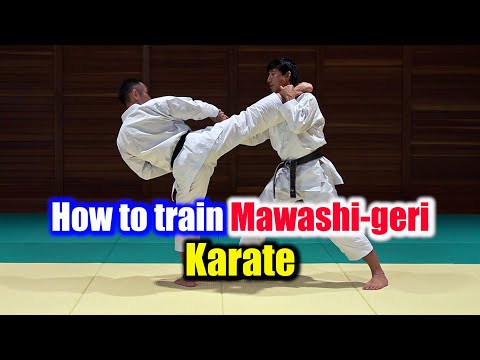
How to train "Mawashi-geri"【Tatsuya Naka】
0
Nidan Geri·kuro-obi world
※ This AI voice is created from Naka sensei's own voice with his permission. It is the wish of Kuro-obi World that as ma…
Translation: two-level kick
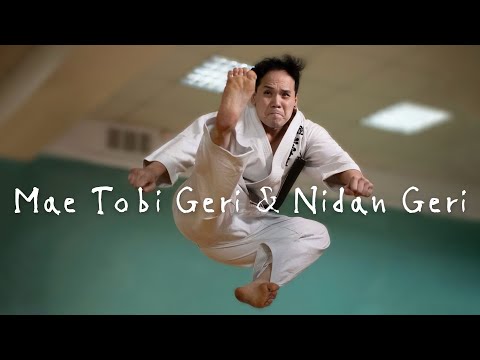
Nidan Geri is a jumping double kick where the attacker delivers two kicks at different heights while airborne — typically a front kick to the midsection followed immediately by a front kick to the face, both executed before landing. [1] The name literally means 'two-level kick' (nidan = two levels, geri = kick). [1] It requires explosive jumping ability, rapid leg chambering, and excellent balance in the air. [1]
Documented in traditional karate manuals. [1]
Primarily a training, demonstration, and point-fighting technique. Rarely seen in full-contact MMA or kickboxing due to acrobatic risk and telegraphing. Appears occasionally in TKD and point-fighting karate tournaments. [1]
No images yet for this technique.
Sign in to suggest an image.
※ This AI voice is created from Naka sensei's own voice with his permission. It is the wish of Kuro-obi World that as ma…
Other video with Mae Geri Kicking: https://youtu.be/jXlbgm8tOJI
Nidan geri (two-stage kick) is a dynamic aerial technique requiring coordinated sequential leg movements and precise body mechanics. The Shuhari Shotokan Karate Association emphasizes the foundational importance of proper stance and knee positioning, instructing practitioners to begin from a natural stance with feet together, execute an initial squeeze and lift of the first leg to knee height, then drive upward through the hips and center of gravity before extending the second leg. Shuhari sensei stresses that both legs must rise together during the jumping phase, with particular attention to maintaining vertical alignment and the geometric relationship between the legs and torso. The timing and synchronization of leg and feet elevation is cited as critical, with applications noted in kata such as Kanku Dai and Kanku Sho. In contrast, kuro-obi world's Tatsuya Naka focuses primarily on mawashi-geri (roundhouse kick) training methodology rather than nidan geri specifically, though the hip joint flexibility and body lean mechanics Naka describes—particularly the image of the kicking foot passing over the face and the importance of controlled elevation with partner support—represent complementary foundational skills applicable to advanced kicking techniques. Both instructors agree that proper hip mobility, controlled progression of height, and awareness of center of gravity are essential prerequisites for executing complex aerial kicks effectively.
Synthesized from 2 instructors
No instructional courses yet for this technique.
Sign in to suggest a course.
Risk of injury to the person this technique is applied to
The airborne double impact can be powerful.
Skill level needed to execute this technique reliably
Whether this technique is allowed under major competition rule sets
Oyama, M. This Is Karate / Essentials of Karate.
[1] Oyama / Funakoshi, Karate technique manuals
Official karate technique names (和語/漢語)
Established Japanese martial arts naming convention — native Japanese term (和語/漢語)
[1] Oyama / Funakoshi, Karate technique manuals
explosive leg power for height, core control for mid-air stability, timing for dual kicks
light, explosive athletes with strong vertical jump
quadriceps (dual extension), hip flexors (rapid chambering), calves (launch), core (air stability)
Nidan geri (two-level kick) delivers two kicks in a single jump — typically first to the body, then to the head. The first kick draws the guard down, the second hits the exposed target. Primarily a kata and demonstration technique. (Oyama, This Is Karate; Nakayama, Dynamic Karate)
According to Tiru Jr Katsu sensei, having both legs and feet come up together at the same time is very important, as if everything moves up in unison during the jump.
Tiru Jr Katsu sensei emphasizes that knee up gaily (proper knee height) is important in many kata, including applications like kam kudai finishes and kam kak kusho.
Nidan Geri is a jumping double kick where the attacker delivers two kicks at different heights while airborne — typically a front kick to the midsection followed immediately by a front kick to the face, both executed before landing. The name literally means 'two-level kick' (nidan = two levels, geri = kick).
Documented in traditional karate manuals.
WKF Karate: Legal: legal — controlled contact; Unified MMA: Legal {src:Unified Rules of MMA, August 2025|/sources/Unified: legal — MMA-Rules-August-2025.pdf}; WAKO Kickboxing: Legal {src:WAKO Full Contact Rules|/sources/WAKO: legal — Full-Contact-Rules.pdf}
Danger rating 6/10. High — the airborne double impact can be powerful.
The standard setup chain: Kizami-zuki to face → opponent raises guard → launch nidan geri (body then head) → Oi-zuki rush → opponent retreats → leap into nidan geri closing the gap → Mawashi geri feint → opponent braces for roundhouse → nidan geri catches them unprepared.
Standard counters include: Side step — move laterally as opponent commits to the aerial trajectory / Low sweep — sweep the support leg before the jump completes / Straight punch counter — fire a cross into the advancing airborne opponent.
Common variants: Front kick + front kick (most common); Front kick + side kick; Front kick + roundhouse kick; Mae geri + yoko geri combination in air.
Primarily a training, demonstration, and point-fighting technique. Rarely seen in full-contact MMA or kickboxing due to acrobatic risk and telegraphing.
Top errors to watch for: Not jumping high enough — can't fit both kicks in / First kick too weak — doesn't clear the way for the second / Both kicks at the same height — defeats the purpose / Landing before the second kick — timing off.
The Nidan Geri is also known as Nidan Geri, Nidan-Geri, Double Jump Kick, Two-Level Jumping Kick, Jumping Double Kick.