Overview and Effectiveness
The flying front kick, known as 'tobi giri' in Japanese, is effective for three primary reasons: it breaks the distance gap between fighters, it involves a leg switch in mid-air that surprises opponents, and it multiplies striking power through the jumping motion. The technique combines distance closure with deceptive footwork to create tactical advantage.
Fundamental Leg Sequencing
The technique begins by lifting the back leg first, then pushing off with the support leg while executing the kick. To develop proper rhythm and coordination, practitioners should practice touching both the back and front legs in sequence before adding the jump, using a one-two cadence to establish muscle memory.
Rhythm and Timing Deception
The flying front kick's power derives partly from breaking an opponent's anticipatory timing. The two-part motion—initial leg lift followed by the actual kick—creates confusion, as opponents may react defensively to the first movement while the actual strike lands on an altered timing sequence.
Center of Gravity Management
The practitioner's center of gravity shifts progressively throughout the technique, similar to ascending stairs. The body weight transfers forward with each step, so that by the time the kick extends, the entire bodyweight drives through the striking point rather than relying on leg strength alone.
Distance and Range Advantage
The flying front kick allows strikes from a distance where conventional techniques would be ineffective, forcing the opponent to remain unaware of the threat range. This extended reach advantage is amplified by the force generated from explosive floor contact and forward momentum.
Practical Application Setup
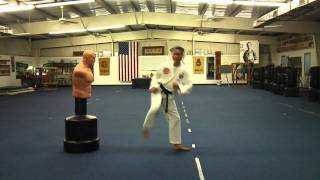
When executing against a target, the striker positions themselves at extended range where the opponent cannot easily counter. As the technique initiates, the body remains slightly back until the jump phase, at which point the entire torso and weight transfer forward toward the target.
Knee Alignment and Target Focus
During execution, both the initial lift and final kick should direct the knee toward the target rather than simply raising the leg vertically. This alignment principle applies regardless of target height, whether aiming at the torso or head, and maintains offensive structure throughout the technique.
Upper Body Relaxation and Hip Drive
Maintaining relaxed upper body tension allows smoother technique execution and greater power transfer. The hips drive forward during the jump phase while the upper body remains loose and reactive, enabling efficient energy channeling rather than rigid, tension-based striking.
Machida Flying Kick! 3 steps to learn the famous Machida Flying Front kick
Key Takeaways
- •Overview and Effectiveness
- •Fundamental Leg Sequencing
- •Rhythm and Timing Deception
- •Center of Gravity Management
Kick like Lyoto Machida and Daniel San! Sensei Chinzo Machida teaches in 3 steps how you can do the famous Machida flying front kick. Learn this technique and much more at the Machida Virtual Dojo. You can train at your time and pace, earning your belts as a Machida student from the HQ. Machida Karate
Related Techniques
Frequently Asked Questions
What does this video teach about flying front kick?
This video covers overview and effectiveness, fundamental leg sequencing, rhythm and timing deception. It provides detailed instruction from Machida Karate .
How long does it take to learn flying front kick?
The basic mechanics can be understood in a single session, but developing reliable execution requires consistent drilling over weeks of practice. This 8-part breakdown helps structure your training by isolating each phase of the technique.
What are the key details for finishing flying front kick?
During execution, both the initial lift and final kick should direct the knee toward the target rather than simply raising the leg vertically. This alignment principle applies regardless of target height, whether aiming at the torso or head, and maintains offensive structure throughout the technique.