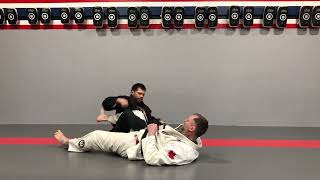
Introduction to the Crab Ride Back Take
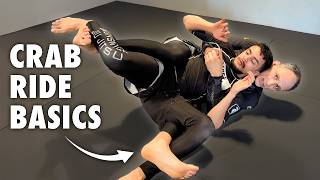
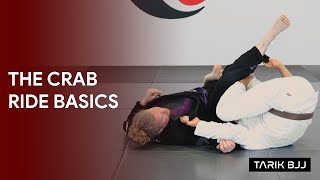
The crab ride presents a second viable option for taking the back from the yam side standing position. Unlike the Berimbolo-style roll covered previously, this technique utilizes the crab rack as the primary control mechanism.
Establishing Initial Grip and Rotation
The instructor secures the foundational grips: right thumb hooks under the opponent's knee while the left hand controls the far hip. The instructor then rotates to open the opponent's legs while pulling their hips back to the floor, differing from the first variation.
Converting to the Crab Rack Hook
The right foot transitions from a deep hook position to a shallow crab rack hook once the opponent's hips are secured to the floor. This positioning is crucial before proceeding with the subsequent rolling action.
The Deep Scoop Grip and Forward Roll
The right hand reaches deep underneath the opponent's legs to secure a tight scoop grip using the entire wrist for maximum control. The instructor then executes a forward roll over the right shoulder, initiating the back take sequence.
Secondary Hook Placement and Hip Elevation
The left foot serves as a critical secondary hook, positioning itself on top of the opponent's hip to force elevation and prevent them from remaining flat. This foot placement is essential for successfully sitting the opponent up and extending the primary right leg hook away.
Securing Back Control and Seat Belt
Once the opponent is seated upright, the instructor transitions into a deep underhook position and establishes the seat belt grip on the flat side. The instructor can then secure additional control with a body triangle for complete back dominance.
Key Mechanical Details
The right knee turns inward while the left foot hooks the shin, creating a lock that prevents the opponent from clearing the hook position. The execution requires coordinated extension of both hooks while maintaining the scoop grip throughout the roll.
Adjustments from Outside Position
If the opponent strips the grip or pulls away, the crab ride remains a viable option from the outside position. The fundamental difference remains steering and pulling hips to the floor rather than stacking on the far side.
Crab Ride Back Take: CRAIG JONES BJJ Techniques
Key Takeaways
- •Introduction to the Crab Ride Back Take
- •Establishing Initial Grip and Rotation
- •Converting to the Crab Rack Hook
- •The Deep Scoop Grip and Forward Roll
CRAB RIDE BACK TAKE BY CRAIG JONES // In this BJJ Techniques video, Craig Jones demonstrates Crab Ride Back Take. Craig Jones is one of the best grapplers in Brazilian Jiu Jitsu. Known for his impressive lower body attacks and back takes Craig has taken the bjj community by storm. This is a clip off of his new instructional "Battle Tested Down Under Leg Locks" available exclusively at https://www.BJJFanatics.com BJJ Fanatics was started by a pair of black belts (Bernardo Faria & Michael Zenga) who feel that nothing is more important than improving your BJJ skills as much as possible in the least amount of time. Their aim was to create a shop for BJJ Students who don’t look at BJJ as a sport – but as a lifestyle. 15% OFF On All Of Our BJJ Instructional Videos - Just Use The Coupon Code: FANATICSYOUTUBE Website: www.bjjfanatics.com Youtube: https://www.youtube.com/channel/UCAqme-CE-yLm01BV5nUjPPA Facebook Group: https://www.facebook.com/groups/733553463659020/ Instagram: https://www.instagram.com/bjj.fanatics/?hl=en . For the best fightwear, check out https://www.kojofightwear.com/ and use code " YTD15 " to get 15% off your first order.
Frequently Asked Questions
What does this video teach about standard crab ride?
This video covers introduction to the crab ride back take, establishing initial grip and rotation, converting to the crab rack hook. It provides detailed instruction from BJJ Fanatics.
How long does it take to learn standard crab ride?
The basic mechanics can be understood in a single session, but developing reliable execution requires consistent drilling over weeks of practice. This 8-part breakdown helps structure your training by isolating each phase of the technique.
What are the key details for finishing standard crab ride?
The right knee turns inward while the left foot hooks the shin, creating a lock that prevents the opponent from clearing the hook position. The execution requires coordinated extension of both hooks while maintaining the scoop grip throughout the roll.