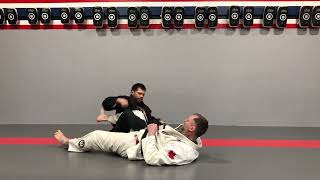
Introduction to Crab Ride
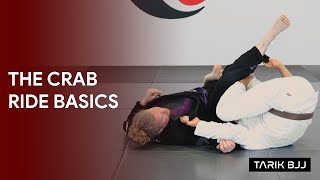
The crab ride is a fundamental ground control position used in wrestling and Brazilian jiu-jitsu as an alternative to hooks or body triangles. It provides lower and upper body control when an opponent attempts to escape from the back position by bridging or planting their feet.
Starting Position and Escape Problem
The instruction begins from a seated position with two hooks in place and hands locked in a seatbelt grip. When the bottom player bridges and moves their shoulders past the top player's shoulder line, they create space to escape and reduce the effectiveness of the back control.
Transitioning to Crab Ride
When the opponent bridges, the top player switches to a chest lock and removes their feet from the traditional hook position. The legs are then extended in a chair-sit fashion underneath the opponent's thighs to establish the crab ride position.
Counter Forces: Toes and Knees
Proper crab ride control requires creating two opposing forces simultaneously: pushing the pinky toes outward while pinching the knees inward. This dual tension prevents the opponent from circling their feet back inside or escaping by bridging.
Following Movement with Active Legs
As the opponent moves, the top player maintains tension by keeping the legs active on whichever side the opponent moves toward, using knee pressure and toe tension to follow and control. The technique emphasizes lifting the opponent's heel toward the sky through this leg tension rather than simply hooking.
Transitioning Back to Hooks
When ready to attack, the top player can recover traditional hooks by placing a foot back inside the opponent's leg, allowing progression to submission techniques like the body triangle. The crab ride serves as an intermediate control position during this transition.
Advanced Application from Leg Drag
The crab ride can be applied during scrambles or when the opponent prevents traditional hook insertion by guarding the space between their elbows and chest. Starting from a leg drag position, the top player uses a controlled roll to transition behind the opponent's legs.
Leg Drag to Crab Ride Sequence
From a leg drag with the head positioned on the passing side and hips hugged, the top player performs a tripod-supported roll, bringing the head through to end up behind the opponent. As the opponent scoots or recovers to turtle position, the top player inserts the first crab ride hook by extending the top leg through.
Securing and Maintaining Crab Ride Position
Once the first hook is established, the top player follows the opponent's movement to insert a second hook while maintaining hand lock if possible. The feet are kept on the mat with toes turning inward and knees pinching to maintain tension as the opponent attempts to move or create separation.
How To Learn The Crab Ride - From Beginner To Advanced
Key Takeaways
- •Introduction to Crab Ride
- •Starting Position and Escape Problem
- •Transitioning to Crab Ride
- •Counter Forces: Toes and Knees
Crab ride hooks provide a way to stay connected to your partner in scrambles and when you can't put hooks in from the back. You'll find them frequently in wrestling par terre, and we can modify a few things to make them work in no gi grappling scenarios as well. Thanks for watching 😊 Want to support this channel? Check out my BJJ Fanatics instructionals, where we go deep into the systems, principles and techniques you see in these videos. https://bjjfanatics.com/products/pressure-drop-dynamic-guard-passing-standing-vs-supine-by-brian-glick?_ab=0&_fd=0&_sc=1 https://bjjfanatics.com/products/only-way-out-dynamic-pin-escapes-by-brian-glick https://bjjfanatics.com/products/only-way-out-front-headlock-and-turtle-escapes-by-brian-glick . . . . . . . . . . . . WHO AM I? ➡️ MY BIO BY JOHN DANAHER - https://bit.ly/3gUMU5R INSTAGRAM: http://www.instagram.com/bzglick TRAINING: http://www.555jiujitsu.com
Frequently Asked Questions
What does this video teach about crab ride?
This video covers introduction to crab ride, starting position and escape problem, transitioning to crab ride. It provides detailed instruction from Brian Glick.
How long does it take to learn crab ride?
The basic mechanics can be understood in a single session, but developing reliable execution requires consistent drilling over weeks of practice. This 9-part breakdown helps structure your training by isolating each phase of the technique.
What are the key details for finishing crab ride?
From a leg drag with the head positioned on the passing side and hips hugged, the top player performs a tripod-supported roll, bringing the head through to end up behind the opponent. As the opponent scoots or recovers to turtle position, the top player inserts the first crab ride hook by extending the top leg through.