Setup and Arm Control
Begin with your opponent in butterfly guard. As they attempt to elevate their hips, move your body forward and press their arms downward. Grab both armpits and push them away while sliding your body upward to eliminate all space. Walk your knees forward, positioning their feet as close to their buttocks as possible while maintaining firm control of their armpits.
Ankle Acquisition
Angle your body slightly to the side for better positioning. Quickly move your knee back and secure the outside of your opponent's ankle with a firm grip. Return immediately to a tight position without allowing any space for escape. You now control both the ankle and the arm on the same side.
Knee Repositioning
Before lowering your opponent's leg, move your knee slightly out of the way to create clearance. Place your hand on their knee to control the limb. Drop your shoulder onto their belt or abdomen and post your forehead on the ground for stability.
Fundamental Finish (Beginner)
From the grounded position, tripod up onto your feet. Bend one leg and hop over to side control, transitioning one foot at a time. This fundamental approach provides a clear and reliable path to positional dominance for all skill levels.
Advanced Finish (Competition)
Maintain arm and ankle control while executing the same initial setup. After posting your head and shoulder, tripod up and flip to the one o'clock position rather than straight over the opponent's head. Keep your hips elevated throughout the transition to maintain control and conceal your movement from your opponent.
Critical Detail: Sequential Leg Movement
Always move one foot at a time rather than throwing both legs simultaneously. Moving one leg while keeping the other grounded minimizes airtime and reduces vulnerability to counterattacks. Moving both feet together extends the duration of vulnerability, allowing an opponent to catch your legs and reverse the position.
Directional Principle
Never transition directly over your opponent's head, as this risks striking their face or body. Always angle your movement toward the one o'clock or two o'clock position to maintain safety and control. This angular approach also disorients your opponent, leaving them unable to react before you establish side control.
99 TECHNIQUES - #75 "Butterfly Guard Pass"
Key Takeaways
- •Setup and Arm Control
- •Ankle Acquisition
- •Knee Repositioning
- •Fundamental Finish (Beginner)
SUBSCRIBE TO OUR "99 TECHNIQUES" CHANNEL ON YOUTUBE TO SEE MORE AND SHARE WITH FRIENDS. Professor Daynin Dashefsky teaches "Butterfly Guard Pass" with Joey Hauss of Jean Jacques Machado & LA Jiu-Jitsu Club in Los Angeles, CA. This video is #75 Technique in her "99 TECHNIQUES" that she uses as part of her "ADULT TESTING" for White through Black Belts at her Kahala Jiu-Jitsu academy in Honolulu, Hawaii which is an Impact Jiu-Jitsu affiliate. (www.KahalaJiuJitsu.com) The testing standard between belt levels are different but the testing techniques are the same for every student. All 99 Techniques are based on Fundamental Jiu-Jitsu.
Frequently Asked Questions
What does this video teach about jean jacques sweep?
This video covers setup and arm control, ankle acquisition, knee repositioning. It provides detailed instruction from Think Jiu Jitsu 99 Techniques.
How long does it take to learn jean jacques sweep?
The basic mechanics can be understood in a single session, but developing reliable execution requires consistent drilling over weeks of practice. This 7-part breakdown helps structure your training by isolating each phase of the technique.
What are the key details for finishing jean jacques sweep?
Always move one foot at a time rather than throwing both legs simultaneously. Moving one leg while keeping the other grounded minimizes airtime and reduces vulnerability to counterattacks. Moving both feet together extends the duration of vulnerability, allowing an opponent to catch your legs and reverse the position.
Related videos
The Jean Jacques Machado Hook Flip or Butterfly Takedown by Greg Hamilton BJJ
Renzo Gracie Jiu Jitsu DFW
10th Planet Springfield Warmup B4
Superhero Jiu Jitsu Academy
The Godfather Sweep
Apotheke
UDE GAESHI Arm Reversal Roll Throw
welcomematstevescott
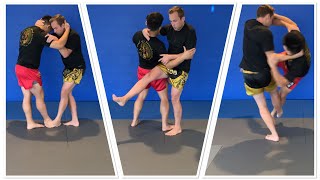
3 Easy (No-Gi) Leg Sweep Takedowns Anyone Can Do
Skyhook Martial Arts & Fitness