Terminology and Definition
Ude Gaeshi combines two Japanese terms: "ude" (arm) and "gaeshi" (to roll backward or counter). This technique involves rolling over one's back in a reversal motion, countering the opponent's direction. The throw draws from classical judo and is frequently seen in Sambo applications.
Starting Position and Grip Setup
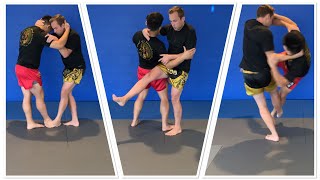
The technique begins from a side angle rather than front-facing, which provides superior mechanical advantage. The attacking player establishes a left-hand lapel grip on the opponent's jacket while securing an under-grip to elevate the opponent's elbow. This two-on-one control creates the necessary leverage for the throw.
Arm Control and Positioning
Maintaining control of both the wrist and elbow is critical throughout execution. The attacking player keeps the opponent's elbow elevated while securing the wrist, preventing the opponent from extracting their arm. This dual control becomes particularly important if the opponent attempts to withdraw mid-technique.
Executing the Throw Mechanics
The attacking player dips their head and drives their right leg through while maintaining arm control. The body whip generates the throwing force rather than arm strength alone. The continuous rotational momentum pulls the opponent through and into a pinning position on their back.
Whizzer Variation
An alternative approach controls the opponent's upper arm and bicep rather than using a traditional two-on-one grip. The attacking player places their grip over the tricep and captures the bicep, maintaining control even if the opponent resists. This variation remains effective even when a clean two-on-one break cannot be established.
Alternative Control Method
When the opponent pulls their arm upward to escape, the attacking player follows this motion while maintaining bicep control. Downward pressure from the attacking player's arm encourages the opponent to lift their arm, creating the opening needed. The throw continues by rotating through while pulling the bicep like turning a wheel.
Classification and Strategic Value
Ude Gaeshi is classified as a Yoko Sutemi Waza—a side sacrifice throw—because the attacking player's body rolls to the side to execute it. The throw appears deceptively simple but generates power through body mechanics rather than jumping. Its relative rarity in modern judo makes it an effective surprise tactic in competition.
Key Execution Principles
The attacking player must maintain constant pressure on the opponent's arm throughout the technique to prevent escape. Simultaneous dipping of the head and drive of the leg creates unified body momentum. Continuous whipping motion through completion ensures the opponent cannot resist or recover balance.
UDE GAESHI Arm Reversal Roll Throw
Key Takeaways
- •Terminology and Definition
- •Starting Position and Grip Setup
- •Arm Control and Positioning
- •Executing the Throw Mechanics
Ude Gaeshi is an old technique that continues to be effective in judo, sambo and other grappling sports. Coaching by Steve Scott and Derrick Darling.
Frequently Asked Questions
What does this video teach about twist back sweep?
This video covers terminology and definition, starting position and grip setup, arm control and positioning. It provides detailed instruction from welcomematstevescott.
How long does it take to learn twist back sweep?
The basic mechanics can be understood in a single session, but developing reliable execution requires consistent drilling over weeks of practice. This 8-part breakdown helps structure your training by isolating each phase of the technique.
What are the key details for finishing twist back sweep?
Ude Gaeshi is classified as a Yoko Sutemi Waza—a side sacrifice throw—because the attacking player's body rolls to the side to execute it. The throw appears deceptively simple but generates power through body mechanics rather than jumping. Its relative rarity in modern judo makes it an effective surprise tactic in competition.