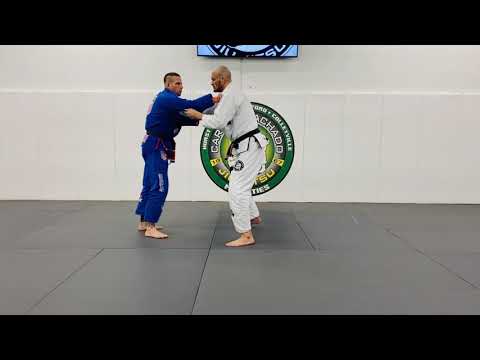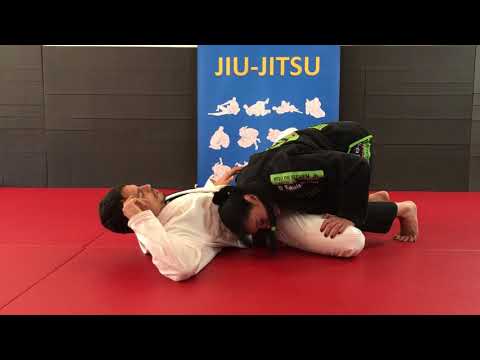
99 TECHNIQUES - #75 "Butterfly Guard Pass"
0
Jean Jacques Sweep·Think Jiu Jitsu 99 Techniques
SUBSCRIBE TO OUR "99 TECHNIQUES" CHANNEL ON YOUTUBE TO SEE MORE AND SHARE WITH FRIENDS. Professor Daynin Dashefsky teach…
Translation: Named after Jean Jacques Machado, the legendary BJJ coach under whom Eddie Bravo earned his black belt — the sweep is a tribute to Machado's influence on Bravo's grappling development
The Jean Jacques Sweep is a half guard sweep from the 10th Planet Jiu-Jitsu system, executed from the lockdown position by establishing a deep underhook, elevating the opponent using a hip-whip motion (the 'Jaws of Life'), and rolling them over the top to achieve a dominant top position. [1] Eddie Bravo named this technique after his instructor Jean Jacques Machado — one of the five legendary Machado brothers and a multiple-time BJJ World Champion despite having a congenital hand condition (ectrodactyly) that limited his gripping ability, which led Machado to develop an innovative no-gi game that profoundly influenced Bravo's own approach. [1],[2] The sweep begins from the lockdown — the 10th Planet half guard control where the bottom player figure-fours their legs around the opponent's trapped leg and hooks the far ankle, creating an inescapable leg entanglement. [1] From the lockdown, the bottom player uses the 'Jaws of Life' movement — a powerful hip-whip that creates space between the two bodies — to thread a deep underhook under the opponent's far armpit. [1] Once the underhook is secured, the bottom player drives upward and forward, using the lockdown to lift the opponent's base while the underhook prevents them from posting with their arm — the opponent is rolled over the top onto their back, and the bottom player comes up in top position (typically side control or mount). [1] The Jean Jacques Sweep is one of the highest-percentage sweeps in the 10th Planet system because the lockdown provides far superior leg control compared to a standard half guard hook, making it extremely difficult for the opponent to base out and resist the sweep. [1]
The Jean Jacques Sweep was developed by Eddie Bravo as part of his 10th Planet Jiu-Jitsu system, named in tribute to his instructor Jean Jacques Machado. [1] Machado (born 1967) is one of the five Machado brothers — cousins of the Gracie family — who brought Brazilian Jiu-Jitsu to the United States in the 1990s. [2] Jean Jacques' congenital hand condition (ectrodactyly, resulting in fewer fingers on both hands) led him to develop an innovative grappling style that minimised reliance on gi grips, focusing instead on body positioning, underhooks, and leg control — this no-gi-friendly approach profoundly influenced Bravo's development of the 10th Planet system. [1],[2] Bravo earned his black belt under Machado and went on to defeat Royler Gracie at ADCC 2003, a victory that validated both Bravo's techniques and Machado's teaching methodology. [2] The Jean Jacques Sweep is documented in Mastering the Rubber Guard (2006) as one of the core half guard sweeps in the 10th Planet curriculum. [1]
The Jean Jacques Sweep is one of the highest-percentage sweeps in the 10th Planet system because the lockdown provides a level of leg control that is unavailable from standard half guard. [1] The lockdown prevents the opponent from extracting their leg (the most common half guard escape), which means the sweep attempt can be sustained over a longer period without the risk of losing the position entirely. [1] In EBI (Eddie Bravo Invitational) competition, the lockdown-to-sweep sequence (either Jean Jacques or Electric Chair) is one of the most commonly seen half guard offensive strategies. [1] The sweep is especially effective in MMA because it achieves top position while maintaining control throughout the transition — there is no scramble phase where the bottom player is vulnerable to strikes. [1]
Used extensively in EBI (Eddie Bravo Invitational) competition. The lockdown-to-sweep sequence (Jean Jacques and Electric Chair) is a standard offensive strategy for 10th Planet half guard players. The technique has been used in UFC competition by fighters with 10th Planet training backgrounds.
No images yet for this technique.
Sign in to suggest an image.
SUBSCRIBE TO OUR "99 TECHNIQUES" CHANNEL ON YOUTUBE TO SEE MORE AND SHARE WITH FRIENDS. Professor Daynin Dashefsky teach…
It’s a “Best Seller 🏆 “ 🔥 Check out my brand new 5 DVD series and what the legend Bernardo Faria said himself https://…
The Jean Jacques Sweep, also known as the Jean Jacques Machado Hook Flip or Butterfly Takedown, is a leg-hook-based takedown executed from standing against an opponent in butterfly guard. Renzo Gracie Jiu Jitsu DFW emphasizes proper grip and posture mechanics: the same-side arm and leg must be forward simultaneously to generate power, with one hand posting to control the opponent's free hand while the other pulls. Footwork is critical—the sweep executor must circle and shuffle, controlling the opponent's stepping pattern and forward progress to dictate accuracy. The sweep initiates by forcing an outside hook under the opponent's leg, with the pulling hand controlling the calf as the post hand creates downward pressure. The executor must sit off-center and block the opponent's base leg (preventing posting) by controlling their toes with a free leg. The hook is lifted explosively to complete the sweep, pulling the executor's own body back up to standing rather than simply throwing the opponent over. Think Jiu Jitsu 99 Techniques provides complementary detail on controlling the bottom player's posture by holding their armpits elevated and closing distance, though their focus shifts toward a guard-passing variation rather than a pure standing sweep. Both sources emphasize controlling the opponent's base and preventing post-outs as fundamental to sweep success.
Synthesized from 2 instructors
No instructional courses yet for this technique.
Sign in to suggest a course.
Risk of injury to the person this technique is applied to
The Jean Jacques Sweep is a positional reversal with minimal injury risk to either participant. The sweep involves rolling the opponent to their back, not striking or applying joint pressure.
Skill level needed to execute this technique reliably
Whether this technique is allowed under major competition rule sets
Mastering the Rubber Guard (Bravo, 2006)
description: [1] Bravo 2006 lockdown/sweep section
Standard katakana transliteration of Western martial arts terminology (外来語) — used in Japanese MMA, boxing, and BJJ communities
description: [1] Bravo 2006 lockdown/sweep section
Requires strong hip extension (glutes and hamstrings) for the Jaws of Life and the sweeping bridge
Good leg dexterity for maintaining the lockdown while transitioning
Upper body control for threading and maintaining the deep underhook
Core strength for the bridging/rolling motion
Does NOT require exceptional flexibility (unlike rubber guard techniques)
Accessible to all body types — the lockdown and underhook mechanics work regardless of limb length
Named after Jean Jacques Machado — a specific sweep from the Machado family's BJJ lineage. The Machado brothers (Jean Jacques, Rigan, Carlos, Roger, John) are one of the most influential BJJ families alongside the Gracies. (Machado family BJJ lineage; BJJ history)
Keep your head up with peripheral vision on the opponent's feet rather than looking down at them, so you can see both their feet and eyes at the same time (Renzo Gracie Jiu Jitsu DFW).
Constantly shuffle and circle, making forward progress so you're the one advancing while they retreat, which determines accuracy and control of the technique (Renzo Gracie Jiu Jitsu DFW).
Push the opponent's elbow toward the center with one hand while the other hand pushes them to the side, creating downward force to drive them onto your hook rather than on top of you (Renzo Gracie Jiu Jitsu DFW).
After placing your opponent on the hook, sit off to the side and control their toes while blocking the outside leg with your free leg so they cannot post (Renzo Gracie Jiu Jitsu DFW).
The Jean Jacques Sweep is a half guard sweep from the 10th Planet Jiu-Jitsu system, executed from the lockdown position by establishing a deep underhook, elevating the opponent using a hip-whip motion (the 'Jaws of Life'), and rolling them over the top to achieve a dominant top position. Eddie Bravo named this technique after his instructor Jean Jacques Machado — one of the five legendary Machado brothers and a multiple-time BJJ World Champion despite having a congenital hand condition (ectrodactyly) that limited his gripping ability, which led Machado to develop an innovative no-gi game that profoundly influenced Bravo's own approach.
The Jean Jacques Sweep was developed by Eddie Bravo as part of his 10th Planet Jiu-Jitsu system, named in tribute to his instructor Jean Jacques Machado. Machado (born 1967) is one of the five Machado brothers — cousins of the Gracie family — who brought Brazilian Jiu-Jitsu to the United States in the 1990s.
IJF: legal — Legal throwing technique; IBJJF: legal — Legal at all belt levels; UWW: restricted — Legal in freestyle, banned in Greco-Roman (no leg attacks below waist); Unified MMA: legal — Legal throwing technique; ADCC: legal — Legal; FIAS Sport Sambo: legal — Legal; FIAS Combat Sambo: legal — Legal
Danger rating 2/10. The Jean Jacques Sweep is a positional reversal with minimal injury risk to either participant. The sweep involves rolling the opponent to their back, not striking or applying joint pressure.
The standard setup chain: Bottom half guard → Establish lockdown (figure-four legs, hook far ankle) → Jaws of Life (explosive hip-whip to create space between the bodies) → Thread deep underhook under opponent's far armpit → Grip behind far shoulder or grab the belt/waistband → Bridge upward with the hips while pulling with the underhook → Lockdown lifts the opponent's base while underhook directs the roll → Opponent rolls over their own shoulder → Bottom player comes up to top position (side control or mount) → Consolidate top position.
Standard counters include: Prevent the lockdown — the simplest defence; if the bottom player cannot establish the figure-four leg entanglement, … / Strip the underhook — fight the underhook as it is being established; once the underhook is deep, the sweep is very d… / Whizzer (overhook) — establishing a whizzer on the underhook arm can counter the sweep by redirecting the bottom play… / Base wide — spreading the feet wide creates a more stable base that is harder to lift with the sweep.
Common variants: Standard Jean Jacques (lockdown to underhook to sweep); Old School (a simplified version where the underhook is established b…); Jean Jacques to back take (if the opponent resists the sweep by turning away, follow…); Jean Jacques to Electric Chair (if the opponent defends the underhook, switching to the E…); Jean Jacques to dogfight (coming up to a kneeling position (dogfight) rather than c…).
Used extensively in EBI (Eddie Bravo Invitational) competition. The lockdown-to-sweep sequence (Jean Jacques and Electric Chair) is a standard offensive strategy for 10th Planet half guard players.
Top errors to watch for: Shallow underhook — the most common failure; if the underhook is not deep enough (hand reaching only to the opponent'… / Skipping the Jaws of Life — attempting to get the underhook without first creating space (via the Jaws of Life hip-wh… / Sweeping with the arms instead of the hips — pulling with the underhook arm alone produces a weak sweep; the hips mus… / Losing the lockdown during the sweep — if the lockdown loosens during the sweeping motion, the opponent can base by e….
The Jean Jacques Sweep is also known as Jan Jakku Suīpu, JJ Sweep, Machado Sweep, Half Guard Underhook Sweep, Lockdown to Underhook Sweep.