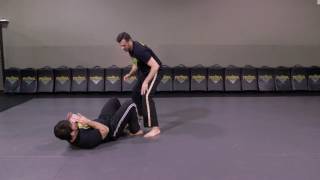
Introduction to Knee on Belly
Knee on belly is a top position that serves two primary functions: applying control and fatigue to an opponent, and providing a transitional platform to other dominant positions. The technique bridges side mount and mount positioning, offering practitioners a moment to maintain pressure while deciding their next move.
Weight Distribution and Pressure
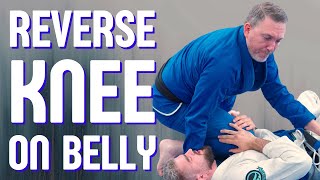
Effective knee on belly control requires concentrating body weight directly onto the opponent's knee joint rather than sitting back on the foot. The knee should contact the center of the chest near the sternum and diaphragm, maximizing respiratory pressure and discomfort while maintaining control through body weight projection.
Base and Leg Positioning
The non-posting leg should be extended wide for stability, with toes pointed forward toward the opponent rather than splayed outward. This forward-facing toe position prevents backward sweeps and allows lateral mobility, keeping the practitioner strong against the opponent's likely directional movement.
Hand Placement and Posture
Hands can float for base or secure grips at the opponent's hips or collar to prevent hip escapes and control upper body movement. Posture must remain upright and strong—comparable to a deadlift position—rather than crouched, enabling the practitioner to apply additional pressure through controlled upper body positioning.
Control-Focused Application
When using knee on belly for control, the practitioner applies sustained pressure to wear down the opponent while remaining alert for defensive mistakes. As pressure increases, the opponent may expose limbs or create openings that lead to submissions or positional advantages.
Transitional Bridge to Mount
Knee on belly functions as a bridge position when transitioning from side mount to full mount, preventing the opponent from re-establishing half guard during the leg pass. A 'knee ride' variation, where the shin crosses the opponent's belt line, maintains control while creating the angle needed to mount.
Transitional Positioning Mechanics
In transitional applications, the knee position remains similar but the purpose shifts from maximal pressure to controlled passage. The practitioner holds this position momentarily to stabilize before advancing to a more advantageous position or exploiting an opening.
Exit from Compromised Mount
When mount position becomes compromised due to effective opponent defense, the practitioner can transition to knee on belly rather than risk being bridged or pulled into guard. This tactical retreat provides a stable platform from which to reset and pursue alternative positional advantages.
Knee On Belly Basics
Key Takeaways
- •Introduction to Knee on Belly
- •Weight Distribution and Pressure
- •Base and Leg Positioning
- •Hand Placement and Posture
Hope you enjoy it! If you have any question message us on social: Instagram - https://www.instagram.com/gracie_barr... Facebook - https://www.facebook.com/GracieBarraR... Want to know more about the academy? Visit our website and take a look! https://graciebarraroundhay.co.uk/
Related Techniques
Frequently Asked Questions
What does this video teach about reverse knee on belly?
This video covers introduction to knee on belly, weight distribution and pressure, base and leg positioning. It provides detailed instruction from Gracie Barra Roundhay Leeds.
How long does it take to learn reverse knee on belly?
The basic mechanics can be understood in a single session, but developing reliable execution requires consistent drilling over weeks of practice. This 8-part breakdown helps structure your training by isolating each phase of the technique.
What are the key details for finishing reverse knee on belly?
In transitional applications, the knee position remains similar but the purpose shifts from maximal pressure to controlled passage. The practitioner holds this position momentarily to stabilize before advancing to a more advantageous position or exploiting an opening.