Position Overview and Importance
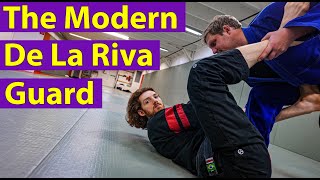
The De La Riva guard is defined primarily by the grip configuration rather than the foot hook alone. It is one of the most important guards in modern jiu-jitsu competition because it is both extremely easy to achieve and exceptionally versatile for both offensive and defensive applications. The position offers favorable attributes for control, defense, and attack initiation.
Defining De La Riva Guard
De La Riva guard variations are distinguished by hand position rather than foot placement, with primary definitions including collar-sleeve, double-sleeve, and cross-sleeve configurations. The most common interpretation involves ankle or pant-leg control combined with specific grip patterns. The foot hook itself is secondary and does not always remain engaged during position maintenance.
Ease of Entry and Accessibility
The De La Riva guard is extremely accessible during bottom position, particularly when the opponent's hands are positioned away or when standing close to the guard player. Simple ankle grabs or pant-leg controls followed by collar grips enable rapid entry into offensive guard configurations. This accessibility makes it an essential tool for guard retention when being passed.
Sleeve Control and Offensive Strategy
Sleeve control is the primary offensive mechanism in De La Riva guard, allowing the bottom player to break grips, manipulate hip position, and transition to sit-up guard variations. Once the sleeve is secured, the opponent cannot effectively withdraw their arm or execute leg-drag or knee-cut passing attempts. From sleeve control, the guard player can establish additional hook positions for sweeping or submission setup.
Spider Hook Transitions
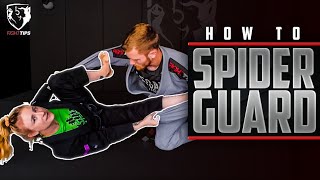
When the sleeve is controlled, the guard player can place their foot in the opponent's bicep to transition into spider hook variations, specifically Leon Rolo guard patterns. This configuration involves one spider hook with the opposite leg on the outside, creating opportunities for ankle-pick sweeps or X-guard transitions. This approach offers strong defensive positioning while maintaining offensive pressure.
De La Riva Exposure Positions
From De La Riva guard with sleeve control, the bottom player can execute rotational sweeps by tapping and attacking exposed positions. The sleeve control prevents the opponent from repositioning their arm to defend these attacks. This mechanical advantage makes sleeve-controlled De La Riva exceptionally difficult for the top player to navigate.
Collar Control and Bolo Threat
When the opponent avoids giving the sleeve, collar control becomes the primary grip option, enabling bolo sweep threats. The bolo threat can force the opponent to step over the guard player's leg, creating opportunities for X-guard transitions or direct sweeping attacks. Experienced competitors like Rafa Mendes and Gabe Goppa frequently utilize this bolo threat sequence.
Sit-Up Guard Transition
From De La Riva with lapel control, the guard player can directly push out and transition to sit-up guard, particularly when the opponent has their hand positioned away. This transition maintains foot hook control while establishing an aggressive upper-body position. The sit-up guard threat provides continuous offensive momentum from the De La Riva position.
Position Integration and Grip Fighting
De La Riva guard functions as a dynamic system where sleeve, collar, and bolo threats operate interdependently rather than in isolation. The guard player must continuously adapt their grip strategy based on opponent resistance, creating a grip-fighting sequence that maintains offensive momentum. Understanding this integrated approach ensures the guard remains effective against experienced opponents who specifically defend against individual threats.
Understanding the De La Riva Guard
Key Takeaways
- •Position Overview and Importance
- •Defining De La Riva Guard
- •Ease of Entry and Accessibility
- •Sleeve Control and Offensive Strategy
Overview of the basic attacks and controls of the de la riva guard
Related Techniques
Frequently Asked Questions
What does this video teach about de la riva guard?
This video covers position overview and importance, defining de la riva guard, ease of entry and accessibility. It provides detailed instruction from JonThomasBJJ.
How long does it take to learn de la riva guard?
The basic mechanics can be understood in a single session, but developing reliable execution requires consistent drilling over weeks of practice. This 9-part breakdown helps structure your training by isolating each phase of the technique.
What are the key details for finishing de la riva guard?
From De La Riva with lapel control, the guard player can directly push out and transition to sit-up guard, particularly when the opponent has their hand positioned away. This transition maintains foot hook control while establishing an aggressive upper-body position. The sit-up guard threat provides continuous offensive momentum from the De La Riva position.