Introduction to Spider Guard Sweeps
This instruction covers three distinct sweeps from the spider guard position in Brazilian Jiu-Jitsu. The technique builds upon foundational spider guard mechanics previously covered, with focus on detailed execution across different opponent responses.
Establishing Spider Guard Grips
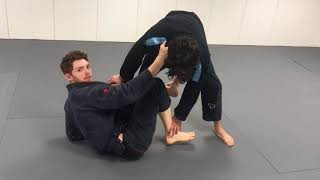
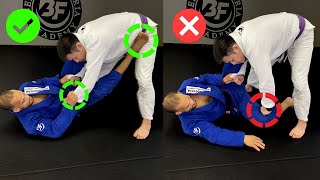
The foundational grip for spider guard uses sleeve hooks or pocket grips rather than pistol grips, as the latter slides out more easily. After securing the grips, the practitioner scoots in with knees to chest, placing feet on the opponent's biceps or shoulders while creating outward knee tension to prevent hand escape.
Hip Positioning and Frame Control
Proper hip positioning requires dropping the hips to one side while extending the opposite leg, creating a direct mechanical path. Spreading the knees outward generates tension that prevents the opponent from circling their hand free, while keeping hips extended creates leverage for sweeping mechanics.
Scissor Sweep from Kneeling Position
When the opponent is on their knees, the practitioner executes a scissor-style sweep by pushing the foot outward from the bicep while extending the sleeve grip arm to rotate the opponent over. After the sweep completes, the practitioner maintains sleeve control, transitions the hooking foot off the bicep, and advances to mount position.
Overhead Sweep Against Standing Opponent
Against a standing opponent, the practitioner scoots under their center of gravity while walking on their shoulders, positioning their buttocks near the opponent's shin. The sweep executes as a single continuous motion—extending the legs while raising the hips to lift the opponent overhead, with the opponent's tucked head allowing rotation over the practitioner's body.
Transitioning to North-South Position
If the standing opponent launches themselves forward during the overhead sweep attempt, the practitioner can transition directly to north-south position rather than completing the initial sweep. This repositioning provides control and prevents the opponent from escaping the leg hooks.
Shin-to-Shin Sweep Variation
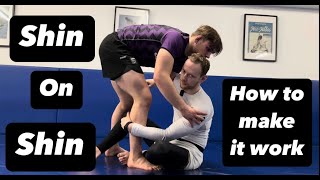
When the opponent backs up to counter the overhead sweep, the practitioner transitions to a shin-to-shin variation by removing the foot from the bicep and making contact with the opponent's shin. The practitioner then slides the foot down to the ankle, pulls the sleeve to load the opponent's weight on one leg, and lifts the hooked leg to execute the sweep.
Preventing Escape from Ankle Hook
After establishing the ankle hook in the shin-to-shin variation, the practitioner flexes the foot to prevent the opponent from posting it back down. Maintaining sleeve control prevents the opponent from regaining balance even if they attempt to lower their hooked leg, allowing the practitioner to establish a superior position on top.
Situational Awareness and Response
The three sweeps presented address different defensive responses from the opponent—a direct scissor sweep against passive resistance, an overhead sweep against a standing opponent, and a shin-to-shin variation when the opponent retreats. Understanding these variations allows practitioners to maintain offensive advantage regardless of how the opponent reacts.
How to Spider Guard (+ 3 Sweeps!)
Key Takeaways
- •Introduction to Spider Guard Sweeps
- •Establishing Spider Guard Grips
- •Hip Positioning and Frame Control
- •Scissor Sweep from Kneeling Position
Coach Erin Herle is back with 3 sweeps from spider guard, a position from the back that manipulates the opponent's arms by controlling the gi sleeves and utilizing the legs to offset balance. Follow Erin Herle on IG►https://www.instagram.com/erinherle SUBSCRIBE TO GET MORE #FIGHTTIPS►http://bit.ly/1APnzvw FOLLOW: Facebook | http://bit.ly/fightTIPSFacebook Twitter | http://bit.ly/fightTIPSTwitter Instagram | http://bit.ly/fightTIPSInstagram
Frequently Asked Questions
What does this video teach about spider guard?
This video covers introduction to spider guard sweeps, establishing spider guard grips, hip positioning and frame control. It provides detailed instruction from fightTIPS.
How long does it take to learn spider guard?
The basic mechanics can be understood in a single session, but developing reliable execution requires consistent drilling over weeks of practice. This 9-part breakdown helps structure your training by isolating each phase of the technique.
What are the key details for finishing spider guard?
After establishing the ankle hook in the shin-to-shin variation, the practitioner flexes the foot to prevent the opponent from posting it back down. Maintaining sleeve control prevents the opponent from regaining balance even if they attempt to lower their hooked leg, allowing the practitioner to establish a superior position on top.