Overview of Shin-On-Shin Guard
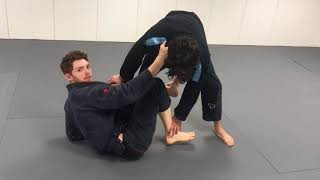
The shin-on-shin guard is a close-range leg entanglement position that the instructor formerly utilized as a primary guard entry. After competing at higher levels, the instructor discontinued this approach upon recognizing significant vulnerabilities in the position's structure.
Primary Vulnerabilities
The main weakness of shin-on-shin guard is the proximity it creates, which facilitates underhook access for the top player. Underhooks enable knee cut passes, body locks, and other dominant control positions that compromise the guard player's position.
Historical Context and Evolution
The shin-on-shin guard was previously effective because opponents typically attempted to disengage rather than entangle. Modern players have developed superior counters through underhook penetration and positioning, rendering the position less reliable at advanced levels.
Self-Frame Defense Mechanics
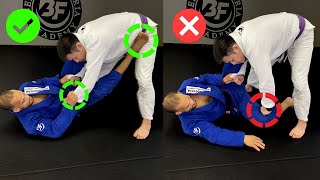
To protect against underhook attacks, the guard player must establish a self-frame on the opposite knee, creating distance and structural support. This defensive framing allows the guard player to off-balance the opponent and transition to cross-face control while maintaining connection.
Hand-Based Grip Integration
Integrating hand grips substantially improves shin-on-shin viability by restricting the opponent's pulling and underhook options. The guard player should connect their hand grip to their body to increase difficulty for the opponent to break or manipulate the entanglement.
Transitional Attacks from Position
Once the guard player controls the shin-on-shin position with hand grips and proper framing, double-collar tie entries and weight distribution shifts become viable. These attacks can force weight transfer to the opponent's other leg, enabling transitions into dominant inside positions.
Comprehensive Defense Requirements
Effective shin-on-shin guard play requires committing fully to weakness coverage through structural self-framing and hand-fighting sequences. Simply achieving position without defensive layering leaves the guard player vulnerable to counters, necessitating integrated technical defense throughout the engagement.
Shin-on-shin guard: weaknesses and how to play it.
Key Takeaways
- •Overview of Shin-On-Shin Guard
- •Primary Vulnerabilities
- •Historical Context and Evolution
- •Self-Frame Defense Mechanics
This is a Video from my Patreon: https://www.patreon.com/c/dimamurovanni Coach Dima Murovanni discusses the weaknesses and vulnerabilities of the shin-on-shin guard in bjj and how we can modify it to make it effective against strong passers.
Related Techniques
Frequently Asked Questions
What does this video teach about shin-on-shin guard?
This video covers overview of shin-on-shin guard, primary vulnerabilities, historical context and evolution. It provides detailed instruction from Dima Murovanni Bjj.
How long does it take to learn shin-on-shin guard?
The basic mechanics can be understood in a single session, but developing reliable execution requires consistent drilling over weeks of practice. This 7-part breakdown helps structure your training by isolating each phase of the technique.
What are the key details for finishing shin-on-shin guard?
Once the guard player controls the shin-on-shin position with hand grips and proper framing, double-collar tie entries and weight distribution shifts become viable. These attacks can force weight transfer to the opponent's other leg, enabling transitions into dominant inside positions.