Strategic Game Planning Against Strong Opponents
Rather than immediately pursuing guard passes against a physically strong opponent like Kyle, the instructor employs a deliberate strategy of maintaining transitional positions to induce fatigue. By keeping the opponent in defensive scrambles and gray areas rather than locked-down control positions, the instructor forces excessive strength expenditure that compounds over time. This approach prioritizes energy management and mental strain over immediate positional advancement.
Exploiting the Stand-Up Moment
When a fatigued bottom player attempts to stand up from guard, this moment presents a critical vulnerability window. The instructor recognizes standing attempts as a sign of exhaustion and monitors breathing patterns to confirm energy depletion. This observation allows for precise timing of attacks when the opponent is most compromised.
Managing Specific Leg Lock Threats
Understanding an opponent's preferred attacks allows for targeted defensive positioning. Against Kyle's dominant outside heel hook threat on the left leg, the instructor employs a conscious outside passing strategy to minimize exposure. This selective approach to passing patterns demonstrates intelligent risk management rather than forcing a single technical sequence.
Point Timing and Tactical Stalling
The instructor strategically delays completing a guard pass until after the point-scoring period concludes to maintain control advantages. This tactical pause forces the opponent to continue expending energy in defensive positions without immediate reward. The referee's awareness of this tactic demonstrates how officials recognize deliberate pace manipulation.
Reading Desperation Through Decision-Making
Tired competitors make predictable tactical errors, including poorly-setup shooting attempts. The instructor accurately predicts Kyle's double-leg takedown attempt based on fatigue-induced poor decision-making and lack of technical setup. This mental clarity advantage transforms a risky position into a controlled submission opportunity.
The Arm-In Guillotine Grip Sequence
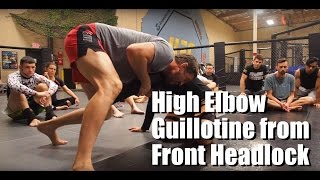
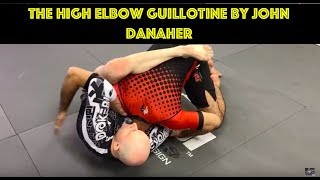
The technique begins with a chin strap grip that immediately connects both hands over the top of the opponent's head. The hands then scoop upward in a controlled arc, collapsing the top of the head and bending the neck sharply. This early neck bend during the takedown descent is critical—completing the neck compression before landing maximizes control and minimizes escape options.
Positional Mechanics on the Ground
Rather than falling flat on the back, the instructor maintains a compressed shoulder position at the base of the opponent's spine with the head kept close. This forward-oriented posture prevents the opponent's head from slipping out of the choke. Proper positioning here eliminates scramble opportunities and forces the opponent into a compromised defensive state.
Securing Control with Closed Guard
Establishing a closed guard completes the submission setup by restricting the opponent's ability to push knees or generate rolling momentum. Without secure leg control, the opponent retains options to turn and escape. The closed guard converts the guillotine from a positional threat into a fully secured finishing position.
Submission Success Against Non-Wrestlers
While Kyle demonstrates excellent submission defense in general, his lack of wrestling background creates a specific vulnerability to guillotine chokes from takedown positions. Non-wrestlers typically lack familiarity with escaping submissions from shooting attempts, making the arm-in guillotine a high-percentage finish. The instructor successfully executed this same technique against Mason Fowler at ADCC 2019, demonstrating its reliability as a competition-proven submission.
ADCC-Tested Guillotine Choke | Craig Jones B-Team Technique
Key Takeaways
- •Strategic Game Planning Against Strong Opponents
- •Exploiting the Stand-Up Moment
- •Managing Specific Leg Lock Threats
- •Point Timing and Tactical Stalling
Craig Jones shows the guillotine choke he used to submit Kyle Boehm at ADCC 2022. Instructionals: https://bjjfanatics.com/collections/craig-jones Website: https://bteamjj.com/ Instagram: https://instagram.com/bteamjj Merch: https://www.ma1combat.com/ #BTeamJiuJitsu #BJJ #JiuJitsu #NoGi
Related Techniques
Frequently Asked Questions
What does this video teach about guillotine choke from top half-guard?
This video covers strategic game planning against strong opponents, exploiting the stand-up moment, managing specific leg lock threats. It provides detailed instruction from The B-Team.
How long does it take to learn guillotine choke from top half-guard?
The basic mechanics can be understood in a single session, but developing reliable execution requires consistent drilling over weeks of practice. This 9-part breakdown helps structure your training by isolating each phase of the technique.
What are the key details for finishing guillotine choke from top half-guard?
Establishing a closed guard completes the submission setup by restricting the opponent's ability to push knees or generate rolling momentum. Without secure leg control, the opponent retains options to turn and escape. The closed guard converts the guillotine from a positional threat into a fully secured finishing position.