Fundamental Structure of the Straight Lead
The straight lead is a vertical-fist jab enhanced by full shoulder rotation and complete body weight transfer. The practitioner lands on the power line formed by the middle and ring finger knuckles, maintaining bone alignment behind the shot. This structural integrity creates significantly greater power than a conventional jab while preserving defensive shoulder coverage.
Power Generation and Body Mechanics
The straight lead derives its force from the entire body weight transferring off the back foot, making it substantially heavier and longer than the standard jab. The full shoulder alignment creates stability that cannot be achieved when turning during a traditional jab. This commitment of body weight results in noticeably increased impact force.
Complementary Use with the Jab
The jab and straight lead function as complementary tools rather than interchangeable techniques. The jab serves as the setup mechanism that positions the opponent for the straight lead's heavier follow-up. Practitioners should develop proficiency with both techniques and deploy them sequentially to manipulate distance, speed, and power along the same line of attack.
Distance Variation Combinations
Effective straight lead application employs measured combinations such as double jab followed by straight lead, creating distance variation along a consistent attack line. The practitioner can also execute straight lead to double jab, utilizing the lead hand twice before resetting. These patterns allow practitioners to deceive opponents regarding punch intensity while maintaining offensive consistency.
Comparative Advantages and Limitations
The jab offers superior speed and lower commitment, enabling rapid successive strikes and greater offensive flexibility. The straight lead delivers superior power and reach but requires greater commitment and telegraphs intention through shoulder rotation. High guards present situations where the jab performs better, as the straight lead must travel a deeper arc to connect effectively.
Setup and Offensive Application
The straight lead functions effectively when executed immediately after the opponent reacts to a leading jab, allowing the practitioner to capitalize on reactive movement. The increased reach of the straight lead compared to the jab enables the practitioner to close distance while simultaneously maintaining separation. This distance control becomes particularly valuable when the lead hand remains in a lower guard position.
Combination Development: Follow-up Techniques
After establishing the straight lead, practitioners can immediately chain defensive and offensive techniques such as hooks or uppercuts. Movement during striking maintains tactical advantage in Jeet Kune Do application, preventing stationary exchanges that disadvantage less powerful practitioners. The straight lead transitions seamlessly into curved punches that capitalize on shortened distance and compromised opponent positioning.
Integration Strategy: Jab-Straight Lead Sequencing
Optimal application alternates between jab and straight lead techniques, beginning combinations with less committed jabs before finishing with the heavier straight lead. Following the straight lead, the practitioner should reset body position through double jabs that reestablish neutral stance and weight distribution. This cyclical approach maximizes both the deceptive qualities of rapid jabs and the finishing power of the committed straight lead.
Jeet Kune Do Straight Lead | Tutorial
Key Takeaways
- •Fundamental Structure of the Straight Lead
- •Power Generation and Body Mechanics
- •Complementary Use with the Jab
- •Distance Variation Combinations
The straight lead, made famous by Bruce Lee, is a powerful jab with a vertical fist and a full shoulder turn. Notice how his fist remains vertical, landing on his power line with the middle finger and ring finger knuckles, ensuring the force is supported by his bones. When someone throws a jab, the right shoulder may misalign slightly from the left. However, with the straight lead, the power comes from the back foot, resulting in the entire body weight being behind the shot. It's a heavier version of the jab, longer and stronger. But don't think we only rely on the straight lead! The jab and the straight lead complement each other. Both punches are essential and need to be mastered. The straight lead is often set up by the jab. When circling or curving with the feet, a technique known as the "corkscrew" in JKD (Jeet Kune Do), we can mix up the distance, power, and speed of our attacks along the same line. A jab starts out like a straight lead but snaps at the last moment. You maintain shoulder coverage and can slightly adjust your knuckles for comfort, but always ensure proper alignment. The straight lead is more stable and robust than a jab, delivering greater power. This doesn't mean the jab is ineffective; in fact, it's the most important punch in boxing. The jab sets up opportunities for rear hand takedowns, kicks, and, of course, the straight lead. However, if you want maximum power in a lead shot, the straight lead takes the lead in that argument. The jab has advantages too! It is less committed, allowing for rapid successive jabs compared to a fully committed straight lead. The turn in the straight lead can telegraph the movement, while the jab is snappier and shorter, allowing for more throws. But it lacks the length and stability of the straight lead. So, mixing both punches is key. Start with the jab, mix in the straight lead, and after a straight lead, it's a good time for a double jab. Start with the jab and finish with the straight lead or vice versa. https://www.nymaa.com/book-a-free-class.html https://www.nymaa.com/contact-us.html https://www.nymaa.com/ https://linktr.ee/newyorkmartialartsacademy Adult program https://bit.ly/2G4cMJ2 Kids program https://bit.ly/2X3B64G Private lessons https://bit.ly/2RzYULO Brooklyn Location https://bit.ly/2QQOqaz Astoria Location https://bit.ly/2XqRwUZ Little Neck Location https://bit.ly/2Xt7r5t Glen Cove Location https://bit.ly/2QLZK7V
Related Techniques
Frequently Asked Questions
What does this video teach about lead hand straight?
This video covers fundamental structure of the straight lead, power generation and body mechanics, complementary use with the jab. It provides detailed instruction from NY Martial Arts Academy.
How long does it take to learn lead hand straight?
The basic mechanics can be understood in a single session, but developing reliable execution requires consistent drilling over weeks of practice. This 8-part breakdown helps structure your training by isolating each phase of the technique.
What are the key details for finishing lead hand straight?
After establishing the straight lead, practitioners can immediately chain defensive and offensive techniques such as hooks or uppercuts. Movement during striking maintains tactical advantage in Jeet Kune Do application, preventing stationary exchanges that disadvantage less powerful practitioners. The straight lead transitions seamlessly into curved punches that capitalize on shortened distance and compromised opponent positioning.
Related videos
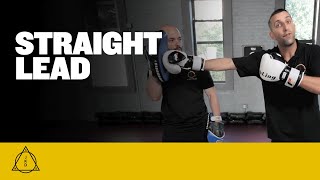
Straight Lead Punch Technique | Using the Straight Lead like Bruce Lee
NY Martial Arts Academy
Tips for the straight lead. (TWJKD)
The Fight System
4 Tips for KO Power in your Jab
Tony Jeffries
Master the Jab to the Body
Tony Jeffries
How To Counter The Jab With The Right Hook - Southpaw vs Orthodox
World Class Boxing Channel