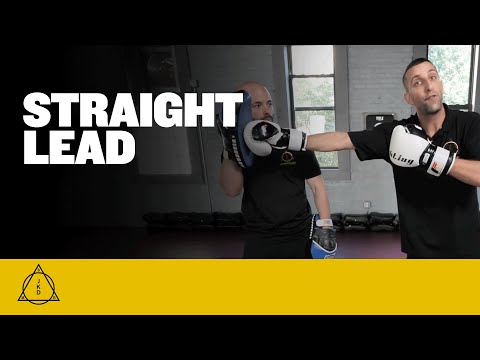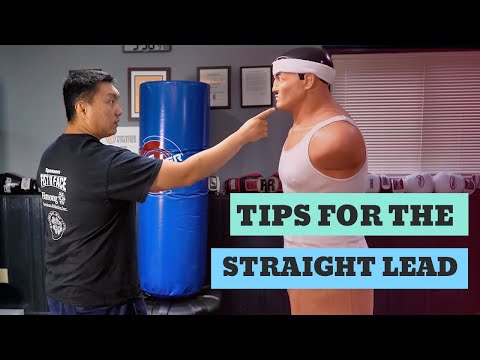
Tips for the straight lead. (TWJKD)
0
Lead Hand Straight·The Fight System
Here's some advice for the Ted Wong guys doing a straight lead. Here are some things to consider. You can also use it…
Translation: Lead straight punch
The Lead Hand Straight (commonly called the Jab) is the most fundamental punch in boxing, delivered with the leading hand in a straight line from the guard position to the target. [1] It is the fastest punch due to the shortest distance to travel and serves as the foundation of all boxing combinations. [1] The jab controls distance, sets up power shots, and disrupts the opponent's rhythm. [1]
Boxing techniques including the Lead Hand Straight have been documented since the earliest Queensberry Rules era. [1]
The Lead Hand Straight is a fundamental boxing technique with proven effectiveness in competition. [1]
Western Boxing tradition. [1]
Used in UFC and professional MMA competition
No images yet for this technique.
Sign in to suggest an image.
Here's some advice for the Ted Wong guys doing a straight lead. Here are some things to consider. You can also use it…
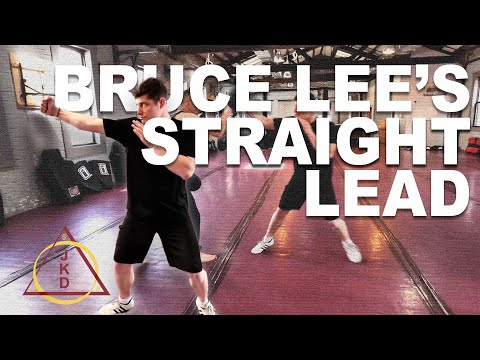
The straight lead punch is a super important technique that Bruce Lee used all the time. It involves throwing a jab with…
The straight lead, made famous by Bruce Lee, is a powerful jab with a vertical fist and a full shoulder turn. Notice how…
The lead hand straight is a vertical-fist punch employing full shoulder rotation and body weight transfer, distinguishing it from the traditional jab through increased power and structural stability. According to NY Martial Arts Academy, the straight lead differs fundamentally from the jab in that the fist remains vertical, landing on the power line formed by the middle and ring finger knuckles, while the shoulders achieve full alignment—a position that cannot be maintained while executing a conventional jab. The Fight System emphasizes maintaining the lead hand in a high guard position, kept near the face between strikes to minimize recovery distance and enable simultaneous defensive functions such as deflection and blocking. NY Martial Arts Academy stresses that hand movement should precede footwork, allowing body weight to transfer into the target rather than remaining grounded, while simultaneously reducing telegraphing compared to step-then-punch sequencing. The straight lead generates power through back-foot drive, hip rotation, and the full commitment of body mass, producing demonstrably greater impact than a jab. All three instructors agree the technique serves multiple tactical roles: offensive initiation, transition interception as opponents move, counter-punching after defensive sequences, and distance-bridging when opponents retreat. NY Martial Arts Academy notes the straight lead provides superior reach—approximately three to five inches longer than a jab—a critical advantage in fighting. The technique pairs synergistically with the jab in combinations, with instructors recommending jab-jab-straight-lead sequencing to vary distance and power on the same line of attack. The Fight System and NY Martial Arts Academy both reference Bruce Lee's methodology and Jeet Kune Do principles as foundational to proper execution.
Synthesized from 3 instructors
No instructional courses yet for this technique.
Sign in to suggest a course.
Risk of injury to the person this technique is applied to
Boxing punch with significant knockout potential
Skill level needed to execute this technique reliably
Whether this technique is allowed under major competition rule sets
Fencing (Pollock, Grove & Prevost, 1902)
description, historyOrigin: sourced from Pollock, W
description, historyOrigin: sourced from Pollock, W
Requires proper weight transfer
Strong shoulders and core
Lead hand straight (jab) appears in 451 passages across 61 books. The most important punch in boxing — it sets up everything else, measures distance, and keeps the opponent at bay. Sugar Ray Leonard called it 'the most important weapon in boxing.' (61 books; Dempsey, Championship Fighting; boxing history)
Hand first, feet follow. If you step and land before punching, you're only punching with the mass of your arm since your body weight is still in the floor. Getting your hand moving first allows you to generate proper power.
From your fighting stance to returning back is almost nothing—you get in, get out, and stay ready to move. Other techniques like the backhand or kicks deviate from your stance much more when you miss, leaving you vulnerable.
The jab is snappier and shorter, allowing you to throw more of them, but the lead straight has more power, length, and stability. You can mix both together depending on your distance and intent.
After defending against an opponent's combo, if you notice they're slightly out of position, the lead straight bridges the gap more easily than the cross because it's a straight line—the shortest distance between two points.
The Lead Hand Straight (commonly called the Jab) is the most fundamental punch in boxing, delivered with the leading hand in a straight line from the guard position to the target. It is the fastest punch due to the shortest distance to travel and serves as the foundation of all boxing combinations.
Boxing techniques including the Lead Hand Straight have been documented since the earliest Queensberry Rules era.
Unified MMA: legal — Legal striking technique; WBC/Boxing: legal — Legal — punches are the core technique of boxing; WKF: legal — Legal, jodan/chudan punch scores 1 point (yuko) — controlled contact required; Kyokushin: restricted — Body punches legal at full power, head punches banned; WT: restricted — Punches to trunk only (1 point), punches to head banned; ITF: legal — Legal — hand techniques to head and body both permitted; WAKO: legal — Legal in Full Contact and Low Kick formats; K: legal — 1/GLORY — Legal — full power punches to head and body; IFMA: legal — Legal
Danger rating 6/10. Boxing punch with significant knockout potential
The standard setup chain: Guard position → Lead Hand Straight → Follow-up combination.
Standard counters include: Slip / Block / Counter-punch.
Common variants: Power lead hand straight; Speed lead hand straight.
Used in UFC and professional MMA competition
Top errors to watch for: Dropping the guard / Over-extending / Telegraphing.
The Lead Hand Straight is also known as Jabu, Jab, Lead Straight, One, Left Lead.