Foundational Principle: The Line to Target
The JKD side kick operates along a straight line from the striker's position to the target. Maintaining this linear pathway is essential for efficiency and prevents unnecessary corrections that compromise power delivery. The striker must position both their feet and the opponent along this same line to ensure direct force application.
Footwork Setup: Crossing and Clearing
To generate momentum while maintaining the line to target, the striker crosses their stance line and steps behind with the rear foot. This movement clears space for the hips and body to rotate into the kick without deviating from the intended trajectory. The step behind is deliberate—any excessive lateral movement wastes energy and disrupts the direct path.
Chamber Mechanics: Height and Efficiency
Rather than dragging the striking leg from ground level to the target, the striker chambers the knee to bring the foot source-to-target distance. This elevated chamber significantly reduces interception opportunities and eliminates the efficiency loss that occurs when fighting gravity. The chambered position also accelerates the kick's final extension toward the target.
Penetration and Intent Through Target
The striker should visualize and execute with the intent to penetrate through the target rather than stopping at impact. Advanced training involves positioning multiple shield holders at different distances to reinforce follow-through mechanics. This penetration mindset develops consistent power delivery and prevents the foot from deviating on contact.
Target Selection and Body Response
Targeting the chest area forces the opponent's body to tilt backward and lose base stability, creating larger displacement. Conversely, targeting center mass causes forward flexion but reduces overall distance the opponent travels. The striker must understand these biomechanical responses to choose appropriate targeting based on tactical objectives.
Spinal Alignment and Balance
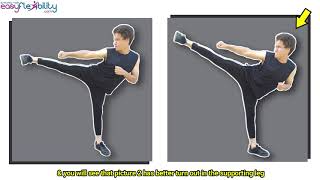
Proper execution requires maintaining a plumb-line vertical alignment—leaning neither excessively forward nor backward. Tilting forward forces excessive muscular effort to maintain leg height, while excessive backward lean creates instability. The striker should remain balanced to absorb rebound impact from the opponent's body without being displaced backward.
Extension Path: Straight Line Delivery
During the final extension, the kicking leg must travel in a straight line to the target without angular deviation. The striker's body position should support this linear trajectory, with the supporting leg anchoring balance throughout impact. Any tilting or rotation compromises both power transfer and recovery mechanics.
How To JKD Side Kick | Core JKD Sidekick Training
Key Takeaways
- •Foundational Principle: The Line to Target
- •Footwork Setup: Crossing and Clearing
- •Chamber Mechanics: Height and Efficiency
- •Penetration and Intent Through Target
Ming delivers the details on a successful, powerful JKD sidekick - and the Core JKD short range side kick. Highlighting the key elements that will get you to execute this kick with a little added detail from Savate for power, speed, and function. 15% off our training videos is still in effect. Use discount code: summer15 Find them on gumroad here: https://corejkd.gumroad.com Have I answered questions or given you something new to think about regarding the Core JKD sidekick for self defense? A note on the kicking shield: I found out they don't make them anymore. Your best bet is to search for Century Powerline Force Shield on ebay and the like. Let me know about other questions you may have about self defense training. @@@@@@@@@@@@@@@@@@@@@@@@@@@ Follow our videos on other self defense training topics on Facebook: https://www.facebook.com/corejkd If you'd like to become a supporter our channel, please go to our PATREON page at: https://www.patreon.com/corejkd For more information about our European Headquarters in Germany, check out Core JKD.de Core JKD’s Instagram: https://www.instagram.com/corejkd/ Be sure to go to CoreJKD.com and sign up for our Core JKD newsletter. =================================== Social Media Links: Core JKD’s Facebook: https://www.facebook.com/corejkd/ Core JKD’s Twitter: https://twitter.com/corejkd #corejkd #jkdsidekick #sidekick #kicking #jkd #kickingshield #kick #jkdkick #sidekickpower
Related Techniques
Frequently Asked Questions
What does this video teach about oblique back side kick?
This video covers foundational principle: the line to target, footwork setup: crossing and clearing, chamber mechanics: height and efficiency. It provides detailed instruction from corejkd.
How long does it take to learn oblique back side kick?
The basic mechanics can be understood in a single session, but developing reliable execution requires consistent drilling over weeks of practice. This 7-part breakdown helps structure your training by isolating each phase of the technique.
What are the key details for finishing oblique back side kick?
Proper execution requires maintaining a plumb-line vertical alignment—leaning neither excessively forward nor backward. Tilting forward forces excessive muscular effort to maintain leg height, while excessive backward lean creates instability. The striker should remain balanced to absorb rebound impact from the opponent's body without being displaced backward.