Listen to Your Body, Not Instructions
Before learning technique, practitioners should assess their body's natural mechanics through two simple questions: does the body prefer forward-backward or side-to-side leg movement, and does it respond better to heel or lateral foot pressure? The human body is structurally designed to handle force along joints rather than across them, a principle that has governed walking, running, and jumping throughout life.
Alignment Principle: Force Through Joints
The side kick must respect the body's biomechanical design by directing pressure along the ankle, knee, and hip joints rather than across them. Applying force laterally across these joints invites injury and diminishes power output. This principle becomes increasingly critical as kick height increases, requiring greater body rotation to maintain proper alignment.
The Pivot Rule: Height Demands Rotation
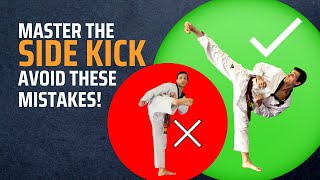
A fundamental rule governs side kick execution: the higher the target, the more the body must pivot. Low-level kicks to the ankles and shins may tolerate incomplete rotation, but medium and high kicks require full body rotation to generate power and prevent injury. Incomplete pivots create lateral stress on joints during both offensive delivery and defensive situations.
Tip One: Rotate the Support Foot
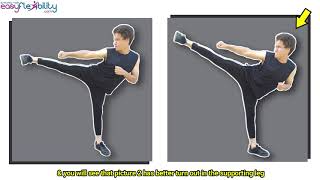
The support foot must turn to align force along its length rather than across its lateral edge. This rotation generates power for offensive techniques and absorbs impact safely if the kick is caught or redirected. Failure to rotate the support foot compromises both power generation and the ability to safely reset after a blocked or countered kick.
Tip Two: Strike With the Heel
The heel delivers superior power and structural integrity compared to striking with the blade of the foot. Heel strikes create bone-on-muscle alignment similar to stomping motion, distributing force safely through the leg. Blade strikes concentrate pressure on the ankle and knee joints, creating discomfort and reducing power transfer to the target.
Tip Three: Align the Hip and Buttocks
The most critical aspect of the side kick involves aligning three key points: the heel, buttocks, and torso in a single plane toward the target. Protruding hips prevent engagement of the body's largest power-generating muscles and create vulnerability if the kick is countered or blocked. Proper hip alignment maximizes power output and distributes defensive impact safely through the core.
Three Timing Options for the Pivot
Practitioners can execute the pivot in three ways: pivot first then kick second for controlled power; pivot halfway while completing the kick for a balanced approach; or send the foot forward quickly and rotate the support foot at impact for speed-focused execution. Regardless of timing method chosen, the support foot must complete its full rotation by the moment of impact to generate maximum power and prevent injury.
Common Consequences of Incomplete Rotation
Failure to fully rotate during the side kick results in four primary problems: significantly reduced striking power, increased susceptibility to being knocked off balance, poor technique appearance, and high injury risk to the ankles, knees, and hips. Complete body rotation at impact ensures the kicking leg feels as strong and stable as basic stomping or swinging motions.
How to Side Kick - Tips for Power and Balance
Key Takeaways
- •Listen to Your Body, Not Instructions
- •Alignment Principle: Force Through Joints
- •The Pivot Rule: Height Demands Rotation
- •Tip One: Rotate the Support Foot
►Click here for my Kicking Basics Course! http://www.senseiando.com/kicking-basics-course/ Bad side kicks... you see them everywhere. Movies, commercials... even in kickboxing and martial arts classes! Here are three tips to help anyone learn how to side kick with more power and better balance. First off, I'm a big fan of proper body alignment. In fact, I think your body can teach you more than your instructor! Here are two questions to ask your body about the side kick... QUESTION 1: Should I kick sideways or towards my rear? Try this: Swing your leg forward and backward. Now side to side. Which feels better? QUESTION 2: Should I kick with my heel or the blade? Try this: Stomp on your heels. Now on the side of your foot-- actually, don't do that! It hurts! If your body is like mine, you just learned this about the side kick-- 1) A side kick is not executed to the side. 2) You should kick with the heel, not the side of your foot. The reason for both is simple— Your foot, knee, and hip deliver and receive pressure along the joints, not across them. Putting pressure across your ankle, knee, or hip is a surefire way to get injured. As a rule, the higher you kick, the more you should turn your body. Based on all that, here are three side kick tips direct from your body-- 1: Turn your support foot so the line of force runs along the foot, not across the foot. 2: Kick with the heel. When I kick with my heel, there’s bone and muscle behind it. 3: Get your butt in line. Align your glutes between your torso and the kicking foot. If you remember nothing else, remember this— aim your butt, kick their butt! The key to accomplishing all of this is in executing a full pivot. I leave the timing up to you. Just make sure that when your foot strikes the target, your body is in the same natural position as when you swing your leg and stomp your heel. The big lesson? Listen to your body. It can teach you a lot more than just how to side kick! :) 👍🏼Thanks for LIKING and SUBSCRIBING! 🔔 http://bit.ly/SenseiAndo Keep fighting for a happy life! 🥧 BUY ME A PIECE OF PIE: (Thank you!) https://paypal.me/SenseiAndo 🖥️ ONLINE VIDEO COURSES https://www.senseiando.com/school/ 💪🏼TRAIN WITH ANDO (Online or in-person): https://www.senseiando.com/train-with-ando/ ✅7-DAY MARTIAL ARTS CHALLENGE! https://www.senseiando.com/updates/ ▶︎ Website: http://www.senseiando.com ▶︎ Instagram: https://www.instagram.com/ando_mierzwa/ ▶︎ Facebook: https://www.facebook.com/SenseiAndo 👕 Tee Shirts: Shop: https://teespring.com/stores/happy-life-martial-arts ❌WARNING: The advice and movements shown in this video are for informational and educational purposes only. Consult a doctor before engaging in any exercise or martial arts program. #sidekick #howtokick #kickboxing #karate
Related Techniques
Frequently Asked Questions
What does this video teach about drop side kick?
This video covers listen to your body, not instructions, alignment principle: force through joints, the pivot rule: height demands rotation. It provides detailed instruction from Ando Mierzwa.
How long does it take to learn drop side kick?
The basic mechanics can be understood in a single session, but developing reliable execution requires consistent drilling over weeks of practice. This 8-part breakdown helps structure your training by isolating each phase of the technique.
What are the key details for finishing drop side kick?
Practitioners can execute the pivot in three ways: pivot first then kick second for controlled power; pivot halfway while completing the kick for a balanced approach; or send the foot forward quickly and rotate the support foot at impact for speed-focused execution. Regardless of timing method chosen, the support foot must complete its full rotation by the moment of impact to generate maximum power and prevent injury.