Introduction and Guest Appearance
The instructor welcomes a special guest to discuss two fundamental kicking techniques. This collaborative episode will compare the side kick and axe kick, two of the most effective striking tools in martial arts.
Side Kick Fundamentals: Range and Power
The side kick is praised for its exceptional range and power generation. It utilizes the entire lower body musculature, employing the same explosive mechanics used in jumping movements.
Side Kick Mechanics: Foot Position and Alignment
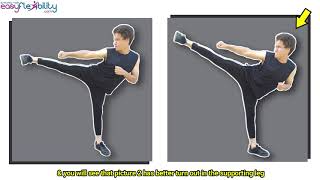
Proper side kick execution requires pointing the foot away from the target while directing the heel toward the opponent. The striker maintains a straight alignment from eyes through shoulder, hip, knee, and foot at full extension.
Side Kick Impact Surfaces: Heel vs. Blade
The side kick can be delivered using either the heel or the bladed edge of the foot, both providing solid impact with minimal give. Striking with the ball of the foot or toes should be avoided, as these surfaces compress on impact and reduce power transmission.
Side Kick Setup and Execution
An effective setup involves an exaggerated overhand motion to elevate the opponent's hands, followed by stepping the base foot out and driving the side kick inward with a tight, chambered knee. This creates distance and timing advantages for successful technique application.
Axe Kick Overview: Concept and Applications
The axe kick, known as mae keage in Japanese Kyokushin Karate, is an overhead descending strike that surprises opponents due to its unconventional trajectory. The technique delivers devastating power by directing the heel downward into targets such as the face, neck, collarbone, or temple.
Axe Kick Variations: Inside-Outside Mechanics
Two primary variations exist: an outside-to-inside path and an inside-to-center path, with the latter being more commonly employed. Both variations maintain heel contact as the primary striking surface throughout the technique.
Axe Kick Power Generation: The Descent Phase
The majority of power in the axe kick derives from the downward acceleration phase, not the lifting phase. A common error is raising the kick with full intensity while allowing gravity to control the descent; proper execution requires driving force throughout the entire downward motion.
Axe Kick Stationary Practice and Flexibility Development
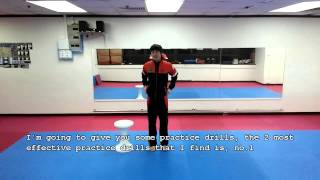
Initial training involves repetitive single-leg practice from a stationary stance, alternating sides to build muscle memory and balance. Practitioners should target 100 consecutive repetitions per leg to develop the flexibility and conditioning necessary for effective axe kick performance.
Axe Kick Dynamic Practice: Movement Integration
Progressive training includes executing the kick while moving forward in a straight line, maintaining momentum through successive repetitions. This develops the ability to apply the technique while maintaining footwork and transitional movement.
Axe Kick Bag Work and Partner Drills
Heavy bag practice ensures accurate center-line targeting and prevents the kick from slipping laterally. Partner drills focused on vital point accuracy—nose, collarbone, and temple—develop precision striking while emphasizing controlled contact to prevent injury.
Axe Kick Setup: Push Kick Deception
An effective fighting setup involves throwing multiple push kicks at varying speeds to condition the opponent's expectations. After the opponent commits to defending or catching a push kick, the striker executes the axe kick using the same approach motion, catching the opponent unprepared.
Axe Kick V.S Side Kick With Sensei Seth
Key Takeaways
- •Introduction and Guest Appearance
- •Side Kick Fundamentals: Range and Power
- •Side Kick Mechanics: Foot Position and Alignment
- •Side Kick Impact Surfaces: Heel vs. Blade
I am very excited to share this collab between @SenseiSeth and @RGMARTIALARTS. In this video you will learn more about the favourite techniques of both Sensei Seth and Senpai Roland! With tips, drills, and set-ups for both techniques, you will learn about two of the deadliest kicks in martial arts! Make sure to subscribe to: @SenseiSeth 🔥✅IF YOU LIKE THIS VIDEO, 💥SMASH💥that LIKE button✅ 🔥✅IF YOU KNOW SOMEONE WHO WOULD BENEFIT FROM THIS KNOWLEDGE, ♻️𝘚𝘏𝘈𝘙𝘌 ♻️ THIS VIDEO WITH ALL OF YOU FRIENDS, FAMILY, AND ACQUAINTANCES! ✅🔥 ---------------------------------------------------------------------------------------------------------------- STAY SAFE AND HEALTHY GUYS! KEEP UP THE GRIND🔥👊🏻 #RGMARTIALARTS #SenseiSeth #Axekick #Sidekick
Related Techniques
Frequently Asked Questions
What does this video teach about bent-body side kick?
This video covers introduction and guest appearance, side kick fundamentals: range and power, side kick mechanics: foot position and alignment. It provides detailed instruction from RG MARTIAL ARTS.
How long does it take to learn bent-body side kick?
The basic mechanics can be understood in a single session, but developing reliable execution requires consistent drilling over weeks of practice. This 12-part breakdown helps structure your training by isolating each phase of the technique.
What are the key details for finishing bent-body side kick?
Heavy bag practice ensures accurate center-line targeting and prevents the kick from slipping laterally. Partner drills focused on vital point accuracy—nose, collarbone, and temple—develop precision striking while emphasizing controlled contact to prevent injury.