Introduction and Terminology
Karl Van Roon introduces the back kick, also known as the back piercing kick. The technique is called du cha jedegi (or du cha ji) in Korean martial arts and ushirogeri in Japanese karate. Understanding the correct terminology across disciplines is essential for comprehensive martial arts training.
Contact Points and Striking Surfaces
The back kick can be executed using either the heel or the foot sword (blade of the foot) as the primary contact point. In Taekwondo, the foot sword is called bao kal, while karate practitioners refer to it as yosokuto. Selecting the appropriate striking surface depends on the specific application and target.
Basic Stance and Setup
The technique begins from a parallel ready stance (narani jumbisogi), with feet positioned at shoulder-width apart. From this neutral position, the practitioner lifts the knee while extending the hips backward to generate power. This foundational positioning ensures proper alignment and balance throughout the execution.
Upper Body Mechanics and Foot Position
The chest leans forward in opposition to the direction of the kick, similar to a squat motion, while the toes point downward rather than upward. This positioning differentiates the back kick from a side kick and allows the foot sword to make clean contact. Proper foot angle maximizes striking efficiency and reduces the risk of injury.
Lower Body Engagement and Loading
The practitioner bends the knees and sits the hips back while maintaining a broad chest to avoid collapse through the upper body. The kick loads high with the knee and toes pointed downward before driving perpendicular to the target. This loading phase prevents the leg from catching obstacles and ensures maximum force transfer.
Recovery Mechanics
The heel retracts toward the buttocks as the kick executes, followed by a controlled reload to the starting position. The dramatic loading movement prevents the leg from swinging upward uncontrollably during execution. Proper recovery maintains balance and readiness for subsequent techniques or defensive positioning.
Turning Variation and Setup
The turning version of the back kick begins with a pivot of the front foot, directing the heel toward the target. This setup resembles the reverse turning kick but differs in execution—the back kick drives straight rather than utilizing circular arm momentum. The chest remains oriented opposite to the direction of the kick throughout the rotation.
Advanced Body Control in Turning Execution
When executing the turning back kick, the elbow drives directly backward rather than swinging in a circular pattern. The hips extend outward while maintaining a broad chest and forward lean, positioning the body for maximum power transfer. Controlled arm movement prevents excessive momentum that would compromise the straight-line trajectory of the strike.
Tutorial: Back Kick AKA Back Piercing Kick (뒷차지르기. 後ろ蹴り)
Key Takeaways
- •Introduction and Terminology
- •Contact Points and Striking Surfaces
- •Basic Stance and Setup
- •Upper Body Mechanics and Foot Position
Tutorial: Back Kick AKA Back Piercing Kick (뒷차지르기. 後ろ蹴り) In this video Carl van Roon looks at key considerations for the effective execution of the back piercing kick. This tutorial covers a step by step method for how to throw this technique in it's most simple form and then explores the back kick versus turning side kick and the strengths and weaknesses of each kick. Thank you for visiting Van Roon Martial Arts! Please Like, Comment and Subscribe! Facebook Page: https://www.facebook.com/vanroon.mart... Instagram: https://www.instagram.com/vanroonmart... FOR BOOKINGS EMAIL: [email protected] Tutorial by Carl van Roon 11 x World Champion - International Coach - Masters Degree in Sport Science
Related Techniques
Frequently Asked Questions
What does this video teach about drop back kick?
This video covers introduction and terminology, contact points and striking surfaces, basic stance and setup. It provides detailed instruction from Van Roon Martial Arts.
How long does it take to learn drop back kick?
The basic mechanics can be understood in a single session, but developing reliable execution requires consistent drilling over weeks of practice. This 8-part breakdown helps structure your training by isolating each phase of the technique.
What are the key details for finishing drop back kick?
The turning version of the back kick begins with a pivot of the front foot, directing the heel toward the target. This setup resembles the reverse turning kick but differs in execution—the back kick drives straight rather than utilizing circular arm momentum. The chest remains oriented opposite to the direction of the kick throughout the rotation.
Related videos
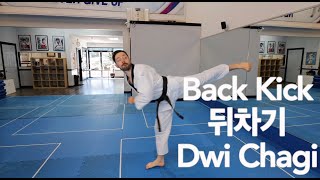
Taekwondo Fundamentals: Back Kick
TaekwondoShawn

Be More CONFIDENT With Your SPINNING Back Kick Set Up
MMA COACH
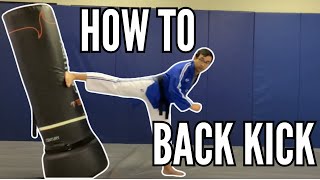
How To Back Kick Tutorial | Catholic Karate Lesson
ᴶᴹᴶ Dojo Go ! | Online Kids Martial Arts & Karate
How to Do a Taekwondo Back Kick
Taekwondo Guide
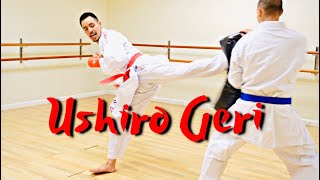
USHIRO GERI TUTORIAL (Spinning Back Kick)
ULTIMATE KARATE