Introduction to the Back Kick
The back kick is widely recognized as one of the most powerful striking techniques in Taekwondo. This technique leverages the entire body's posterior chain, particularly the glutes, while maintaining ground contact for maximum leverage and force generation.
Practical Applications
The back kick serves multiple purposes across competition, demonstration, and self-defense contexts. In sparring, it yields higher point values than front turning kicks; in demonstrations, it can penetrate multiple boards; and in self-defense, it functions effectively as a stomp, shin rake, or groin strike.
Warm-Up Exercise 1: Forward-Backward Leg Swings
Practitioners should perform leg swings while holding a stable support, swinging the leg forward and then directly backward through full range of motion. This exercise primes the muscles and nervous system specifically for the back kick's movement pattern while maintaining proper posture.
Warm-Up Exercise 2: Squat Jacks
Squat jacks activate the glutes and quadriceps by combining a jumping jack with a full squat descent. The practitioner maintains an upright torso and engaged glute muscles throughout each repetition, preparing the lower body for the explosive power requirements of the back kick.
Ground-Level Technique Foundation
From an all-fours position, the practitioner looks over their shoulder and chambers the kicking leg before extending it straight backward. The foot blade (heel edge) must be properly positioned with toes pulled inward, while the glutes remain maximally engaged throughout the extension.
Standing Technique with Support
The practitioner faces the target, rotates the hips to face away while looking over the shoulder, and maintains light contact with a support structure. The sequence progresses from head positioning through shoulder and hip rotation, with the knee chambering close to the body before full extension.
Common Error: Excessive Hip Opening
A critical mistake occurs when practitioners open the hips excessively, transforming the back kick into a side kick. Proper execution requires closing the same-side shoulder during the kick, which maintains body alignment and maximizes glute engagement at point of impact.
Independent Execution
From a fighting stance facing the target, the practitioner rotates away while maintaining visual contact, chambers the knee, and extends straight backward with maximum glute compression. The recoil completes the technique, preparing the practitioner for immediate follow-up movements.
Timing Impact for Desired Effect
The practitioner must determine whether to generate maximum impact force by achieving near-full leg extension at contact, or maximum pushing power by extending through the target. Full extension at impact creates greater damage, while bent-knee extension creates greater displacement.
Direct Path Principle
The most efficient trajectory from chamber to target requires a straight, direct line without unnecessary downward scooping or arcing motions. This minimizes distance traveled, maximizes speed, and ensures the technique reaches its intended target without wasted movement.
Taekwondo Fundamentals: Back Kick
Key Takeaways
- •Introduction to the Back Kick
- •Practical Applications
- •Warm-Up Exercise 1: Forward-Backward Leg Swings
- •Warm-Up Exercise 2: Squat Jacks
Back Kick 뒤차기 Dwi Chagi is arguably one of the strongest kicks! Training a good Back Kick will benefit your 'power' demonstration skills, single leg strength, it's good for self defence (Great for stomping toes and kicking the groin!🙃) and also GREAT for Kyorugi (Competitive Sparring). Let's look at stretches, ways to practice, and some muscle building exercises to improve this kick! Check it out.👊
Related Techniques
Frequently Asked Questions
What does this video teach about drop back kick?
This video covers introduction to the back kick, practical applications, warm-up exercise 1: forward-backward leg swings. It provides detailed instruction from TaekwondoShawn.
How long does it take to learn drop back kick?
The basic mechanics can be understood in a single session, but developing reliable execution requires consistent drilling over weeks of practice. This 10-part breakdown helps structure your training by isolating each phase of the technique.
What are the key details for finishing drop back kick?
The practitioner must determine whether to generate maximum impact force by achieving near-full leg extension at contact, or maximum pushing power by extending through the target. Full extension at impact creates greater damage, while bent-knee extension creates greater displacement.
Related videos
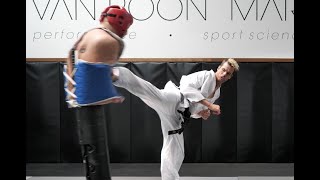
Tutorial: Back Kick AKA Back Piercing Kick (뒷차지르기. 後ろ蹴り)
Van Roon Martial Arts
Be More CONFIDENT With Your SPINNING Back Kick Set Up
MMA COACH
How To Back Kick Tutorial | Catholic Karate Lesson
ᴶᴹᴶ Dojo Go ! | Online Kids Martial Arts & Karate
How to Do a Taekwondo Back Kick
Taekwondo Guide
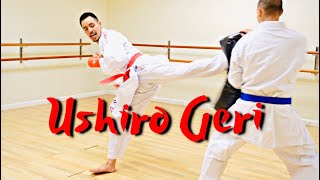
USHIRO GERI TUTORIAL (Spinning Back Kick)
ULTIMATE KARATE