Foundation of Kihon Training
Kihon forms the foundation of all karate development, with flexibility serving as the base upon which kihon is built. Moving kihon (idogeko) develops from static kihon, kata develops from moving kihon, and kumite—the lifeblood of karate—develops from kata. Every training element outside the actual competition, including footwork patterns, combination drilling, and repetition defense work, constitutes kihon training.
Quality Over Quantity in Technique Repetition
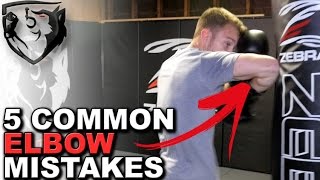
Executing one hundred repetitions with poor form develops detrimental habits rather than proficiency. Practitioners must maintain technical sharpness throughout training; stopping at fifty correct repetitions is superior to completing one hundred repetitions where ninety-eight contain errors. Laziness in practice, such as allowing hands to connect during elbow techniques, creates ingrained muscle memory that transfers to kumite.
The Five Ranges of Combat Distance
Kyokushin recognizes five distinct ranges: kicks (long range), punches (mid-range), head butt/elbow range (close range), standing grappling, and ground grappling. The elbow operates effectively only within head butt range; if proper distance prevents a head butt without forward momentum, that distance is too far for an effective elbow strike. Using head butt proprioception as a reference point develops accurate distance perception for elbow techniques.
Scapular Retraction and Extension
Proper scapular retraction significantly extends the reach of elbow strikes while maintaining proper mechanics. Without scapular retraction, the elbow remains passive and ineffective; drawing the scapula back creates distance separation that allows maximum extension upon strike delivery. This subtle but vital movement transforms the technique from a weak, arm-only movement to a powerful, full-body technique.
Correct Elbow Alignment and Contact Point
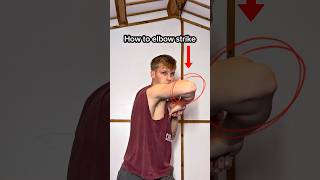
The striking surface of the elbow is the ulna bone at its tip, which must remain aligned with the knife hand (shuto) regardless of strike direction—rising, horizontal, or falling. The radius bone sits internally while the ulna positions externally; striking with the ulna tip produces no hand movement or injury, unlike improper fist alignment. All variations—rising elbows, cutting elbows, and whipping elbows—must maintain this consistent alignment.
Weight Distribution and Balance Control
Weight must sink onto the leg corresponding to the striking arm; a right elbow strike requires weight settlement onto the right leg, and a left elbow strike onto the left leg. Many practitioners unconsciously shift weight laterally or allow the head to sway during elbow execution, compromising balance and power. Maintaining proper weight distribution proves essential in martial arts application, where losing balance directly results in losing the encounter.
Martial Arts Versus Sport Competition
Martial arts and sport karate tournaments represent fundamentally different disciplines with opposing primary focuses. Sport karate emphasizes constant attacking, while traditional martial arts emphasizes defense as the primary objective, with techniques learned to defend and then finish the opponent. This distinction explains why balance matters absolutely in martial arts—a loss of balance in self-defense is a loss of the encounter—while tournament competition may reset the situation.
Kihon Series. Hiji-Ate ~ Elbows. Kyokushin Karate Advanced Training with Shihan Cameron Quinn
Key Takeaways
- •Foundation of Kihon Training
- •Quality Over Quantity in Technique Repetition
- •The Five Ranges of Combat Distance
- •Scapular Retraction and Extension
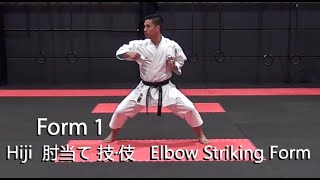
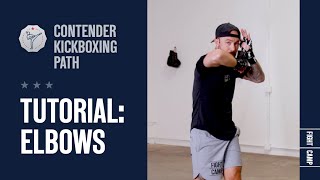
Continuing with the Kihon series, today we are looking at elbow strikes, Hiji-Ate, also called Empi. Most Kyokushin dojos around the world teach a number of elbow techniques. There are also a number of different elbows strikes in the kata. Here, I am concentrating on the single elbow that was part of the standing Kihon training as taught by Sosai at Honbu during my time there. If you haven't already done so, hit Subscribe and the little bell next to it so you know when a new video has been uploaded. But most important of all, please share with your friends so we can get the message out. And if you enjoy the content, check out my Patreon page and become a Patreon Family member where you get extra videos, downloads, discounts, and opportunities especially for my family members. https://bit.ly/CQPatreon
Related Techniques
Frequently Asked Questions
What does this video teach about hiji chudan mae ate?
This video covers foundation of kihon training, quality over quantity in technique repetition, the five ranges of combat distance. It provides detailed instruction from Cameron Quinn Budo Training.
How long does it take to learn hiji chudan mae ate?
The basic mechanics can be understood in a single session, but developing reliable execution requires consistent drilling over weeks of practice. This 7-part breakdown helps structure your training by isolating each phase of the technique.
What are the key details for finishing hiji chudan mae ate?
Weight must sink onto the leg corresponding to the striking arm; a right elbow strike requires weight settlement onto the right leg, and a left elbow strike onto the left leg. Many practitioners unconsciously shift weight laterally or allow the head to sway during elbow execution, compromising balance and power. Maintaining proper weight distribution proves essential in martial arts application, where losing balance directly results in losing the encounter.