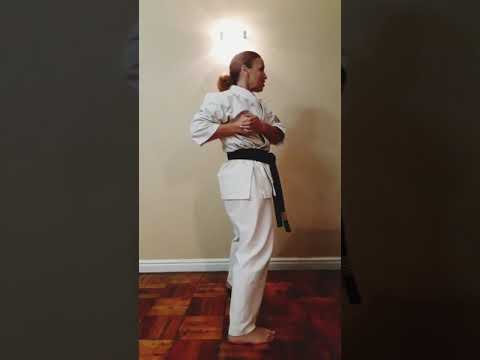
Mae hiji ate
0
Hiji Chudan Mae Ate·R.R karate
Translation: middle forward elbow strike
Hiji Chudan Mae Ate (Middle Forward Elbow Strike) is a Kyokushin Karate forward-driving elbow strike to the midsection, driving the point of the elbow into the solar plexus. [1] Mas Oyama, founder of Kyokushin Karate, demonstrated this as a fundamental combat technique requiring proper body mechanics and spirit. [1] The technique emphasises full-body power generation through hip rotation and proper weight transfer. [1]
Kyokushin practitioners train this strike for bare-knuckle effectiveness, making it one of the most practically tested karate techniques. [1]
Kyokushin Karate; founded by Masutatsu Oyama (1964). [1]
Used in Kyokushin full-contact karate tournaments
No images yet for this technique.
Sign in to suggest an image.
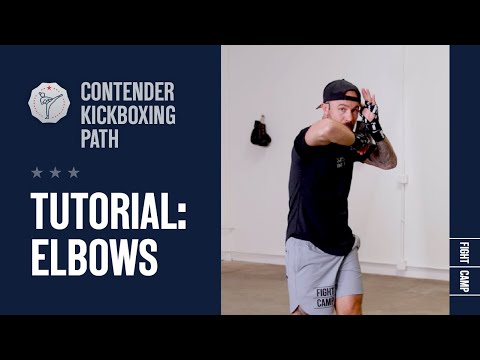
EXPLORE & SHOP FIGHTCAMP: https://bit.ly/3hGyE1o Welcome to another tutorial from FightCamp's level two Kickboxing Path…
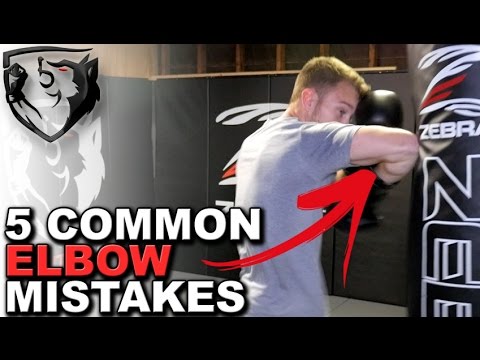
This tutorial explains 5 common mistakes when throwing the Muay Thai elbow strike, and how to properly cut your opponent…
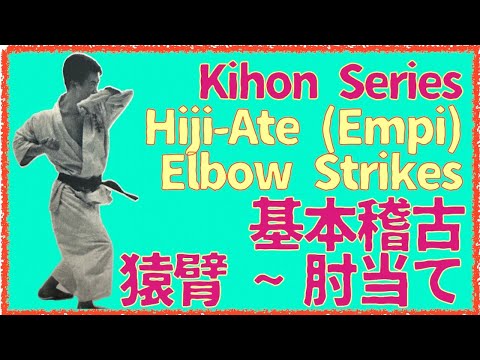
Continuing with the Kihon series, today we are looking at elbow strikes, Hiji-Ate, also called Empi. Most Kyokushin dojo…
Age 12 to Senior
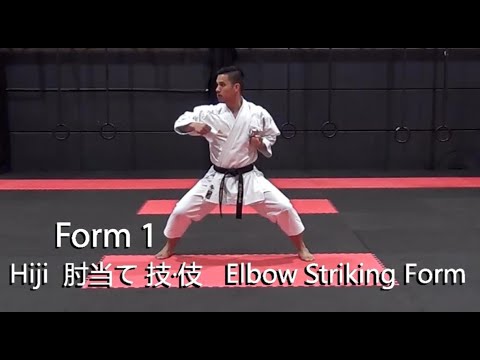
Form 1 Hiji-Ate 肘当て 技·伎 Elbow Striking Form Form 1 demonstrates a series of simple but effective elbow st…
Hiji Chudan Mae Ate (middle-level forward elbow strike) is a fundamental elbow technique targeting the torso—chest, ribs, or mid-section—delivered with rotational body mechanics for maximum force. According to Kyokushin Greenpoint Cape Town, the strike originates from the back with both fists stacked, employing full-body rotation to generate power while striking at chest level (chudan). FightCamp describes a similar rear elbow across variant where the striker shifts weight from back leg to front while rotating the torso, emphasizing that the other hand remains up defensively since elbows require close-range positioning. Cameron Quinn Budo Training provides extensive technical detail, stressing that the striking surface is the ulna tip—never the muscular part of the forearm—and that the technique must remain in line with the shuto (knife hand). Quinn emphasizes scapular retraction to extend range and proper weight distribution onto the corresponding leg (right leg for right elbow, left for left). All instructors agree on the importance of body rotation, defensive hand positioning, and treating the elbow as a close-range (head-butt distance) technique. Quinn uniquely details two-person drills for reaction training and notes that elbows remain equally effective in sport and self-defense contexts, though they are less common in regulated sports due to their devastating impact.
Synthesized from 4 instructors
No instructional courses yet for this technique.
Sign in to suggest a course.
Risk of injury to the person this technique is applied to
Full-power Kyokushin karate strike trained for bare-knuckle impact
Skill level needed to execute this technique reliably
Whether this technique is allowed under major competition rule sets
This Is Karate (Oyama, 1965)
description, historyOrigin: sourced from Oyama, M
description, historyOrigin: sourced from Oyama, M
Strong hands and wrists (conditioned through makiwara training)
Good hip rotation
Solid stance
Hiji chudan mae ate (middle-level forward elbow strike) drives the elbow straight forward into the solar plexus or ribs — a short-range thrusting elbow. Used in clinch range and self-defense. (Oyama, This Is Karate; Nakayama, Dynamic Karate)
When you elbow, you have to be close to your opponent and target, making you very vulnerable. Keeping your hands up higher than your eyebrow bone provides better protection while in close range.
When in elbow range, get into the habit of throwing with your palm out on the forehead or palm in—either way protects your face while you throw the elbow.
Scapular retraction is vital because it separates and extends your elbows closer to the target, significantly increasing the reach and power of your strike, according to Shihan Cameron Quinn.
The strike must always be in line with your knife hand—keep your little finger up so the technique stays aligned. Avoid turning your hand in a way that pushes the muscle out instead of the bone.
Hiji Chudan Mae Ate (Middle Forward Elbow Strike) is a Kyokushin Karate forward-driving elbow strike to the midsection, driving the point of the elbow into the solar plexus. Mas Oyama, founder of Kyokushin Karate, demonstrated this as a fundamental combat technique requiring proper body mechanics and spirit.
Hiji Chudan Mae Ate is a fundamental technique of Kyokushin Karate as codified by Masutatsu Oyama. Kyokushin's emphasis on full-contact fighting requires every strike to be trained for maximum real-world effectiveness.
Unified MMA: legal — Legal — all elbow strikes permitted; WBC/Boxing: banned — All elbow strikes prohibited in boxing; WKF: banned — Elbow strikes not a legal technique in sport karate; Kyokushin: banned — Elbow strikes prohibited; WT: banned — Prohibited; ITF: banned — Prohibited; WAKO: banned — Prohibited in all kickboxing formats; K: banned — 1/GLORY — Prohibited — key difference from Muay Thai; IFMA: legal — Legal — elbows are a core Muay Thai weapon (art of eight limbs)
Danger rating 7/10. Full-power Kyokushin karate strike trained for bare-knuckle impact
The standard setup chain: Stance → Hip rotation → Hiji Chudan Mae Ate → Recovery.
Standard counters include: Block and counter / Distance management / Evasion.
Common variants: From front stance; From fighting stance; As counter-attack.
Used in Kyokushin full-contact karate tournaments
Top errors to watch for: Insufficient hip rotation / Tensing too early / Poor stance.
The Hiji Chudan Mae Ate is also known as Hiji Chudan Mae Ate, Middle Forward Elbow Strike.