Elbow Lever from Half Guard
0
Grinding Elbow from Half Guard·South Boston BJJ
Translation: grinding elbow from half guard
MMA-specific strike developed for cage fighting. [1]
Effective in MMA ground-and-pound scenarios. [1]
Modern MMA methodology. [1]
Used in UFC and professional MMA competition
No images yet for this technique.
Sign in to suggest an image.
Stephan Kesting (http://www.grapplearts.com) shows you how to stop those guys who think that opening your closed guard b…
Stephan Kesting from http://www.beginningbjj.com shares the four most common mistakes grapplers make in the half guard. …
https://grapplersguide.com - One of the most recommended grappling learning sites http://www.gameplanworksheet.com - Bu…
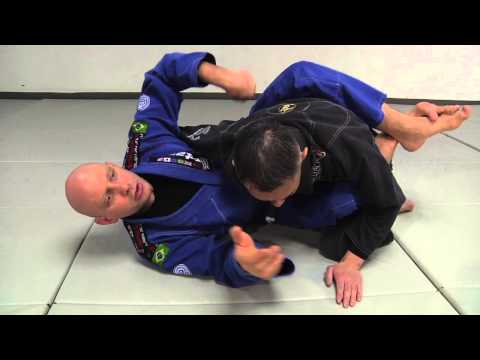
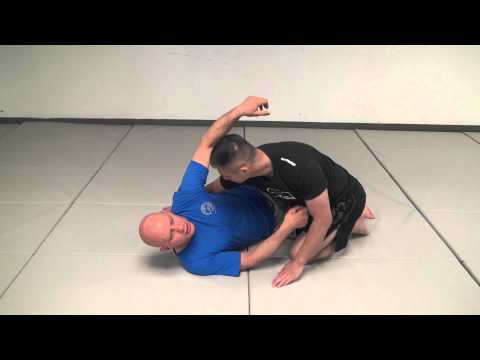
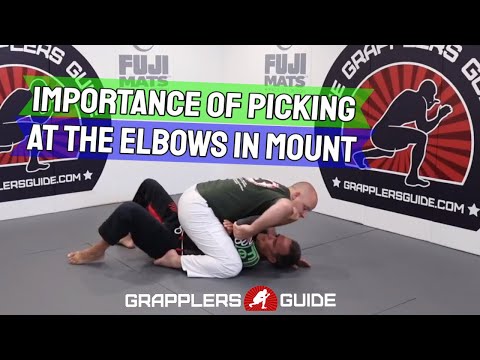
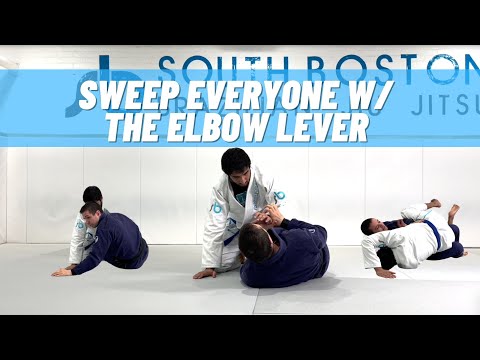
The grinding elbow from half guard represents a transitional control and sweeping mechanism employed when an opponent resists chest-to-chest positioning in half guard. South Boston BJJ emphasizes the elbow lever as a sweep alternative when opponents avoid the traditional knee lever by maintaining distance; the technique involves trapping the opponent's arm by placing one's elbow inside their armpit while maintaining a wrist grip, creating a difficult-to-break control that facilitates scooting into range for a knee lever sweep. Stephan Kesting addresses the defensive counter to elbow grinding in closed guard, outlining that opponents often resort to grinding elbows into the thighs as a blunt guard-opening method. His primary defenses involve cupping the elbows from underneath to block the grind, or peeling the arms forward while driving the knees to the chest simultaneously, followed by establishing preferred grips. Kesting notes this technique is ineffective in high-level competition and suggests transitioning to alternative guard systems (butterfly, spider, half guard) renders it obsolete. The Grapplers Guide emphasizes elbow picking from mount position, where immediate recognition of elbow placement determines control strategy; selectively picking one elbow—prioritizing the bottom elbow on the direction of lean—prevents escape and establishes high-knee control. All instructors agree that elbow control fundamentally disrupts opponent mobility and creates submission opportunities through positional dominance.
Synthesized from 4 instructors
No instructional courses yet for this technique.
Sign in to suggest a course.
Risk of injury to the person this technique is applied to
MMA ground strike with significant damage potential
Skill level needed to execute this technique reliably
Whether this technique is allowed under major competition rule sets
Mixed Martial Arts: The Book of Knowledge (Penn, Cordoza & Krauss, 2007)
description, historyOrigin: sourced from Penn, B
description, historyOrigin: sourced from Penn, B
Good balance and base from ground positions
Jason Scully emphasizes that as soon as you establish mount position—not a second later—you must immediately recognize whether the opponent's elbows are in or out, because your time is precious and the longer you wait, the more opportunity they have to escape.
Jason Scully recommends picking at only one elbow rather than both simultaneously, as picking both elbows at the same time is awkward and if your opponent bumps you, you risk losing your position or even getting knocked out.
According to Jason Scully, once you control the opponent's elbows and create the right position, they cannot effectively defend against an armbar, allowing you to pick and choose which side to attack and opening up many submission options.
South Boston BJJ explains that when an opponent stays back to avoid the knee lever sweep, you can use an elbow lever by starting with a two-on-one grip, then releasing to take an outside wrist grip before bringing your elbow inside their armpit to trap their arm.
The Grinding Elbow from Half Guard is a short-range elbow strike delivered while in the top half guard position, grinding the point of the elbow into the opponent's face or temple.
MMA-specific strike developed for cage fighting.
Unified MMA: legal — Legal — all elbow strikes permitted; WBC/Boxing: banned — All elbow strikes prohibited in boxing; WKF: banned — Elbow strikes not a legal technique in sport karate; Kyokushin: banned — Elbow strikes prohibited; WT: banned — Prohibited; ITF: banned — Prohibited; WAKO: banned — Prohibited in all kickboxing formats; K: banned — 1/GLORY — Prohibited — key difference from Muay Thai; IFMA: legal — Legal — elbows are a core Muay Thai weapon (art of eight limbs)
Danger rating 7/10. MMA ground strike with significant damage potential
The standard setup chain: Position control → Grinding Elbow from Half Guard → Follow-up.
Standard counters include: Guard recovery / Escape / Block.
Common variants: Standard Grinding Elbow from Half Guard.
Used in UFC and professional MMA competition
Top errors to watch for: Poor base during execution / Over-committing.
The Grinding Elbow from Half Guard is also known as Grinding Elbow from Half Guard, Half Guard Elbow, GNP Elbow.