Introduction to Parry and Riposte Fundamentals
This lesson introduces the foundational parry and riposte action in longsword combat. The instructor establishes that multiple parrying methods exist, each with distinct advantages depending on situational context, including variations in blade angle, footwork, and distance management.
The Fendinterverso: Riposte Mechanics
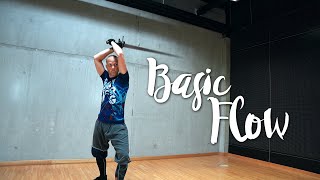
The riposte technique is the Fendinterverso, a diagonal downward cut from left to right, executed from the Dona Sinestra guard. Practitioners must generate power through full-body mechanics, coordinating hip rotation and footwork to deliver an effective counter-strike.
Transitioning Stance for Consistent Execution
The Fendinterverso must be practiced from both right and left foot-forward positions to develop consistent mechanics. When transitioning from right to left foot-forward, the cut's angle naturally widens relative to vertical, a normal variation practitioners should expect and accept.
Pota di Ferro as Defensive Foundation
The Pota di Ferro (iron door) guard provides optimal balance between offensive and defensive capabilities. From this guard, practitioners pivot their back foot and rotate their torso to transition into the frontale position, generating speed and structural stability for the parry.
Parry and Riposte Integration
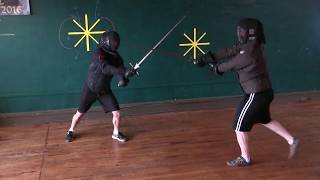
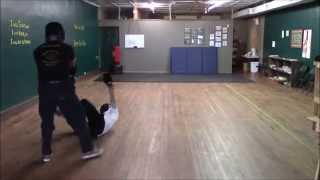
The complete action combines parrying from Pota di Ferro with an immediate Fendinterverso riposte. The defender must time the parry correctly while maintaining position control, then explosively release stored energy to execute the counter-cut.
Attacker and Defender Coordination
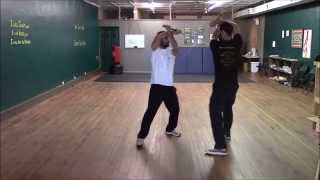
The attacker executes a descending cut with variable footwork, while the defender practices parrying at the correct moment before launching their riposte. Attack distance determines which footwork pattern the attacker employs, requiring defenders to adapt their timing accordingly.
Progressive Training Methodology
Practitioners should begin at reduced speed to internalize proper form and timing. As defensive mechanics become automatic reactions, speed gradually increases while focusing on opponent observation and precise strike timing, ensuring quality technique development over rushed progression.
Longsword Beginners Guide #4 - Parry and Riposte
Key Takeaways
- •Introduction to Parry and Riposte Fundamentals
- •The Fendinterverso: Riposte Mechanics
- •Transitioning Stance for Consistent Execution
- •Pota di Ferro as Defensive Foundation
Follow me on: PATREON - https://www.patreon.com/MalaguttiFederico Instagram - https://www.instagram.com/federicomalagutti/ Facebook - https://www.facebook.com/MalaguttiMartialArts/ Twitter - https://twitter.com/Fede_Duellist Wordpress Blog - https://fedemalablog.wordpress.com/ Tumblr - https://www.tumblr.com/blog/malaguttifederico
Frequently Asked Questions
What does this video teach about oberhau?
This video covers introduction to parry and riposte fundamentals, the fendinterverso: riposte mechanics, transitioning stance for consistent execution. It provides detailed instruction from Federico Malagutti HEMA.
How long does it take to learn oberhau?
The basic mechanics can be understood in a single session, but developing reliable execution requires consistent drilling over weeks of practice. This 7-part breakdown helps structure your training by isolating each phase of the technique.
What are the key details for finishing oberhau?
The attacker executes a descending cut with variable footwork, while the defender practices parrying at the correct moment before launching their riposte. Attack distance determines which footwork pattern the attacker employs, requiring defenders to adapt their timing accordingly.