Foundation & Hand Placement
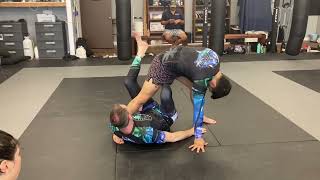
The Crocodile begins from a base position with both hands placed flat on the mat. This foundational stance establishes the starting point for all subsequent movement patterns and weight distribution.
Opposite Limb Coordination
The core principle of The Crocodile is moving opposite hand and opposite foot simultaneously. When the left hand moves forward, the right foot follows; when the right hand advances, the left foot steps. This contralateral pattern maintains balance and forward progression.
Progressive Walking Pattern
The practitioner initiates movement by choosing one side and extending the hand while stepping with the opposite leg. Each successive repetition covers greater distance, gradually lowering the body position until reaching a fully extended horizontal posture. The progression creates an expanding range of motion with each cycle.
Four Corners Drill
From the fully extended position, the practitioner threads the extended leg through the body to rotate 90 degrees, facing a new direction. This four-quadrant rotation—alternating legs with each turn—develops spatial awareness and reinforces the opposite limb coordination principle from multiple angles.
Reverse Movement
The Crocodile can be executed in reverse by moving the hand backward while stepping the opposite foot back. This backward variation maintains the same contralateral coordination while repositioning the body away from threat or opponent pressure.
Application from Side Mount
From side mount position, the Crocodile prevents the opponent's escape when they attempt to shrimp and replace guard. By advancing with opposite hand and knee while maintaining pressure, the top player can follow the opponent's movement and block their knee escape route.
Positional Transitions
The Crocodile enables the practitioner to shift laterally and vertically within side mount, adapting to opponent resistance and pressure changes. By threading legs and switching hand positions using the four corners principle, the practitioner maintains control while repositioning around defensive obstacles.
Continuous Flow & Adaptation
The technique functions as a dynamic, flowing sequence rather than isolated movements. The practitioner continuously applies opposite limb coordination while adjusting direction and pressure based on opponent response, creating persistent positional control.
WARMUP 007_The Alligator (Jacare)
Key Takeaways
- •Foundation & Hand Placement
- •Opposite Limb Coordination
- •Progressive Walking Pattern
- •Four Corners Drill
Related Techniques
Frequently Asked Questions
What does this video teach about the crocodile?
This video covers foundation & hand placement, opposite limb coordination, progressive walking pattern. It provides detailed instruction from SundarJiuJitsu.
How long does it take to learn the crocodile?
The basic mechanics can be understood in a single session, but developing reliable execution requires consistent drilling over weeks of practice. This 8-part breakdown helps structure your training by isolating each phase of the technique.
What are the key details for finishing the crocodile?
The Crocodile enables the practitioner to shift laterally and vertically within side mount, adapting to opponent resistance and pressure changes. By threading legs and switching hand positions using the four corners principle, the practitioner maintains control while repositioning around defensive obstacles.
Related videos
Advanced Jiu-jitsu - Alligator Choke
Gracie Humaita Jiujitsu in Brownsville
49 Back Mount Entries in Less Than 6 Min - Jason Scully BJJ Grappling
The Grapplers Guide by Jason Scully
Mounted Rubber Guard - 10th Planet Jiu Jitsu
Brandon Mccaghren
10th Planet Fundamentals Half Guard Stomp & Super Stomp 2 of 2 Heather
10th Planet Denver Jiu Jitsu
Ways to use Mini Stomp, 10th Planet Orange Park Jiu Jitsu
10th Planet Orange Park