Establishing the Overback Grip Foundation
The instructor begins with the defender in an overback grip position, establishing the baseline for flattening techniques. Understanding the opponent's defensive options—primarily attempting to extend away or maintain a knee shield—is essential before executing any flattening pass.
Defeating a Lazy Knee Shield
When the defender allows their knee to drift away from the inside position, the instructor exploits this vulnerability by chasing the opponent's far hip with their knee. This creates a knee-to-elbow connection that secures hip and chest control, establishing dominance before advancing to the upper body.
The Cross Face as Distraction and Entry
The cross face serves dual purposes: it distracts the defender while creating an opportunity to establish inside bicep control. When the defender successfully defends the cross face by following upward, the instructor pivots to using the feint as cover for transitioning inside the opponent's bicep.
Controlling the Far Shoulder with Inside Bicep Tie
Once inside the bicep, the instructor uses a backhand frame on their own head to crash the defender's far shoulder to the mat. This position prevents shrimping, shoulder elevation, and underhook development by maintaining constant weight distribution on the compressed shoulder.
Three-Option Upper Body Entry System
The instructor employs a progressive entry strategy with three variations: direct cross face (if defender doesn't follow), threading through and around (if defender follows up), and elbow lift with forward shuck (if defender follows with the elbow). Each option capitalizes on different defensive reactions.
Securing the Head and Arm Lock
By locking the inside bicep tie while controlling the far shoulder, the instructor prevents the defender from creating escape space. The critical detail involves positioning the chin and ear inside the defender's wrist to eliminate the gap where they might re-establish inside control, ensuring the head and arm lock remains dominant.
Managing the Wrist Inside Defense
The defender's intelligent response is maintaining their wrist inside relative to the instructor's jaw. If this position is preserved, any underhook transition allows the defender to create space for the knee to return inside, requiring the instructor to first open the elbow and secure ear-to-shoulder contact before proceeding.
Final Flattening and Upper Body Dominance
With the head and arm locked and ear-to-shoulder connection established, the instructor lifts slightly through the opponent's shoulder to create space for the hand to thread through completely. From this position, the defender cannot recover inside control, leaving them flat and vulnerable to further positional advancement or submission threats.
Basic Ways to Flatten an Opponent Out by Gordon Ryan
Key Takeaways
- •Establishing the Overback Grip Foundation
- •Defeating a Lazy Knee Shield
- •The Cross Face as Distraction and Entry
- •Controlling the Far Shoulder with Inside Bicep Tie
BASIC WAYS TO FLATTEN AN OPPONENT OUT https://bjjfanatics.com Gordon Ryan demonstrates how to flatten your opponent out in this bjj training video. Gordon Ryan is arguably the greatest submission grappler on the planet. This is an excerpt from HALF GUARD PASSING available from BJJFanatics.com. To learn more great Jiu Jitsu Techniques, visit https://www.bjjfanatics.com BJJ Fanatics was started by a pair of black belts (Bernardo Faria & Michael Zenga) who feel that nothing is more important than improving your BJJ skills as much as possible in the least amount of time. Their aim was to create a shop for BJJ Students who don’t look at BJJ as a sport – but as a lifestyle. Youtube: https://www.youtube.com/channel/UCAqme-CE-yLm01BV5nUjPPA Facebook Group: https://www.facebook.com/groups/733553463659020/ Instagram: https://www.instagram.com/bjj.fanatics/?hl=en 15% OFF On All Of Our BJJ Instructional Videos - Just Use The Coupon Code: FANATICSYOUTUBE Website: https://bjjfanatics.com . For the best fightwear, check out https://www.kojofightwear.com/ and use code " YTD15 " to get 15% off your first order.
Frequently Asked Questions
What does this video teach about xande's flattening pass?
This video covers establishing the overback grip foundation, defeating a lazy knee shield, the cross face as distraction and entry. It provides detailed instruction from BJJ Fanatics.
How long does it take to learn xande's flattening pass?
The basic mechanics can be understood in a single session, but developing reliable execution requires consistent drilling over weeks of practice. This 8-part breakdown helps structure your training by isolating each phase of the technique.
What are the key details for finishing xande's flattening pass?
The defender's intelligent response is maintaining their wrist inside relative to the instructor's jaw. If this position is preserved, any underhook transition allows the defender to create space for the knee to return inside, requiring the instructor to first open the elbow and secure ear-to-shoulder contact before proceeding.
Related videos
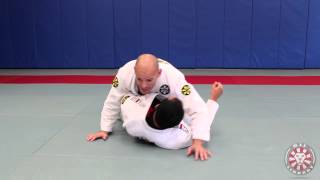
Flattening to Pass the Half Guard by Xande Ribeiro
BJJLibrary
You don't have to flatten them out to pass half guard...try the easy way instead...
Invisible Jiu Jitsu
Luis Azeredo vs Tony DeSouza
amtuncurich
X Pass Basics and Control Principles
Aaron Benzrihem bjj
How I use X-Pass to crush my opponent's guard
Tristar Gym