Half Guard Pass Setup
When passing half guard with an underhook already established, the instructor avoids the smashing approach to prevent being bridged. Instead, the goal is to position the opponent on their side so their bottom thigh contacts the ground, creating a more technical passing angle.
Butterfly Grip Advantages
The butterfly grip is superior to a gable grip for half guard passes because it allows the passer to fill space dynamically and maintain shoulder pressure throughout the pass. This grip accommodates different body types and maintains constant contact, unlike a gable grip which can create gaps.
Controlled Pressure and Balance
Rather than leaning heavily across the opponent, the passer brings them into their body while maintaining neutral balance. This positioning makes it difficult for the opponent to flatten their back or successfully bridge, creating control without compromising the passer's base.
High Knee Placement
Placing the near-side knee high—up by the opponent's shoulder, armpit, or head—is crucial for the pass mechanics. This high placement allows the passer to use their toes to pry open the opponent's bottom leg and establish the double hooks position.
Prying the Bottom Leg
With the knee positioned high, the passer walks their legs around and uses their toes to locate and pry open the opponent's bottom leg. This separation is essential for transitioning into a secure double hooks position that prevents the opponent from reclaiming half guard.
Hip Elevation Technique
When removing the double hooks, the passer raises their hips slightly upward and forward toward the opponent's head. This minor adjustment creates the freedom needed in the hips to extract the hooks cleanly in one motion while preventing the opponent from reclaiming half guard.
Foot Positioning Defense
The passer should maintain either a flat foot or be up on their toes, but never allow their foot to drop low. Keeping the foot elevated prevents the opponent from establishing a lockdown, which would stall the pass and create defensive complications.
Defending the Bridge Escape
When the opponent bridges, the passer executes a windshield wiper motion using their head as a base point. By moving their legs in an alternating sweep pattern away from the opponent's bridge direction, the passer shifts their center of gravity and transitions to side control.
Head Base Positioning
When basing the head during the windshield wiper escape, the passer should place it far from the opponent's head rather than adjacent to it. Proper spacing prevents the opponent from rotating the passer over their own head and potentially causing neck strain.
Two-Step Pass Sequence
The complete pass follows two outcomes: if the opponent remains passive, the passer advances to mount position. If the opponent bridges, the passer executes the windshield wiper to establish side control on the opposite side of the bridge direction, maintaining positional advantage either way.
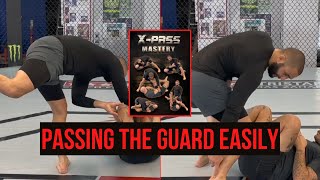
You don't have to flatten them out to pass half guard...try the easy way instead...
Key Takeaways
- •Half Guard Pass Setup
- •Butterfly Grip Advantages
- •Controlled Pressure and Balance
- •High Knee Placement
It's my first time teaching since about March 2020! Here's the first passing technique from my passing half guard seminar at my student's academy, Horizon BJJ. Crazy times with 44 people packed on the mat, it's good to be back. Hope you enjoy it too! ~Support the Channel by Liking, Commenting, and Sharing the videos. :) @0:00 The grip and first pass @2:00 The leg movement @2:46 Taking mount @3:50 Flat feet or on the toes @4:47 What if he bridges? @7:00 Shoulder pressure time @8:50 Windshield wiper @10:00 Summary @11:20 Kick your non-friend in the face If you found this video helpful, entertaining or thought-provoking, please consider helping the channel via PAYPAL, shopping via our no-cost-to-you AMAZON Affiliate links below, or pledging your support on PATREON. Your support goes a long way towards improving the quality of our videos, so thank you! PAYPAL LINK: https://www.paypal.me/invisiblejiujitsu PATREON: https://www.patreon.com/invisiblejiujitsu AMAZON LINKS: USA: https://amzn.to/2uuKxAG UK: https://amzn.to/2pT4qg7 FILMED ON: THE SWEET 4K CAMERA I USE: USA: https://amzn.to/2GXokOg UK: https://amzn.to/2GxmlT5 THE TINY CAMERA I USE: USA: https://amzn.to/2I9qI3J UK & EUROPE: https://amzn.to/2pRauVh MICROPHONE: USA: https://amzn.to/2IYsypr UK & EUROPE: https://amzn.to/2GSVQVG READ ABOUT THE GLOBETROTTERS HERE: USA: https://amzn.to/2I9Cuev UK & EUROPE: https://amzn.to/2pOLQVr FOLLOW ON SOCIAL MEDIA: https://www.facebook.com/InvisibleJiuJitsuAcademy MY ACADEMY: www.invisiblejiujitsu.co.uk
Frequently Asked Questions
What does this video teach about xande's flattening pass?
This video covers half guard pass setup, butterfly grip advantages, controlled pressure and balance. It provides detailed instruction from Invisible Jiu Jitsu.
How long does it take to learn xande's flattening pass?
The basic mechanics can be understood in a single session, but developing reliable execution requires consistent drilling over weeks of practice. This 10-part breakdown helps structure your training by isolating each phase of the technique.
What are the key details for finishing xande's flattening pass?
When basing the head during the windshield wiper escape, the passer should place it far from the opponent's head rather than adjacent to it. Proper spacing prevents the opponent from rotating the passer over their own head and potentially causing neck strain.