Flattening to Pass the Half Guard by Xande Ribeiro
0
Xande's Flattening Pass·BJJLibrary
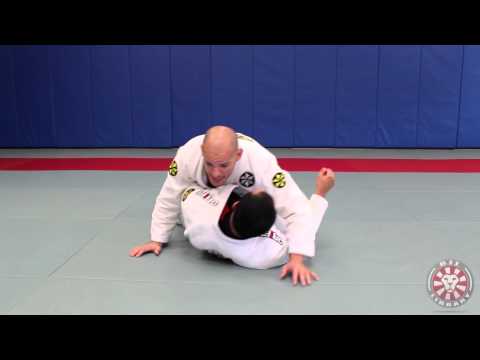
Follow 6-time black belt world champ, Xande Ribeiro as he teaches two ways to flatten your opponent in the half guard. H…
Translation: xande's flattening pass
The Xande's Flattening Pass is a guard passing technique detailed in Saulo Ribeiro's systematic BJJ approach. [1]
Effective guard passing technique taught as part of a comprehensive passing system. [1]
Brazilian Jiu-Jitsu guard passing methodology. [1]
Used in UFC and professional MMA competition
No images yet for this technique.
Sign in to suggest an image.
Not yet documented
Follow 6-time black belt world champ, Xande Ribeiro as he teaches two ways to flatten your opponent in the half guard. H…
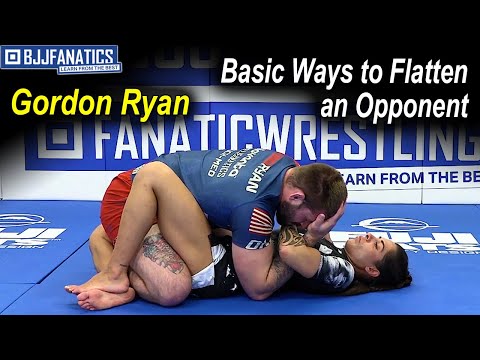
BASIC WAYS TO FLATTEN AN OPPONENT OUT https://bjjfanatics.com Gordon Ryan demonstrates how to flatten your opponent out…
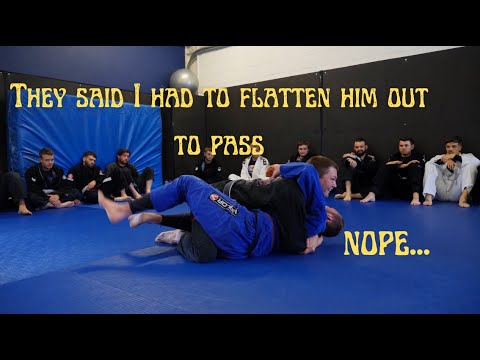
It's my first time teaching since about March 2020! Here's the first passing technique from my passing half guard semina…
Xande's flattening pass is a fundamental half-guard guard-passing technique that prioritizes flattening the opponent's body to the mat before executing the pass, thereby eliminating their lateral mobility and forcing them to expend energy. All three instructors—Invisible Jiu Jitsu, BJJLibrary, and BJJ Fanatics—agree that flattening removes the opponent's positional advantage and creates a crucial temporal gap, forcing them to perform extra steps (hip escape, shoulder recovery) before defending effectively. Invisible Jiu Jitsu emphasizes using an underhook with a butterfly grip to control the opponent's torso while keeping them on their side, then positioning a high knee near the shoulder to open the bottom leg into a double-hooks position before executing a windshield wiper motion into side control. BJJLibrary stresses the conceptual importance of flattening as a foundational principle: applying face pressure while using the knee or crab-walk foot placement to keep the opponent supine, thereby neutralizing their half-guard leverage. BJJ Fanatics (Gordon Ryan) offers the most detailed upper-body technical progression, describing methods to chase the hips first via knee-to-hip connection, then systematically work the upper body through cross-face or inside-bicep-tie positions, with emphasis on controlling the far shoulder and preventing the opponent from reclaiming inside elbow position. All instructors agree that controlling head position and shoulder pressure are temporary tools used only during the flattening phase; once the opponent is flat and the legs are free, pressure shifts to maintaining side control.
Synthesized from 3 instructors
No instructional courses yet for this technique.
Sign in to suggest a course.
Risk of injury to the person this technique is applied to
Guard passing — positional technique, not a strike or submission
Skill level needed to execute this technique reliably
Whether this technique is allowed under major competition rule sets
Jiu-Jitsu University (Ribeiro & Howell, 2008)
description, historyOrigin: sourced from Ribeiro, S
description, historyOrigin: sourced from Ribeiro, S
Good hip mobility and pressure
Balance
Getting your opponent on their side prevents them from using their elbow and hip to escape. According to Invisible Jiu Jitsu, when your opponent is on their side with their bottom thigh touching the ground, they lose the ability to generate leverage for hip escapes and defensive movements.
You want to get your knee high up—by your opponent's shoulder, armpit, or head area. Invisible Jiu Jitsu emphasizes that if your opponent points their knees to the sky, you won't be able to achieve this position, so you need to walk your feet in and find their calf to maintain control.
Avoid being too low or too close to your opponent, as this makes you vulnerable to lockdowns and sweeps. Invisible Jiu Jitsu recommends maintaining a low center of gravity with wide knees and active toes, staying far enough away to give yourself leverage while remaining balanced.
Use your head to base and execute a windshield wiper motion with your legs to escape into side control. Invisible Jiu Jitsu notes that if your opponent bridges the other way, you can throw your head to the opposite side to maintain position.
Flattening your opponent 'cuts the problem by the root' by taking away their ability to hip escape and execute defensive techniques. Xande Ribeiro explains that the goal is to prevent your opponent from turning their hip out and setting up their defense, not just to flatten them for its own sake.
Xande's Flattening Pass is a half guard passing technique developed by Xande Ribeiro that focuses on flattening the opponent before extracting the trapped leg. The emphasis is on crushing pressure rather than speed.
The Xande's Flattening Pass is a guard passing technique detailed in Saulo Ribeiro's systematic BJJ approach.
IBJJF: legal — Legal, guard pass scores 3 points; IJF: legal — Legal — transitioning past opponent's legs is part of newaza; ADCC: legal — Legal, guard pass scores 3 points; Unified MMA: legal — Legal; FIAS Sport Sambo: legal — Legal
Danger rating 2/10. Guard passing — positional technique, not a strike or submission
The standard setup chain: Control grips → Xande's Flattening Pass → Establish side control or mount.
Standard counters include: Re-guard / Frame and hip escape / Underhook from bottom.
Used in UFC and professional MMA competition
Top errors to watch for: Rushing without controlling grips / Allowing guard re-composition.
The Xande's Flattening Pass is also known as Xande's Flattening Pass, Flattening Pass, Xande Pass.