Introduction to Flattening
Flattening the opponent is a foundational concept in half guard passing. When the opponent remains on their side, they maintain leverage and mobility, making it difficult to execute any pass effectively. The first step in any successful half guard pass is to flatten the opponent onto their back.
Why the Half Guard Player Stays on Their Side
The defending half guard player naturally positions themselves on their side to maximize leverage and movement options. From this position, they can create space, control the passer's posture, and transition to offensive techniques like back takes. By flattening the opponent, the passer removes these advantages and forces the defender to expend additional energy to escape.
The Strategic Purpose of Flattening
Flattening serves a preventative purpose rather than simply controlling position. When the opponent remains on their side, they are already prepared to execute their desired techniques. By continuously flattening, the passer adds an extra step to the opponent's process, forcing them to first escape to their side before attempting any offensive moves, which expends their energy.
Critical Hand Placement on the Face
The passer must maintain constant contact with the opponent's face to control their posture effectively. The hand should press directly into the face rather than pushing outward, which forces the opponent to move their entire shoulder and body. This connection point is essential—without it, the opponent retains the power to generate techniques and resist flattening.
First Flattening Method: Knee on Stomach with Foot Step
The passer steps their inside knee onto the opponent's stomach while planting their foot. By using their body weight on the knee placement, the passer can systematically flatten the opponent as they attempt to turn to their side. This method uses leverage and weight rather than muscular force.
Second Flattening Method: Inside Knee on Hip
The passer positions their inside knee directly on the opponent's hip while keeping their stomach against the opponent's torso. This placement prevents the opponent from turning to their side and controls their lower body while the passer maintains face pressure. This variation is effective when the opponent has strong leg control.
Third Flattening Method: Crab Walk and Foot Stab
The passer uses a lateral crab walk motion with their knee to maintain constant pressure. When the opponent has strong legs and resists the crab walk by shifting their hips, the passer transitions to stabbing their foot down to apply full body weight. This method overcomes strong leg defense and completes the flattening action.
Common Mistake: Pressing Too High
Many practitioners attempt to flatten by pushing high on the opponent's chest or shoulder, which only generates a bump reaction. This high pressure allows the opponent to gain leverage and create space. The passer must focus on face connection and lower body control to prevent the opponent from recovering to their side.
Applying Flattening to Half Guard Passes
Once the opponent is flattened, the passer can seamlessly transition into their preferred half guard passes, such as the arm trap pass, base switch, or other positional advances. Flattening serves as the foundational setup that makes all subsequent passing techniques more effective and efficient. This approach cuts off the problem at its source rather than reacting to the opponent's techniques.
The Energy Management Principle
The strategic goal is to force the opponent to exhaust their energy attempting to escape the flattened position before executing any offensive techniques. Once the opponent becomes fatigued from defending flattening pressure, they are far more vulnerable to the passer's techniques. Understanding this energy principle separates technical proficiency from practical, effective grappling.
Flattening to Pass the Half Guard by Xande Ribeiro
Key Takeaways
- •Introduction to Flattening
- •Why the Half Guard Player Stays on Their Side
- •The Strategic Purpose of Flattening
- •Critical Hand Placement on the Face
Follow 6-time black belt world champ, Xande Ribeiro as he teaches two ways to flatten your opponent in the half guard. How to flatten your opponent is an important concept to master to build a set of effective half guard passes. Get full access to videos like this at: http://www.bjjlibrary.com Come train BJJ in San Diego and stay at the BJJ Hostel: http://bjjhostel.com Tape Armor Finger Tape for BJJ: http://tapeyourfingers.com
Frequently Asked Questions
What does this video teach about xande's flattening pass?
This video covers introduction to flattening, why the half guard player stays on their side, the strategic purpose of flattening. It provides detailed instruction from BJJLibrary.
How long does it take to learn xande's flattening pass?
The basic mechanics can be understood in a single session, but developing reliable execution requires consistent drilling over weeks of practice. This 10-part breakdown helps structure your training by isolating each phase of the technique.
What are the key details for finishing xande's flattening pass?
Once the opponent is flattened, the passer can seamlessly transition into their preferred half guard passes, such as the arm trap pass, base switch, or other positional advances. Flattening serves as the foundational setup that makes all subsequent passing techniques more effective and efficient. This approach cuts off the problem at its source rather than reacting to the opponent's techniques.
Related videos
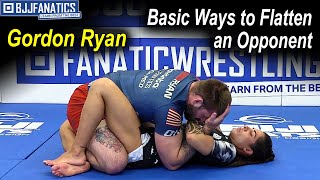
Basic Ways to Flatten an Opponent Out by Gordon Ryan
BJJ Fanatics
You don't have to flatten them out to pass half guard...try the easy way instead...
Invisible Jiu Jitsu
Luis Azeredo vs Tony DeSouza
amtuncurich
X Pass Basics and Control Principles
Aaron Benzrihem bjj
How I use X-Pass to crush my opponent's guard
Tristar Gym