Foundation: Parry 6 to 7 Transition
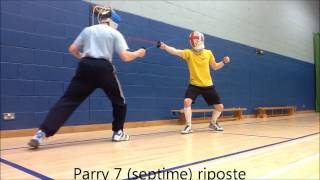
The parry of septime begins with a solid parry of 6th, which transitions into 7th through a controlled carry motion. The instructor demonstrates how the Lié (bind) naturally occurs during this transition, allowing the fencer to extend and strike immediately. This foundational movement establishes the technical base required for the subsequent offensive action.
Common Error: Wide Parry Position
A frequent mistake occurs when the parry of 6th extends too wide, leaving the fencer vulnerable with no effective blade contact. When the opponent's blade carries too far from the center, the defensive position becomes compromised and offensive opportunities are lost. Maintaining proper blade proximity is essential to the technique's success.
Three-Part Execution Principle
The parry of septime requires three critical components to function effectively: initiating with a proper parry, executing a clean transport of the blade, and concluding in a secure final parry position. Each element must flow seamlessly into the next to prevent vulnerability. This structured approach ensures defensive integrity while preparing for the counterattack.
Right of Way Considerations
When the opponent maintains right of way, they retain the ability to extend and score with a simple straightforward action. The defender must account for this priority when executing parries and ripostes. Understanding this fencing fundamental shapes the timing and execution of the septime parry response.
Parry 4 with Lower-Line Engagement
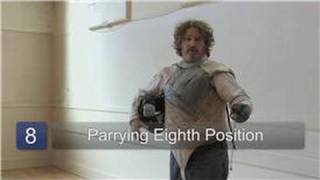
Following the septime sequence, the fencer transitions to parry 4 while directing attention to the lower target lines. This involves a deliberate sitting down of the legs combined with parry 8, creating a comprehensive lower-line defense. The combination prepares the fencer to extend and lunge with full offensive commitment.
Repetition and Rhythm Building
The instructor cycles through parry 4, 8, and 4 sequences to develop muscle memory and consistent timing. Each repetition reinforces the mechanical execution while building the fencer's ability to extend cleanly into the lunge. This drilling methodology establishes automaticity in the defensive-offensive transition.
Palm Position in Sexte: Critical Detail
When executing parries 6 and 7 (sexte), maintaining an upward palm orientation is essential to proper blade geometry. Allowing the palm to rotate inward converts the parry into terza, which creates an awkward and compromised defensive position. Strict attention to this detail prevents technical degradation and maintains the integrity of the parry.
Recovery and Blade Control
After completing the parry sequences and lunge, proper recovery returns the fencer to on-guard position with maintained blade control. The recovery movement must restore balance and readiness for the next defensive action. This completes the technical cycle and prepares the fencer for sustained engagement.
Lesson 5 - Pare 6th, 7, Septime, 4th extend lunge.
Key Takeaways
- •Foundation: Parry 6 to 7 Transition
- •Common Error: Wide Parry Position
- •Three-Part Execution Principle
- •Right of Way Considerations
ISB Fencing Club lesson.
Frequently Asked Questions
What does this video teach about parry of septime?
This video covers foundation: parry 6 to 7 transition, common error: wide parry position, three-part execution principle. It provides detailed instruction from Thierry1964.
How long does it take to learn parry of septime?
The basic mechanics can be understood in a single session, but developing reliable execution requires consistent drilling over weeks of practice. This 8-part breakdown helps structure your training by isolating each phase of the technique.
What are the key details for finishing parry of septime?
When executing parries 6 and 7 (sexte), maintaining an upward palm orientation is essential to proper blade geometry. Allowing the palm to rotate inward converts the parry into terza, which creates an awkward and compromised defensive position. Strict attention to this detail prevents technical degradation and maintains the integrity of the parry.
![Seated Parry Riposte Game | Fencing Tutorial [Home Edition] Foil, Epee, Saber](https://img.youtube.com/vi/B_sHGhLolC4/mqdefault.jpg)