Position Overview and Entry Points
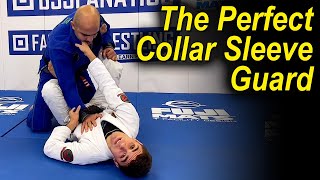
The collar-sleeve guard is established by controlling the opponent's collar with a cross-collar grip while holding their sleeve, typically paired with a de la Riva hook or lasso position. This guard position can be accessed from multiple entry points, commonly transitioning from spider guard when the second sleeve control becomes unavailable. The position presents numerous attacking and transitional opportunities at high levels of grappling.
Managing the De La Riva Hook
When playing collar-sleeve with a de la Riva hook, the practitioner must maintain the foot placement near the opponent's bicep or shoulder while pulling tight to prevent the opponent from looping their arm free. If the opponent traps the hooked leg, immediate transition to a lasso position becomes necessary to free the foot and maintain guard integrity. The practitioner can manipulate the opponent's posture by clamping the heel down against looping attempts or extending the leg against over-top passes.
Lasso Transition and Foot Recovery
Once the opponent's leg gets trapped during de la Riva positioning, executing a lasso sweep over the trapped leg allows the practitioner to recover foot position. After establishing the lasso, the practitioner can either push with the foot to drive it back out or release the sleeve grip momentarily to reposition the foot and restart the guard. Maintaining lasso control is essential whenever the initial de la Riva hook becomes compromised.
Omoplata Attack Setup
The omoplata represents one of the primary submissions available from collar-sleeve guard, executed by extending the hooked leg while pulling the sleeve and driving the hamstring into the opponent's knee to rotate the arm over. An alternative setup occurs when the opponent traps the leg and the practitioner transitions to lasso—if the opponent then opens their elbow while attempting to loop out of the lasso, the practitioner can immediately unlasso and transition into omoplata positioning. Variations in omoplata finishing include hooking the far leg and sitting up with proper leverage.
Overhead Sweep Variation
When the opponent positions their front foot close to the guard player's body, an overhead sweep becomes available by removing the foot from the bicep and placing the toes directly into the opponent's stomach. The practitioner maintains both collar and sleeve grips while pulling the collar down and keeping the sleeve tight against the hip, then lifting to flip the opponent over. This sweep is particularly effective when the opponent commits their weight forward with their lead leg.
Ankle Lock and Bolo Transitions
From collar-sleeve guard, the practitioner can transition to ankle lock entries by pushing the opponent back and switching focus to the ankle, creating opportunities for bolo-style sweeps and submissions. These transitional attacks expand the attacking surface available from the position beyond the primary omoplata and overhead sweep options.
Framing Against Toreando Pass
When defending against a toreando pass attempt, proper frame timing is critical—the guard player must keep their arms positioned low rather than high and strike the floor quickly to establish the frame before the opponent gets too close. A common error is delaying the frame placement until the opponent has already advanced too far into the pass, making it difficult to generate sufficient pressure. Early recognition and quick hand positioning near the floor enable effective frame execution to stall and repel the passing attempt.
Understand the Collar Sleeve Guard In 5 Min
Key Takeaways
- •Position Overview and Entry Points
- •Managing the De La Riva Hook
- •Lasso Transition and Foot Recovery
- •Omoplata Attack Setup
This is a general overview of the collar sleeve guard, one of the most commonly used positions in competition today. Follow me on Instagram: JonThomasBJJ
Related Techniques
Frequently Asked Questions
What does this video teach about collar-sleeve guard?
This video covers position overview and entry points, managing the de la riva hook, lasso transition and foot recovery. It provides detailed instruction from JonThomasBJJ.
How long does it take to learn collar-sleeve guard?
The basic mechanics can be understood in a single session, but developing reliable execution requires consistent drilling over weeks of practice. This 7-part breakdown helps structure your training by isolating each phase of the technique.
What are the key details for finishing collar-sleeve guard?
From collar-sleeve guard, the practitioner can transition to ankle lock entries by pushing the opponent back and switching focus to the ankle, creating opportunities for bolo-style sweeps and submissions. These transitional attacks expand the attacking surface available from the position beyond the primary omoplata and overhead sweep options.