Transitioning from Gi to No-Gi Grappling
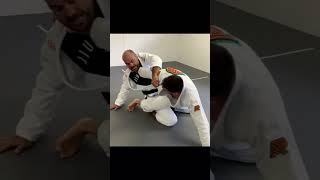
Students transitioning from gi jiu-jitsu to no-gi grappling often struggle with grip mechanics. Without collar grips available, practitioners must develop proficiency with overhooks, underhooks, and body control. This triangle setup demonstrates how to apply these foundational no-gi grips in a practical submission sequence.
Establishing Posture Break and Overhook Control
Begin with a basic posture break by coming under the opponent's hands and using leg pressure to pull them down. Immediately establish an overhook by pinching the back of the tricep with the bend of your arm. This creates immediate control and prevents the opponent from easily posturing up.
Securing the Arm with C-Clamp Grip
As the opponent attempts to create space by pushing their hand against your body, immediately secure their arm with a C-clamp grip—thumbs facing you—and lock your other hand over top. This two-handed control of the opponent's arm is essential for preventing escape and setting up the triangle entry.
Triangle Entry and Arm Positioning
Hip forward and throw the leg over the opponent's arm to establish the basic triangle position. The critical detail is ensuring the leg crossing the armpit sits on top, creating downward pressure that secures the position. Pull the trapped arm across the body to fully commit to the submission setup.
Proper Foot and Leg Mechanics for Finishing
Keep the top foot pointed upward rather than locked to avoid injury from defensive extension. Push the knee inward toward your neck rather than simply pulling down and squeezing. This movement extends the bottom leg outward and engages the stronger hamstring muscles for more efficient pressure.
Closing the Triangle and Creating Pressure
The key to finishing is closing the gap within the triangle formed by your legs. Rather than relying only on knee squeezes, turn the leg outward while clamping down to engage the hamstring—a significantly stronger approach. This biomechanical adjustment creates the necessary pressure to eliminate space and complete the choke.
Alternative Grip Setup and Arm Control
From the initial overhook position, grab the opponent's head to maintain tightness while waiting for their defensive hand to push upward. When that hand rises, secure it with a C-clamp grip, push it to the chest, and lock the opposite hand over top. Pull the captured arm away from you to establish a secure grip that prevents escape.
Forcing the Triangle Entry Position
Pull the opponent upward to create an uncomfortable position that forces them to sit back and reset. As they retreat, push through and throw the triangle lock. Ensure the crossing leg sits over the armpit with downward pressure; if it sits underneath, the opponent can straighten their body and escape the position.
Ratcheting Technique for Advanced Finishing
Apply a ratcheting action similar to a mechanical ratchet—extend and squeeze in rhythmic cycles without losing contact with the opponent's head. This sliding motion gradually improves position while maintaining the submission threat. The technique works by continuously closing space rather than attempting a single explosive finish.
Angle Adjustment and Final Submission
For larger or more defensive opponents, increase the angle to improve mechanical advantage. Even at close angles, continuing to push inward and clamp down removes the remaining space in the triangle. The combination of proper leg positioning, ratcheting action, and angle adjustment creates an effective finish regardless of opponent size.
No Gi Triangle Choke From Closed Guard
Key Takeaways
- •Transitioning from Gi to No-Gi Grappling
- •Establishing Posture Break and Overhook Control
- •Securing the Arm with C-Clamp Grip
- •Triangle Entry and Arm Positioning
WWW.CHEWJITSU.NET In this video I show a triangle choke from guard. This is a great setup for either gi or no gi Brazilian Jiu-jitsu. I also go into a couple of details about finishing the triangle. Give it a try. Also, for more instructional videos, recipes and all sorts of helpful BJJ related information. Check out my blog www.chewjitsu.net.
Related Techniques
Frequently Asked Questions
What does this video teach about triangle from closed guard?
This video covers transitioning from gi to no-gi grappling, establishing posture break and overhook control, securing the arm with c-clamp grip. It provides detailed instruction from Chewjitsu.
How long does it take to learn triangle from closed guard?
The basic mechanics can be understood in a single session, but developing reliable execution requires consistent drilling over weeks of practice. This 10-part breakdown helps structure your training by isolating each phase of the technique.
What are the key details for finishing triangle from closed guard?
Apply a ratcheting action similar to a mechanical ratchet—extend and squeeze in rhythmic cycles without losing contact with the opponent's head. This sliding motion gradually improves position while maintaining the submission threat. The technique works by continuously closing space rather than attempting a single explosive finish.
Related videos
How to Create Angles in Closed Guard Like Gordon Ryan
Gordon Ryan
Triangle from Closed Guard w/ Over-hook (Lachlan Giles)
Absolute MMA St Kilda - Melbourne
Triangle from the Closed Guard?
Matt Arroyo Jiu Jitsu
My Favourite Triangle Set Ups From Closed Guard!
The Grappling Academy
Triangle Choke from Closed Guard by Giancarlo Bodoni
Bernardo Faria BJJ Fanatics