Peruvian Necktie Overview
The Peruvian necktie is an exotic front headlock submission that uniquely incorporates all four limbs to control the opponent's neck and head. Unlike most front headlock techniques that rely on squeezing, rotating, or twisting movements, this submission generates pressure through coordinated use of both arms and legs.
Hand Position and Initial Setup
The practitioner establishes a gable grip with both hands connected underneath the opponent's neck. The technique is particularly effective when a secure grip cannot be obtained due to the opponent's defensive posture, such as turtling or actively fighting hand control.
First Leg Placement
The practitioner walks their right leg up toward the opponent's head, positioning the hamstring across the back of the neck. This leg placement generates significant choking force and brings the opponent's head downward into the wrist connection beneath the neck.
Hip Transition and Second Leg Setup
The practitioner falls to their right hip, which opens space to thread the left leg over the opponent's head. This transition is crucial for creating the mechanical advantage needed to apply the submission.
Extension and Finishing Position
After placing the left leg over the opponent's head, the practitioner falls back toward the left side while extending the right leg. This directional fall increases the vertical distance available to drop the right leg, generating maximum downward force into the choke.
Force Generation and Biomechanics
The Peruvian necktie requires no upper body strength and generates all choking force through leg extension rather than arm squeezing. The technique emphasizes driving the opponent's chin downward into their chest, directing force into the carotid arteries via the wrist connection beneath the throat.
Mechanical Leverage Advantage
By falling backward to the opposite side, the practitioner gains multiple feet of dropping power rather than only the inches available when remaining upright. This extended range of motion converts into increased leverage and choking pressure on the opponent's neck.
The Peruvian Necktie - Use all 4 limbs to finish this exotic choke
Key Takeaways
- •Peruvian Necktie Overview
- •Hand Position and Initial Setup
- •First Leg Placement
- •Hip Transition and Second Leg Setup
Related Techniques
Frequently Asked Questions
What does this video teach about necktie lever?
This video covers peruvian necktie overview, hand position and initial setup, first leg placement. It provides detailed instruction from Keenan Cornelius.
How long does it take to learn necktie lever?
The basic mechanics can be understood in a single session, but developing reliable execution requires consistent drilling over weeks of practice. This 7-part breakdown helps structure your training by isolating each phase of the technique.
What are the key details for finishing necktie lever?
The Peruvian necktie requires no upper body strength and generates all choking force through leg extension rather than arm squeezing. The technique emphasizes driving the opponent's chin downward into their chest, directing force into the carotid arteries via the wrist connection beneath the throat.
Related videos
High Wrist Guillotine Choke Submission in Turtle
Pica Pau Jiu Jitsu & Grappling

How To Do The Reverse Guillotine Choke
Redneckjiujitsu

Catch Wrestling: Front Headlock into 10 Finger Guillotine & Bulldog Choke
Snake Pit U.S.A.
BJJ | How To Execute A D'Arce Choke From The Turtle Position
Evolve Mixed Martial Arts
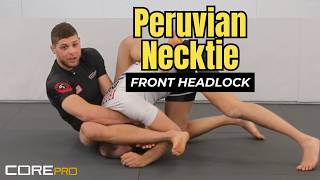
The Front Headlock System: Peruvian Necktie
CorePRO BJJ