Headlock Compression

SubFamily

フロントヘッドロックチョーク(Furonto Heddorokku Chōku)

Transliteration

Translation: Front Headlock Choke (katakana loanword)

Overview

The cattle choke from standing headlock is a species where the bulldog-style compression strangle is applied while both practitioners are on their feet, with the attacker controlling the opponent's head in a standing headlock. [1] The attacker wraps one arm tightly around the opponent's neck from the side, trapping the head against the attacker's ribcage, then reinforces with the free hand to squeeze both sides of the neck simultaneously. [1],[2] Standing application adds the threat of snap-down or takedown as auxiliary pressure, compelling the opponent to fight the choke while also managing balance and takedown defence. [2] This species is frequently seen in MMA and self-defence contexts where the fight begins on the feet. [2],[3] The attacker may finish standing or transition to the ground while maintaining the choke throughout. [3]

Also known as
Headlock Compression ChokesWrestling[1]Squeeze Headlock SubmissionsWrestling[2]

History & Origin

Standing headlock chokes are among the oldest wrestling techniques, documented in catch-as-catch-can wrestling and various folk wrestling traditions worldwide. [1],[2] The cattle choke variant from standing was refined in professional wrestling and catch wrestling before being integrated into submission grappling and MMA rulesets. [1] In competitive contexts, the standing headlock became a viable finish when combined with the bulldog-style compression mechanics that distinguish it from simple headlock holds. [1],[2]

Effectiveness

Headlock compression chokes are the simplest choking mechanism — arm around neck and squeeze. Their simplicity makes them effective under stress when fine motor skills are compromised, particularly in self-defence and MMA. [1]

Lineage

The oldest choking mechanism in martial arts — arm-around-neck squeezes appear in virtually every wrestling and combat tradition worldwide, from ancient Greek pankration to modern catch wrestling. [1]

Competition Record

Common in early MMA and catch wrestling competition. Less frequent in modern BJJ competition where more refined techniques (guillotine, D'Arce) are preferred. [1]

Images

No images yet for this technique.

Sign in to suggest an image.

Biomechanical Mechanism

Primary ActionBilateral compression of the carotid arteries — restricts blood flow to the brain, causing unconsciousness within seconds
Joints InvolvedCervical spine (lateral flexion), glenohumeral joint of the trapped arm (if arm-in), nuchal region
Force VectorLateral squeeze creates inward pressure on both sides of the neck simultaneously
Choking MechanismVascular strangle — occludes carotid arteries and jugular veins, distinct from airway (tracheal) chokes

Position & Entry

From sprawl (takedown defence)After sprawling on a shot, secure the head-and-arm position from the front headlock
From snap-downSnap opponent's head down with collar tie, drop to front headlock position, thread the choke
From guard (opponent postures low)Opponent drops head, wrap the neck and thread to the choking configuration

Videos

No videos yet

Help build this encyclopedia by suggesting a relevant video.

Sign in to suggest a video.

Learn This Technique

No instructional courses yet for this technique.

Sign in to suggest a course.

Ratings

Danger Rating

Risk of injury to the person this technique is applied to

7
Very High7/10

Headlock compression chokes use a tight headlock grip to restrict blood flow to the brain

Difficulty

Skill level needed to execute this technique reliably

Intermediate
Competition Legality

Whether this technique is allowed under major competition rule sets

Illegal
FIAS Sport Sambo — All chokes prohibited in Sport Sambo
FIAS International Sambo Competition RulesPDF
Legal
IBJJF — Legal at all belt levels, gi and no-gi — chokes a...
IBJJF Rules Book v6.0, June 2024PDF
ADCC — Legal
ADCC Rules Update, April 2025PDF
Unified MMA — Legal — choke submissions are among the mos...
Unified Rules of MMA, August 2025PDF
FIAS Combat Sambo — Legal
FIAS Combat Sambo RulesPDF

Training Notes

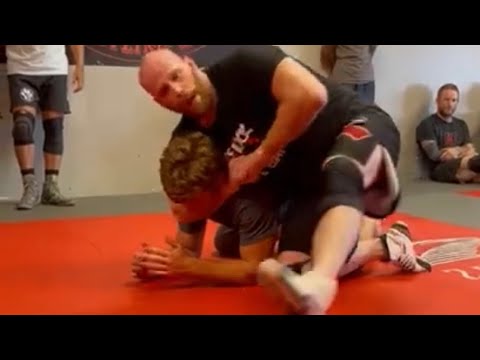
The headlock compression subfamily groups chokes that use a direct headlock wrap with compressive squeezing — the arm encircles the head and squeezes the neck through direct pressure rather than arm-triangle or fabric mechanisms (Paulson, Shoot Wrestling, 2007)
This subfamily represents the simplest choking mechanism: wrap the arm around the neck and squeeze — the forearm and bicep compress the neck bilaterally
Headlock compression chokes include the cattle choke, bulldog choke, and various standing headlock strangles — all sharing the basic arm-around-neck-and-squeeze mechanism
The headlock compression is distinct from arm triangles (which use the opponent's shoulder) and collar chokes (which use fabric) — it relies purely on the attacker's arm pressure
From front headlock: the headlock compression is the 'default' choke — if more sophisticated techniques (guillotine, anaconda) aren't available, the basic squeeze can still finish
The compression headlock is highly effective in self-defence and MMA: the simplicity means it works under stress when fine motor skills are compromised
The headlock compression has ancient roots: arm-around-the-neck squeezes appear in virtually every wrestling and combat tradition worldwide
Common Mistakes

!Dismissing headlock compression as unsophisticated — simplicity is a virtue; the technique works when others fail due to its low complexity
!Using headlock compression from bottom position — the technique requires top or neutral position; bottom headlocks lead to back exposure
!Squeezing without head control — the head must be trapped tightly; a loose headlock allows the opponent to posture
!Not driving body weight into the compression — lean into the headlock from top position; arms alone tire quickly
!Holding the headlock without attempting to finish — increase pressure progressively; a static headlock is control, not a submission
!Not transitioning when defence is effective — the headlock position supports multiple attacks; move to guillotine, anaconda, or go-behind if the compression fails
!Applying neck cranks disguised as headlock chokes — be aware of whether you're applying a choke (arm on neck) or a crank (arm on head/face) — different mechanisms and risks

Related Techniques

Counter Techniques

Setup Chain

1Achieve Controlling Positionsecure the position from which the choke is applied
2Isolate the Neckclear defending hands and establish access to the throat
3Set the Griplock the choking configuration (arm, lapel, or leg placement)
4Apply Pressuresqueeze to compress the carotid arteries for the finish

Sources & References

Primary Source

Wikipedia ja (フロントチョーク); Japanese BJJ community

Japanese Wikipedia — martial arts technique articles

2OtherJapanese Combat Sports Katakana Convention

Standard katakana transliteration of Western martial arts terminology (外来語) — used in Japanese MMA, boxing, and BJJ communities

3CitationWikipedia ja (フロントチョーク); Japanese BJJ community

Japanese terminology sourced from Wikipedia ja (フロントチョーク); Japanese BJJ community

Community

Athletics

Requires

grip or squeeze strength, positional control

Favours

strong upper body for sustained compression

Key muscles

forearms, biceps, pectorals, core stabilisers

Sub-techniques

Frequently Asked Questions

How does the Headlock Compression work?

The cattle choke from standing headlock is a species where the bulldog-style compression strangle is applied while both practitioners are on their feet, with the attacker controlling the opponent's head in a standing headlock. The attacker wraps one arm tightly around the opponent's neck from the side, trapping the head against the attacker's ribcage, then reinforces with the free hand to squeeze both sides of the neck simultaneously.

Where does the Headlock Compression come from?

Standing headlock chokes are among the oldest wrestling techniques, documented in catch-as-catch-can wrestling and various folk wrestling traditions worldwide. The cattle choke variant from standing was refined in professional wrestling and catch wrestling before being integrated into submission grappling and MMA rulesets.

Is the Headlock Compression legal in competition?

IBJJF: legal — Legal at all belt levels, gi and no-gi — chokes are the safest submission cat…; IJF: legal — Legal (shime-waza) — strangulation techniques are one of three permitted subm…; ADCC: legal — Legal; Unified MMA: legal — Legal — choke submissions are among the most common finishes in MMA; FIAS Sport Sambo: banned — All chokes prohibited in Sport Sambo; FIAS Combat Sambo: legal — Legal

How dangerous is the Headlock Compression?

Danger rating 7/10. Headlock compression chokes use a tight headlock grip to restrict blood flow to the brain

How do I set up the Headlock Compression?

The standard setup chain: Achieve Controlling Position → Isolate the Neck → Set the Grip → Apply Pressure.

How do I defend against the Headlock Compression?

Standard counters include: Tuck Chin — protect the neck by lowering the chin to prevent the choke from sinking / Two-on-One Grip Fight — use both hands to strip the choking grip before it locks / Turn Into — rotate toward the choking arm to relieve carotid pressure / Posture Up — straighten the spine and create distance to break the choking angle.

What are the variants of the Headlock Compression?

Common variants: Standard grip variation (primary hand configuration for maximum choking pressure); Gi variation (uses the lapel or collar as an anchor for additional fric…); No-gi variation (adapted grip and positioning for submission grappling wit…); Transition finish (applied during a positional change to catch the opponent …).

How effective is the Headlock Compression in competition?

Common in early MMA and catch wrestling competition. Less frequent in modern BJJ competition where more refined techniques (guillotine, D'Arce) are preferred.

What are common mistakes when doing the Headlock Compression?

Top errors to watch for: Dismissing headlock compression as unsophisticated — simplicity is a virtue; the technique works when others fail due… / Using headlock compression from bottom position — the technique requires top or neutral position; bottom headlocks le… / Squeezing without head control — the head must be trapped tightly; a loose headlock allows the opponent to posture / Not driving body weight into the compression — lean into the headlock from top position; arms alone tire quickly.

What are other names for the Headlock Compression?

The Headlock Compression is also known as Furonto Heddorokku Chōku, Headlock Compression Chokes, Squeeze Headlock Submissions.