Leg Choke Setup from Cable Position
The instructor demonstrates a leg choke entry from a cable position, where the opponent turns their head away from the initial attack. The setup requires the practitioner to secure the opponent's elbow and control their positioning before transitioning to the choke.
Foot Positioning and Chin Elongation
To execute the leg choke effectively, the practitioner rises on their toes and dives toward the opponent's feet, which elongates the opponent's chin and creates the necessary angle for the strangle. The opponent must be positioned flat on their back to maximize effectiveness.
Response to Leg Grab Defense
When the opponent grabs the practitioner's leg to defend the leg choke, the practitioner responds by moving up on their elbow and switching their feet. This transition to a dragon screw or neck screw provides an alternative finishing method when the initial choke is defended.
Neck Crank Applications Beyond IBJJF Rules
The instructor emphasizes that neck cranks and submissions like toe holds are valuable techniques for grapplers outside regulated IBJJF competition. Advanced practitioners should learn these techniques as they may be utilized in unrestricted grappling matches.
Double Leg Choke Execution
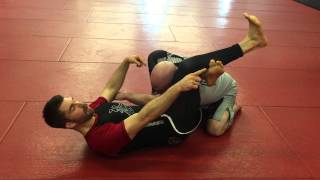
The practitioner steps over the opponent's face and places their knee down, then rises on their toes and dives toward the opponent's feet to set up a double leg choke. If the opponent turns their face, the practitioner switches their feet and transitions to a forearm-based neck crank.
Control and Technique Over Strength
Proper technique execution allows the submission to function effectively against both strong opponents and those with naturally resistant necks. The instructor stresses maintaining tight control throughout the submission rather than relying on muscular force alone.
Crooked Neck Scissors - Leg Choke - Neck Crank
Key Takeaways
- •Leg Choke Setup from Cable Position
- •Foot Positioning and Chin Elongation
- •Response to Leg Grab Defense
- •Neck Crank Applications Beyond IBJJF Rules
Related Techniques
Frequently Asked Questions
What does this video teach about headscissors strangle?
This video covers leg choke setup from cable position, foot positioning and chin elongation, response to leg grab defense. It provides detailed instruction from CSW Association.
How long does it take to learn headscissors strangle?
The basic mechanics can be understood in a single session, but developing reliable execution requires consistent drilling over weeks of practice. This 6-part breakdown helps structure your training by isolating each phase of the technique.
What are the key details for finishing headscissors strangle?
The practitioner steps over the opponent's face and places their knee down, then rises on their toes and dives toward the opponent's feet to set up a double leg choke. If the opponent turns their face, the practitioner switches their feet and transitions to a forearm-based neck crank.