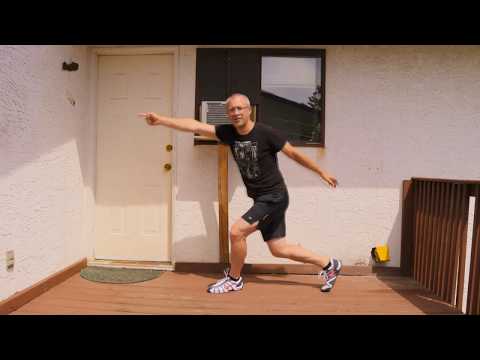
This Technique Should be Banned it's so Good...Presenting the TOE FLECHE
0
Fleche·GP Fencing
Translation: Arrow attack
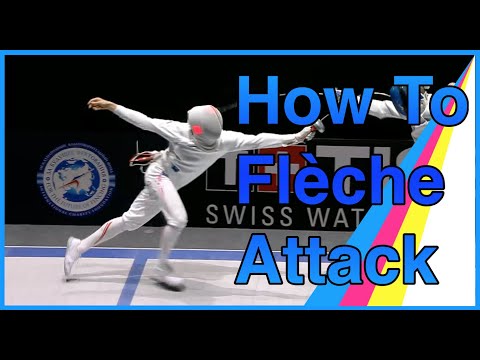
The Flèche (French for 'arrow') is an explosive running attack where the fencer launches the rear foot past the front foot, propelling the body forward in a sprinting motion to close distance rapidly. [1] Unlike the lunge which maintains a recoverable stance, the flèche commits the fencer's entire body forward. [1] It is used in épée and foil competition but is banned in modern sabre fencing. [1]
The Fleche remains a core technique in modern competitive fencing and historical swordsmanship. [1]
Used in FIE international fencing competition
No images yet for this technique.
Sign in to suggest an image.
What options are available to you when your opponent attacks low to your foot in epee? You can displace target and prese…
In this video I go over how to preform a Flèche attack in Epee Fencing. Thanks for watching! As always, please like, sh…
The fleche is an explosive, surprise attack designed to close distance rapidly and catch an opponent unprepared, making it particularly valuable in épée but restricted in foil (where priority rules work against it) and prohibited in sabre (due to crossing feet). OSM Fencing and Fencer's Edge provide complementary technical instruction: both emphasize initiating from a deep knee bend in on-guard position, with arm extension leading the movement. Fencer's Edge stresses that the arm must fully extend first—critical in épée—followed by front shoulder drop and back hand reach to maximize distance, then explosive push-off with the back leg to drive forward while turning shoulders to minimize target area. OSM Fencing adds that the fleche involves leaning forward to build momentum before pushing with the back leg until nearly falling, then crossing over while accelerating. Both instructors agree the fleche should be driven forward, not upward, and executed from proper distance (Fencer's Edge notes hitting the target before or as the front foot lands). OSM Fencing addresses defensive application: using fleche against foot attacks by first withdrawing the target and extending the arm to present line, then performing the fleche at an angle rather than directly ahead. Fencer's Edge introduces fleche variants with opposition (four and six positions) and small-finger-controlled disengages to counter defensive parries. GP Fencing's content emphasizes the 'toe fleche'—a flashy variant targeting the foot—demonstrating the technique's adaptability across target areas.
Synthesized from 3 instructors
No instructional courses yet for this technique.
Sign in to suggest a course.
Risk of injury to the person this technique is applied to
Sport fencing with protective equipment; historically lethal with sharp weapons
Skill level needed to execute this technique reliably
Whether this technique is allowed under major competition rule sets
Fencing (Pollock, Grove & Prevost, 1902)
description, historyOrigin: sourced from Pollock, W
description, historyOrigin: sourced from Pollock, W
Requires good arm extension
Quick reflexes
Balance and footwork
The flèche appears in our corpus: 'Another approaching movement is the fleche (meaning arrow in French), which is considered as an explosive, running attack used only in foil and epee fencing.' The attacker launches forward in a sprinting motion past the opponent. Banned in sabre fencing — replaced by the flunge. (Biomechanics of Human Motion, 2nd Ed.)
In épée, it is absolutely crucial that your arm fully extends first when you start the flèche attack, according to Fencer's Edge. This arm extension must happen before or simultaneously with your body movement to avoid being countered.
Present line with a relaxed shoulder, then lean forward and push with your back leg until you feel like you're about to fall over, then cross over while accelerating with your back. Your front shoulder should drop toward the target area, and you must maintain a bent front knee as you drive forward, according to OSM Fencing and Fencer's Edge.
Common mistakes include keeping shoulders squared off to your opponent instead of rotating them, standing up and pushing upward instead of staying low, failing to do the upper body lean, and attempting the flèche from too far away. The upper body lean is crucial because it moves you closer to the target and gives you forward momentum, according to Fencer's Edge.
You can flèche with opposition to protect yourself from counterattacks. If your opponent attacks inside your arm, use opposition four by moving your wrist over; if they attack outside your arm, use opposition six. This protects your body while still allowing you to make the touch, according to Fencer's Edge.
The Flèche (French for 'arrow') is an explosive running attack where the fencer launches the rear foot past the front foot, propelling the body forward in a sprinting motion to close distance rapidly. Unlike the lunge which maintains a recoverable stance, the flèche commits the fencer's entire body forward.
The Fleche was codified in European fencing treatises from the 16th century onward. Italian and French schools developed the technique into its modern form through centuries of refinement.
FIE: legal — Legal fencing technique — governed by FIE rules for foil, épée, and sabre; HEMA: legal — Legal in historical fencing competition
Danger rating 3/10. Sport fencing with protective equipment; historically lethal with sharp weapons
The standard setup chain: En garde → Preparation → Fleche → Recovery.
Standard counters include: Counter-parry / Distance management / Stop-hit.
Common variants: Direct fleche; Indirect fleche; Compound fleche.
Used in FIE international fencing competition
Top errors to watch for: Over-extending / Telegraphing the action / Poor recovery.
The Fleche is also known as Furesshu, Flèche, Running Attack, Fleche Attack.