Basic Knife-Fighting Techniques: Into the Fray Episode 168
0
Standard Attack On Preparation·USCCA
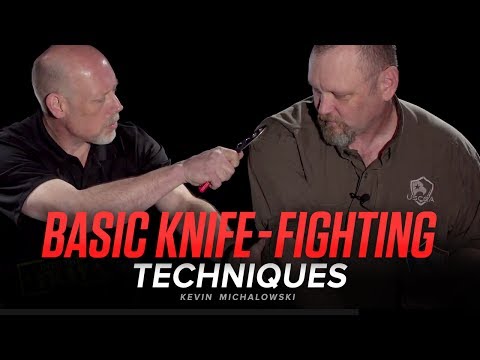
▶ Gun Law Map (FREE): https://uscca.co/oOyA ▶ Join USCCA: https://uscca.co/Bn62 Thousands of USCCA Members have acted i…
Translation: standard attack on preparation
The Standard Attack On Preparation executes the timed offensive action by reading the opponent's preparatory movement (typically a forward step or arm retraction before their attack) and launching an immediate, direct cut or thrust that lands before the opponent's attack reaches the execution phase. [1] The technique is essentially a pre-emptive strike — the fencer recognises the opponent's intention and acts before the intention becomes an action with right-of-way. [1],[2] Execution requires sharp observational skills, explosive acceleration, and the confidence to commit to the attack based on reading subtle preparation cues. [2],[3]
The standard attack on preparation has been part of fencing theory since the classical period but became a critical competitive tool in modern sabre fencing, where reading and exploiting the opponent's preparation is a primary tactical objective. [1] It is a key skill taught to competitive sabre fencers. [2],[3]
The standard attack on preparation is the fundamental tempo attack targeting the opponent's preparatory movements. [1]
This is the baseline form of the attack on preparation as taught in fencing academies. [1]
Attack on preparation is a regular scoring action at all levels of FIE competition. [1]
No images yet for this technique.
Sign in to suggest an image.
▶ Gun Law Map (FREE): https://uscca.co/oOyA ▶ Join USCCA: https://uscca.co/Bn62 Thousands of USCCA Members have acted i…
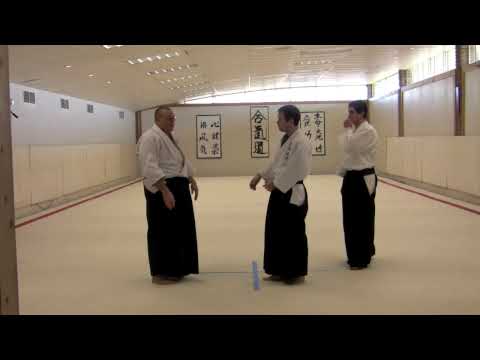
Nick Lowry demonstrates Tomiki aikido principles for facing multipe attackers
12 Basic Strikes and 12 Basic Blocks this video shows the proper stances, strikes and movements. #arnis #kali #eskrima …
The transcripts provided do not address the technique of 'Standard Attack On Preparation' in sabre sport fencing. Instructor 1 (MATTI San Juan Official) teaches arnis striking and blocking fundamentals with no fencing content. Instructor 2 (Kaze Uta Budo Kai) covers aikido multiple-attacker randori, focusing on releases, evasion, and positional control against sequential attackers. Instructor 3 (USCCA) presents knife-fighting self-defense fundamentals, emphasizing angle-one attacks and target prioritization. None of these instructors discuss sabre sport, preparation phases, or attack timing in fencing contexts. The material is drawn from disparate martial disciplines (Filipino martial arts, Japanese aikido, and knife combat) with no overlap addressing the specific fencing technique requested. No synthesis regarding standard attacks on preparation in sabre sport can be constructed from these sources.
Synthesized from 3 instructors
No instructional courses yet for this technique.
Sign in to suggest a course.
Risk of injury to the person this technique is applied to
Modern sport fencing uses blunted weapons and full protective gear; injury rate ~2.5 per 1000 exposures (Harmer 2008)
Skill level needed to execute this technique reliably
Whether this technique is allowed under major competition rule sets
The Art of Fencing (Luigi Barbasetti, 1932)
Alias sources — [1] FIE Rules of Competition [2] Classical Fencing (Rogers, 2014) [3] Classical Fencing (Rogers, 2014)
Effectiveness sources — [1] The Art and Science of Fencing (Evangelista, 1996)
Mixed Japanese-Western terminology — combines traditional Japanese terms with katakana loanwords
Alias sources — [1] FIE Rules of Competition [2] Classical Fencing (Rogers, 2014) [3] Classical Fencing (Rogers, 2014)
Effectiveness sources — [1] The Art and Science of Fencing (Evangelista, 1996)
explosive lunge speed, finger/wrist dexterity, cardiovascular endurance
long reach (tall, long arms), fast-twitch legs
quadriceps (lunge), calves, forearm/finger flexors, core
According to Kaze Uta Budo Kai instructors, you should always be looking for the next attack as it occurs rather than getting locked into engagement with one person. Never spend much time turned away from incoming attackers—continue facing the next threat if at all possible.
The moment of contact gives your opponent permission that it's their turn to attack. This is your signal to immediately disengage and look for the next incoming threat rather than staying committed to the current engagement.
The Standard Attack On Preparation executes the timed offensive action by reading the opponent's preparatory movement (typically a forward step or arm retraction before their attack) and launching an immediate, direct cut or thrust that lands before the opponent's attack reaches the execution phase. The technique is essentially a pre-emptive strike — the fencer recognises the opponent's intention and acts before the intention becomes an action with right-of-way.
The standard attack on preparation has been part of fencing theory since the classical period but became a critical competitive tool in modern sabre fencing, where reading and exploiting the opponent's preparation is a primary tactical objective. It is a key skill taught to competitive sabre fencers.
FIE: legal — Legal fencing technique — governed by FIE rules for foil, épée, and sabre; HEMA: legal — Legal in historical fencing competition
Danger rating 2/10. Low — modern sport fencing uses blunted weapons and full protective gear; injury rate ~2.5 per 1000 exposures (Harmer 2008)
The standard setup chain: En Garde → Advance/Lunge Preparation → Attack → Recovery.
Standard counters include: Parry (Absetzen) — deflect the incoming blade with a counter-displacement / Void (Step Back) — withdraw from measure to avoid the cutting arc / Counter-Cut (Nachreisen) — strike into the opponent's opening during their attack.
Common variants: Simple attack (single blade action (disengage, beat, or direct) to score); Compound attack (multiple blade actions (feint then disengage) to create a…); Riposte (immediate counter after a successful parry); Counter-attack (attacking into the opponent's attack with priority or rig…).
Attack on preparation is a regular scoring action at all levels of FIE competition.
Top errors to watch for: Not reading the opponent's preparation — without recognizing the preparatory movement, the timing is guesswork / Hitting after the opponent has established their attack — the touch must arrive during preparation, not during the at… / Starting too late — the window for attack on preparation is brief; delayed starts miss the opportunity / Using a large, slow cut — the cut must be fast and compact to arrive during the preparation window.
The Standard Attack On Preparation is also known as Sutandādo Pureparashion Kōgeki, Counter-Tempo Attack, Attaque au Moment, Attack in Preparation.