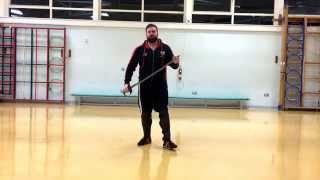
The Twelve Basic Strikes
The foundation of Arnis training begins with mastering twelve fundamental striking techniques. These strikes target the vital areas of an opponent's body and form the basis for all offensive combinations. Practitioners will learn each strike from a stationary position before advancing to dynamic footwork.
Upper Body Strike Targets
The first category of strikes focuses on the head and upper torso. Practitioners execute strikes to both temples, shoulders, and chest areas, which collectively represent the primary targets for upper-body offensive techniques. These strikes develop accuracy and power in the upper range.
Torso and Lower Body Strikes
The second category extends from the stomach through the lower extremities. Strikes to the stomach, chest, knees, and feet complete the twelve-strike arsenal, ensuring comprehensive coverage of target areas. These techniques build a complete understanding of attacking angles across the entire body.
Strikes from Stance Positions
After establishing the twelve strikes in stationary position, practitioners apply these techniques from both right and left foot forward stances. The stance variations demonstrate how strike mechanics adapt with different weight distributions and body alignments. This progression builds the foundation for practical, position-dependent execution.
The Twelve Basic Blocks
Complementing the offensive curriculum, the twelve basic blocks provide the primary defensive responses in Arnis. Each block corresponds to and counters the directional angles of the twelve basic strikes. Proper blocking mechanics protect the practitioner while setting up counteroffensive opportunities.
Block Execution and Variations
Practitioners learn temple blocks, shoulder blocks, torso protections, and knee blocks from stationary position. The rising or umbrella block is introduced as a specialized defensive technique against overhead attacks. Each block must be executed with precise timing and proper weapon angle to effectively intercept incoming strikes.
Blocks from Dynamic Stances
Like the strikes, blocking techniques are practiced from both right and left foot forward positions. This stance-based training ensures that defensive responses remain effective regardless of the practitioner's footwork or positioning. Stance variation builds adaptability and practical application.
Partner Drills: Strikes with Opposition
The curriculum progresses to partner-based training, where one practitioner executes the twelve basic strikes while the other maintains defensive readiness. This interactive phase develops timing, distance management, and the ability to deliver strikes against a live opponent. Partner work bridges the gap between solo technique and practical application.
Strike and Block Integration
The final progression combines the twelve strikes with their corresponding defensive blocks in partner drills. One practitioner attacks with each of the twelve strikes while the partner responds with the appropriate blocking technique. This dynamic exchange builds combat awareness and reinforces the direct relationship between offensive and defensive techniques.
Advanced Stance Application
All partner combinations are performed from various stance positions, requiring practitioners to maintain balance, proper distance, and technique execution while moving. This advanced phase ensures that the fundamental strikes and blocks function effectively in realistic combat scenarios where static positioning is impossible.
12 BASIC STRIKES AND 12 BASIC BLOCKS | ARNIS
Key Takeaways
- •The Twelve Basic Strikes
- •Upper Body Strike Targets
- •Torso and Lower Body Strikes
- •Strikes from Stance Positions
12 Basic Strikes and 12 Basic Blocks this video shows the proper stances, strikes and movements. #arnis #kali #eskrima #arnistutorial #arnisbasic
Frequently Asked Questions
What does this video teach about standard attack on preparation?
This video covers the twelve basic strikes, upper body strike targets, torso and lower body strikes. It provides detailed instruction from MATTI San Juan Official.
How long does it take to learn standard attack on preparation?
The basic mechanics can be understood in a single session, but developing reliable execution requires consistent drilling over weeks of practice. This 10-part breakdown helps structure your training by isolating each phase of the technique.
What are the key details for finishing standard attack on preparation?
The final progression combines the twelve strikes with their corresponding defensive blocks in partner drills. One practitioner attacks with each of the twelve strikes while the partner responds with the appropriate blocking technique. This dynamic exchange builds combat awareness and reinforces the direct relationship between offensive and defensive techniques.