Rapier Footwork -How To-
0
Standard Fencing Footwork·swordpals
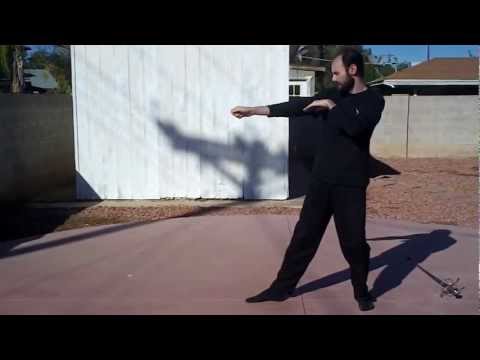
Basic 17th century rapier foot-work from the Phoenix Society of Historical Swordsmanship. Our favorite manual is Nicolet…
Translation: standard fencing footwork
Standard Fencing Footwork encompasses the core movement vocabulary of competitive fencing: the en garde stance (front foot forward, feet perpendicular, knees bent), the advance (front foot leads, rear foot follows), the retreat (rear foot leads, front foot follows), the lunge (explosive extension of the front leg while the rear foot anchors), the recovery (return to en garde from the lunge), and the fleche (a running pass-forward attack). [1] All fencing footwork maintains the fundamental principle of balance — the fencer must be able to attack or retreat from any position without loss of stability. [1],[2] Distance control through footwork is considered the single most important tactical skill in fencing, as the ability to maintain optimal distance determines when attacks can land and when the fencer is safe from the opponent's actions. [2],[3]
Standard fencing footwork (advance, retreat, lunge, balestra) is the foundation of all three weapons, enabling distance control and explosive attacking movements. [1]
Fencing footwork was systematised by French and Italian masters from the 16th century onward, with the modern en garde position codified by the 18th century. [1]
Footwork quality is a primary differentiator at Olympic fencing, with elite fencers covering the 14-metre piste with precise distance management. [1]
No images yet for this technique.
Sign in to suggest an image.
Basic 17th century rapier foot-work from the Phoenix Society of Historical Swordsmanship. Our favorite manual is Nicolet…
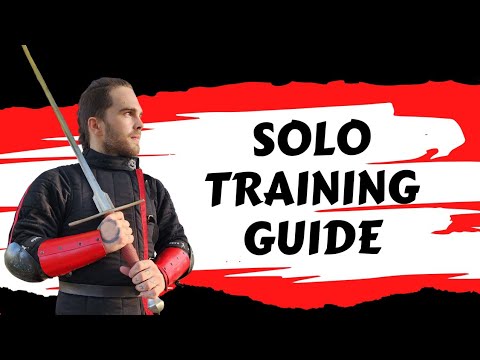
In this video I talk about my methods for solo training. We identify the four different areas of focus for solo sword p…
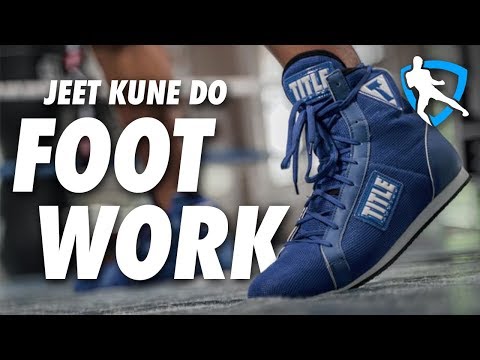
It’s easy to confuse movement with footwork. Any fool can move; JKD fighters move their Ready-Position by means of speci…
Standard fencing footwork encompasses the fundamental movement patterns that maintain mobility while preserving combat readiness across multiple weapon systems. Swordpals emphasizes classical rapier footwork derived from 17th-century Italian manuals, teaching a grounded stance with heels together or slightly offset, followed by core movements: advance and retreat (maintaining level height without bouncing), passes (rear foot becomes front foot), and lateral avoidance. Sellsword Arts reinforces these basics—advances, retreats, lunges, and passes—as essential solo drills requiring correct form and repetition, with particular emphasis on consistency through daily practice of discrete footwork elements. Greenville Academy of Martial Arts approaches footwork from a Jeet Kune Do perspective, framing it as "scientific transportation" of the ready position rather than mere foot movement, employing step-and-slide and slide-step variants. All three instructors agree that footwork is foundational and often neglected, requires deliberate drilling separate from striking, and must preserve the ability to strike from any position. Swordpals and Sellsword Arts share weapon-specific technical details (passes, directional avoidance, blade coordination), while Greenville Academy prioritizes conceptual integration of footwork with offensive readiness. Sellsword Arts uniquely stresses solo training methodology and consistency, whereas Swordpals provides specific historical context and Greenville Academy emphasizes the philosophical underpinning of evasion as primary defense.
Synthesized from 3 instructors
No instructional courses yet for this technique.
Sign in to suggest a course.
Risk of injury to the person this technique is applied to
Modern sport fencing uses blunted weapons and full protective gear; injury rate ~2.5 per 1000 exposures (Harmer 2008)
Skill level needed to execute this technique reliably
Whether this technique is allowed under major competition rule sets
The Art of Fencing (Luigi Barbasetti, 1932)
Alias sources — [1] FIE Rules of Competition [2] Classical Fencing (Rogers, 2014) [3] Classical Fencing (Rogers, 2014)
Effectiveness sources — [1] The Art and Science of Fencing (Evangelista, 1996)
Mixed Japanese-Western terminology — combines traditional Japanese terms with katakana loanwords
Alias sources — [1] FIE Rules of Competition [2] Classical Fencing (Rogers, 2014) [3] Classical Fencing (Rogers, 2014)
Effectiveness sources — [1] The Art and Science of Fencing (Evangelista, 1996)
explosive lunge speed, finger/wrist dexterity, cardiovascular endurance
long reach (tall, long arms), fast-twitch legs
quadriceps (lunge), calves, forearm/finger flexors, core
The core basics are: forward, back, pass forward, pass back, avoid to the left, avoid to the right, and incartata. According to swordpals, these fundamental steps form the foundation of standard fencing footwork.
You want to stay level and avoid bouncing as you advance—push your front foot forward and retreat while always being ready to return to your stance. For a pass, your rear foot becomes your front foot.
According to Sellsword Arts, being able to rely on your feet to do what you want under pressure is incredibly important in fencing. When practicing solo footwork, focus on getting the form correct, because sloppy footwork will show when you actually have to use it.
Take an open stretch of area and go all the way from one side to the other, then come back, doing this for multiple reps (around two times down and back). Make sure your feet are doing exactly what you want them to with each repetition.
Standard Fencing Footwork encompasses the core movement vocabulary of competitive fencing: the en garde stance (front foot forward, feet perpendicular, knees bent), the advance (front foot leads, rear foot follows), the retreat (rear foot leads, front foot follows), the lunge (explosive extension of the front leg while the rear foot anchors), the recovery (return to en garde from the lunge), and the fleche (a running pass-forward attack). All fencing footwork maintains the fundamental principle of balance — the fencer must be able to attack or retreat from any position without loss of stability.
Standard fencing footwork has been codified since the Renaissance, with the lunge attributed to various Italian masters of the 16th century. The modern en garde position and step-lunge combination were standardised through French academic fencing in the 18th-19th centuries.
FIE: legal — Legal fencing technique — governed by FIE rules for foil, épée, and sabre; HEMA: legal — Legal in historical fencing competition
Danger rating 2/10. Low — modern sport fencing uses blunted weapons and full protective gear; injury rate ~2.5 per 1000 exposures (Harmer 2008)
The standard setup chain: En Garde → Advance/Lunge Preparation → Attack → Recovery.
Standard counters include: Beat Parry — deflect the blade with a sharp lateral beat before it reaches target / Displacement — move the body off the line while threatening with the point / Counter-Thrust — extend into the attacker's line during their advance.
Common variants: Simple attack (single blade action (disengage, beat, or direct) to score); Compound attack (multiple blade actions (feint then disengage) to create a…); Riposte (immediate counter after a successful parry); Counter-attack (attacking into the opponent's attack with priority or rig…).
Footwork quality is a primary differentiator at Olympic fencing, with elite fencers covering the 14-metre piste with precise distance management.
Top errors to watch for: Not maintaining the en garde distance between feet during movement — the feet should stay shoulder-width apart at all… / Bouncing during movement — fencing footwork should be smooth and gliding; bouncing wastes energy and telegraphs / Letting the back foot drag — both feet move crisply with clean lifts and placements / Lunging too deep — the front knee should not extend past the front ankle; deeper lunges compromise recovery.
The Standard Fencing Footwork is also known as Sutandādo Fenshingu Ashi-sabaki, Marche-Rompe, Advance-Retreat, Fente.