Introduction to JKD Footwork Fundamentals
Footwork represents the most critical foundation of Jeet Kune Do, yet remains the most neglected aspect of martial arts training. This instructional guide addresses the essential principles of footwork and common misconceptions that prevent practitioners from developing proper mobility.
The Concept of Ready Position Transportation
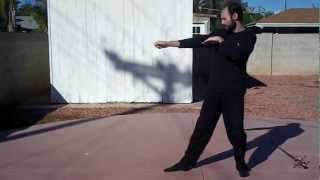
JKD footwork is defined as the scientific transportation of the ready position—a stance that maintains the ability to deliver non-telegraphic straight strikes from the lead hand and lead foot. Practitioners must understand that footwork moves the entire ready position, ensuring they can strike effectively from any location on the floor.
Positioning Over Power: The Strategic Priority
The primary objective in JKD is to outposition opponents and maintain safety, not to deliver maximum force. Effective self-defense integrates striking and movement scientifically; proper footwork prevents injury by keeping the practitioner away from danger rather than absorbing damage.
Four Essential Footwork Patterns
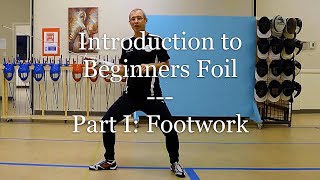
JKD employs four primary footwork techniques: the step-and-slide (most energy-efficient for covering distance), the slide-step (covering greater ground), pivots (rotating one foot around a fixed base), and the push-step. Each pattern serves specific tactical situations and should be practiced with small, rapid, controlled movements.
Movement as Defensive Necessity
Stationary opponents present easy targets; moving practitioners are significantly harder to strike. Practitioners must reject the ego-driven misconception that movement is defensive, understanding instead that scientific movement prevents damage more effectively than static defense.
Footwork as Foundation for Striking
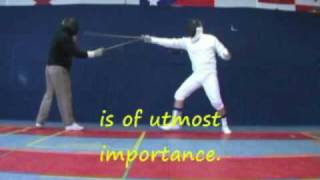
Without consistent footwork training, practitioners cannot execute JKD principles effectively. Daily footwork practice is non-negotiable in legitimate JKD training; neglecting mobility results in ineffective striking and increased vulnerability to counterattacks.
Training Methodology and Drill Implementation
Academy training emphasizes rewiring students' mental approach to combat through dedicated footwork drills. These exercises shift practitioners from static, ground-holding mentality to dynamic, mobile positioning that exemplifies the fluid movement principles demonstrated by JKD's founder, Bruce Lee.
JKD Footwork Training
Key Takeaways
- •Introduction to JKD Footwork Fundamentals
- •The Concept of Ready Position Transportation
- •Positioning Over Power: The Strategic Priority
- •Four Essential Footwork Patterns
It’s easy to confuse movement with footwork. Any fool can move; JKD fighters move their Ready-Position by means of specific footwork designed especially for this purpose. If, for example, you bounce when moving, instead of shuffling as you should, you obliterate your ability to instantly fire when needed. First, you have to stop bouncing, then reset, and then fire. This literally destroys your JKD because now you can’t instantly counter-attack. Your options then are to try and avoid everything by running or getting into a brawl. In this, one can see the careful integration of the three technical fundamentals of JKD: the Bi-Jong, JKD/fencing style footwork to transport the on-guard, and the pulverizing straight hits. It’s a package deal. If one of these go, the others are soon to follow. And this is why you absolutely cannot, repeat cannot, simply add things willy-nilly to your game and call it JKD. Roundhouse swings and bad footwork are generally added by the student because they haven’t been taught that keeping the on-guard position is of central concern. After all, if I lose focus on this, I’m liable to throw strikes that telegraph and/or make instant recovery impossible. The goal of the JKD fighter is, as Bruce called it, stillness in motion. That is to say, we want to fire without warning from the ready-position and then return immediately to it. That’s it! The more we deviate from this standard, the harder everything else becomes. Constant drilling must be done in order to ensure that the JKD fighter is able to maintain their discipline under pressure. The Romans once had the greatest military on the planet. They called their practice maneuvers; their maneuvers were called bloodless battles; their battles were called bloody maneuvers. If you’ve ever been to an amateur MMA or boxing event, you’ll notice how wild the fighters can get. Clearly, they know better than to swing so hard that they fall down if they miss, but novice fighters do this all the time. Why? Simple. They haven’t yet developed the discipline required to control themselves under pressure. This is no small point. Pressure causes us to make mistakes, so the JKD fighter must train and train and train – not until they get it right but until they have to try to do it wrong! Check us out for more information as well as youth and adult martial arts and self defense classes in Greenville, South Carolina! Greenville Academy of Martial Arts 872 Woodruff Rd. Greenville, SC 29670 GreenvilleAcademy.com
Frequently Asked Questions
What does this video teach about standard fencing footwork?
This video covers introduction to jkd footwork fundamentals, the concept of ready position transportation, positioning over power: the strategic priority. It provides detailed instruction from Greenville Academy of Martial Arts.
How long does it take to learn standard fencing footwork?
The basic mechanics can be understood in a single session, but developing reliable execution requires consistent drilling over weeks of practice. This 7-part breakdown helps structure your training by isolating each phase of the technique.
What are the key details for finishing standard fencing footwork?
Without consistent footwork training, practitioners cannot execute JKD principles effectively. Daily footwork practice is non-negotiable in legitimate JKD training; neglecting mobility results in ineffective striking and increased vulnerability to counterattacks.