5 Best NoGi Judo Takedowns/ Throws for BJJ
0
Standard Kick Catch·Grappling Education
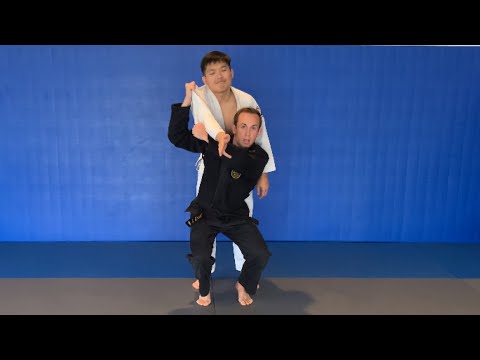
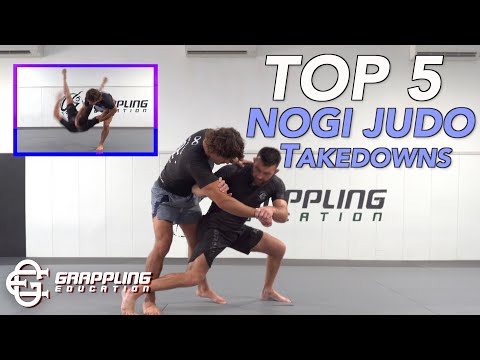
Keller Locke-Sodhi and Rhys Allan teach FIVE of their favourite Judo takedowns adapted for NoGi grappling/ Brazilian Jiu…
Translation: standard kick catch throw
Standard Kick Catch is the fundamental kick-catch throw in sanda in which the fighter reads the opponent's incoming kick, catches the kicking leg at the shin or ankle, steps in to close distance, and executes a sweep of the opponent's standing leg or a lifting-and-dumping action to bring the opponent to the ground. [1],[2] The technique requires sharp reflexes and the ability to transition instantly from defensive catching to offensive throwing. [2],[3]
The kick catch throw is a signature technique of sanda competition, exploiting the vulnerability created when an opponent commits to a kick by catching the leg and executing a sweep or throw. [1] It is effective because sanda's full-contact rules make kicking attacks common, providing frequent opportunities for the catch. [2]
Kick catch techniques were developed within the Chinese sanda competitive system, combining traditional shuai jiao leg-catching methods with modern competition strategy. [1]
Kick catch throws are among the most frequently scored techniques in IWuF Sanda World Championships and Chinese national sanda competitions. [1]
No images yet for this technique.
Sign in to suggest an image.
Keller Locke-Sodhi and Rhys Allan teach FIVE of their favourite Judo takedowns adapted for NoGi grappling/ Brazilian Jiu…
Here are 3 throws I would learn right away if you’re doing a martial art in a gi. This would work great for Judo, BJJ, S…
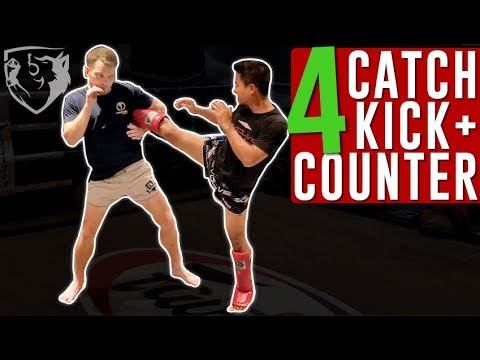
On my trip to Evolve MMA in Singapore, I had a session with 2x Rajadamnern Muay Thai champion, Kru Day (Palangpol Petchy…
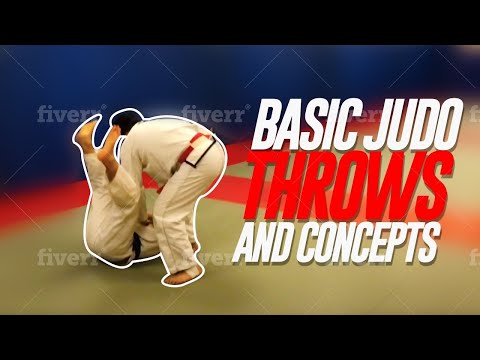
Judo Basics. Here we cover the basic Judo positions and some basic throws and combinations. Osoto 1:24 Taio 1:30 Kenkay…
The standard kick catch is a foundational technique in striking arts, particularly Muay Thai, wherein a defender intercepts an incoming roundhouse kick and immediately counters. According to fightTIPS instructor Shane, who trained with WBA boxing champion Palang Pol Pechin Chi (Crew Day), the first critical element is moving with the incoming kick by stepping to the side, which dissipates power before the catch reaches the ribs. The catch itself must be airtight—held firmly in the armpit or against the body—to prevent the attacker from yanking the leg free and resetting. After catching, the defender creates space by stepping the rear leg backward while maintaining a square stance to the opponent, avoiding excessive body rotation that compromises balance. From this position, fightTIPS documents four primary counters: (1) swinging the caught leg through while springing off the rear calf to land a counter roundhouse kick on the opponent's back, which scores highly in Muay Thai competition; (2) lifting and pushing the caught leg upward to destabilize the opponent's balance, then chasing forward to land a counter kick; (3) performing a front shin sweep by hooking the ankle low while pushing the opponent's head downward and lifting the caught leg; and (4) stepping in with the opposite leg to sweep the support leg while pushing with the opposite hand. fightTIPS emphasizes the three-step maximum rule in Muay Thai—the referee will halt action if the defender takes more than three steps after catching a kick. The instructors note that timing, balance control, and explosive hip drive are essential to executing these counters effectively.
Synthesized from 4 instructors
No instructional courses yet for this technique.
Sign in to suggest a course.
Risk of injury to the person this technique is applied to
Sanda/Sanshou throws emphasize speed and catching strikes into throws
Skill level needed to execute this technique reliably
Whether this technique is allowed under major competition rule sets
Japanese Sanda/Sanshou terminology
Japanese Sanda/Sanshou terminology
Original Chinese martial arts term used in Japanese context
Katakana transliteration used in Japanese Sanda (散打)
precise timing, ankle coordination, upper body kuzushi ability
excellent balance and quick reflexes
tibialis anterior, calves, hip rotators, forearms (grip)
Moving with the kick as you catch it takes the power off the strike, which prevents the kick from breaking your ribs. Palang Pol Pechin Chi emphasizes stepping to the side as you catch the kick into your armpit to absorb the impact safely.
You must hold the caught leg tight and airtight in your armpit. If your grip is loose, the opponent can yank their foot out, create space, and escape the control.
After catching and stepping forward, don't turn your body—step directly toward your opponent while pushing and scooping the support leg out. Keep your lower body strong and don't rotate with them; the goal is to trip them over your leg like schoolyard takedowns.
After you lift and push, stay in the fight and chase your opponent down to land your counter. If you push them too hard or stand your ground, you create too much space and won't be able to land an effective follow-up strike.
Standard Kick Catch is the fundamental kick-catch throw in sanda in which the fighter reads the opponent's incoming kick, catches the kicking leg at the shin or ankle, steps in to close distance, and executes a sweep of the opponent's standing leg or a lifting-and-dumping action to bring the opponent to the ground. The technique requires sharp reflexes and the ability to transition instantly from defensive catching to offensive throwing.
The standard kick catch has been a core technique in sanda training since the sport was formalised in the 1980s, and remains one of the highest-scoring techniques in modern sanda competition.
IJF: legal — Legal throwing technique; IBJJF: legal — Legal at all belt levels; UWW: legal — Legal in both freestyle and Greco-Roman; Unified MMA: legal — Legal throwing technique; ADCC: legal — Legal; FIAS Sport Sambo: legal — Legal; FIAS Combat Sambo: legal — Legal
Danger rating 6/10. High — Sanda/Sanshou throws emphasize speed and catching strikes into throws
The standard setup chain: Grip Setup (Kumi-kata) → Off-Balance (Kuzushi) → Entry (Tsukuri) → Execution (Kake).
Standard counters include: Lower Centre of Gravity — bend knees and drop hips to make the throw harder to execute / Lift the Targeted Leg — raise the foot being attacked above the sweeping action / Counter-Throw — exploit the attacker's committed weight to throw them instead / Grip Break — deny the thrower their preferred gripping configuration.
Common variants: Forward sweep (sweeping the foot in the direction the opponent is stepping); Rear sweep (sweeping the foot backward as the opponent retreats); Combination sweep (chaining sweeps to both feet); Counter sweep (timing the sweep as the opponent initiates their own attack).
Kick catch throws are among the most frequently scored techniques in IWuF Sanda World Championships and Chinese national sanda competitions.
Top errors to watch for: Standing too far away — you can't catch the kick if it doesn't reach you / Catching late after the kick has already retracted — catch during the extension phase / Using only one hand to catch — two hands are needed for a secure grip / Not stepping forward after catching — you leave the opponent balanced on one leg with time to recover.
The Standard Kick Catch is also known as Sanda Kikku Kyatchi Nage, Classical Kick Catch Throw, Standard Leg Catch Sweep.