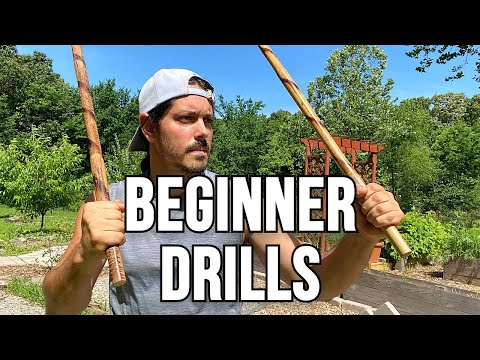
5 Beginner Arnis Double Stick Moves You can do today! Filipino Martial Arts
0
Standard Low Double·Kali Center·Added by Admin
Join my online school and purchase Kali gear today at: https://www.kalicenter.com/ Join my online Kali school and start…
Translation: standard low double
The Standard Low Double executes the fundamental below-the-knee double leg where the attacker drops to both knees with an explosive penetration step, wraps both arms around the opponent's lower legs or ankles, and drives forward while pulling the legs together. [1] The deep level change places the attacker's head below the opponent's waist, and the arm wrap captures both legs in a single scoop. [1],[2] The finish involves pulling the opponent's feet forward while driving the shoulder into their thighs, collapsing them backward. [2] The low double is particularly effective against wrestlers with strong sprawl defence because the low entry point negates hip-based sprawling. [2],[3]
The low double leg is highly effective against opponents with a low, wide stance because the attacker's level change drops below the defender's centre of gravity. [1] The technique requires exceptional speed on the penetration step, as the deeper level change gives the opponent more time to react. [1] When executed correctly, the low double is difficult to sprawl on because the attacker's hips are already below the defender's hip line. [2]
The standard low double is the basic below-the-knee double leg taught in wrestling programmes. [1]
The low double leg is a staple of international freestyle wrestling, frequently used by lighter weight classes where speed advantages are greatest. [1] Jordan Burroughs employed the low double as a signature attack en route to his 2012 Olympic gold medal and four World Championship titles at 74 kg. [2]
No images yet for this technique.
Sign in to suggest an image.
Join my online school and purchase Kali gear today at: https://www.kalicenter.com/ Join my online Kali school and start…
No instructional courses yet for this technique.
Sign in to suggest a course.
Risk of injury to the person this technique is applied to
Double leg drives through opponent; moderate impact on landing
Skill level needed to execute this technique reliably
Whether this technique is allowed under major competition rule sets
Japanese amateur wrestling terminology
Japanese amateur wrestling terminology
Standard katakana transliteration of Western martial arts terminology (外来語) — used in Japanese MMA, boxing, and BJJ communities
Standard katakana transliteration used in Japanese wrestling (レスリング)
explosive lower body power, level change speed, forward drive
stocky build with strong legs and low centre of gravity
quadriceps, glutes, hamstrings, core, shoulders
While waiting for your sticks to arrive, you can grab anything you can find to get started with training, or simply use your hands to practice the motions. According to Paul Ingram at Kali Center, rattan sticks are best for Collie training, but using your hands is a valid way to begin learning the technique.
Paul Ingram emphasizes that you should start nice and slow and not worry about going at high speed in the beginning—you will work up to speed gradually and progressively through focused, quality training rather than just logging hours.
Once you have the five basic drills down, you should work on linking them together creatively through a practice called karenza or solitary free flow, where you explore how the drills connect and mix them in different orders at a slow pace for about 60 seconds.
The Standard Low Double executes the fundamental below-the-knee double leg where the attacker drops to both knees with an explosive penetration step, wraps both arms around the opponent's lower legs or ankles, and drives forward while pulling the legs together. The deep level change places the attacker's head below the opponent's waist, and the arm wrap captures both legs in a single scoop.
The low double has been a standard wrestling technique, particularly in freestyle competition where the deeper level change opens additional scoring opportunities. It gained prominence in MMA through fighters who needed to penetrate past strong takedown defence.
IJF: banned — Banned since 2010 leg grab prohibition — direct hansoku-make for touching opp…; IBJJF: legal — Legal at all belt levels, scored as takedown (2 points); UWW: restricted — Legal in freestyle (2-4 points), banned in Greco-Roman (no attacks below waist); Unified MMA: legal — Legal takedown technique; ADCC: legal — Legal, scored 2-4 points in second half of match; FIAS Sport Sambo: legal — Legal — all takedowns permitted; FIAS Combat Sambo: legal — Legal; NCAA Folkstyle: legal — Legal, scored as takedown (2 points)
Danger rating 4/10. Moderate — double leg drives through opponent; moderate impact on landing
The standard setup chain: Establish Contact → Create Off-Balance → Execute the Takedown → Follow to Ground.
Standard counters include: Sprawl — drop hips back and drive weight down to stuff the takedown attempt / Underhook — establish inside position to control distance and prevent the takedown entry / Post and Circle — post on the attacker's head and circle away to break their angle / Level Change Defence — recognize the shot early and react with appropriate hip defence.
Common variants: Blast double (high-impact forward drive through the opponent without ch…); Snatch double (pulling both legs together and driving laterally); Run-the-pipe double (running through the opponent in a linear drive); Low double (deep penetration step attacking below the knees).
The low double leg is a staple of international freestyle wrestling, frequently used by lighter weight classes where speed advantages are greatest. Jordan Burroughs employed the low double as a signature attack en route to his 2012 Olympic gold medal and four World Championship titles at 74 kg.
Top errors to watch for: Staying on both knees after the level change — you must get back to at least one foot to drive / Grabbing only the fabric or shoes instead of wrapping fully around the lower legs / Head down between their legs, where you can't see or drive effectively / Not pulling the feet together — the whole point is to eliminate their base by bringing ankles close.
The Standard Low Double is also known as Rō Daburu, Deep Double Leg TD, Below-Knee Double, Low-Level Morote Gari.