Figure Four Throw
0
Figure-Four·SpartanCops·Added by Admin
Translation: figure-four
The figure-four wrist lock from seated guard is a flexion submission where the attacker uses a figure-four grip configuration to isolate and bend the opponent's wrist from a bottom guard or seated position. [1] The attacker grabs the opponent's hand with one hand, then threads the other arm around the wrist to grip their own forearm, creating a powerful figure-four lever. [1],[2] This interlocking grip provides superior mechanical advantage compared to simple two-hand grips, as the figure-four structure distributes force efficiently and prevents the opponent from pulling free. [2] From seated guard, the attack typically arises when the top player posts a hand on the mat or the attacker's body during guard passing, exposing the wrist. [2],[3] The figure-four lock allows finishing with relatively small movements. [3]
Wrist locks from guard using figure-four grips became a notable part of the BJJ competition arsenal as practitioners sought supplementary submissions beyond the standard armbar and triangle from guard. [1],[2] The figure-four grip's superior leverage made wrist locks viable even from the bottom position, where the guard player has less gravitational advantage. [1] The technique reflects the ongoing evolution of guard-based attacks in competitive BJJ. [1],[2]
The figure-four grip configuration is used to lock armbars, kimuras, and Americanas, providing superior leverage and control. [1]
The figure-four arm lock configuration appears in judo (ude-garami), catch wrestling, and BJJ. [1]
Figure-four arm locks (kimura, Americana) are among the most commonly attempted submissions in competition. [1]
No images yet for this technique.
Sign in to suggest an image.
Continuing our figure four leg ride series. Coach Higgins teaches how to set up the figure four from the mat, and chain …
Building on my post The Top Circuit, this post teaches you the details and the catch words for The Figure Four Submissio…
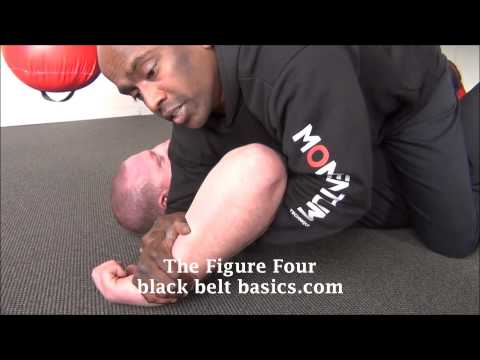
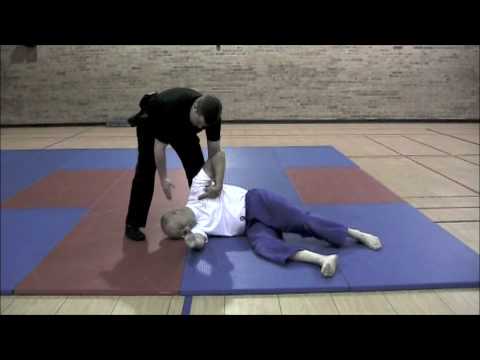
The figure-four is a wrist-flexion lock that restricts the opponent's arm through a controlled frame using two hands against one arm, creating mechanical disadvantage regardless of relative strength. SpartanCops emphasizes the technique's law-enforcement application, describing it as a transition from a failed straight-bar takedown when the opponent drops their elbow for resistance. The setup involves a shallow grip on the opponent's forearm, placement of their elbow on the aggressor's shoulder or chest to prevent pulling escape, and use of the forearm as a lever to drive the opponent's hand behind their shoulder, breaking their balance before the takedown. The pin utilizes a 45-degree angle shin placement on the neck to prevent head mobility. BlackBeltBasics provides a three-step mnemonic—"two on one" (controlling wrist and elbow), "under and over" (hand placement for frame control), and "lift and drag" (executing the lock)—and demonstrates the technique across multiple positions in top control: mount, knee ride, cross-body, and north-south. Centurion Wrestling focuses on wrestling applications, showing how to enter the figure-four from a leg-drag position by scooping the inside foot and using hip turns for positional control and pinning combinations. All three instructors agree on the fundamental mechanics: wrist-elbow alignment, tight framing without excess space, and the lock's effectiveness as both a submission and control tool. They diverge in application context: law enforcement takedown (SpartanCops), submission wrestling across positions (BlackBeltBasics), and leg-drag wrestling entries (Centurion Wrestling).
Synthesized from 3 instructors
No instructional courses yet for this technique.
Sign in to suggest a course.
Risk of injury to the person this technique is applied to
Wrist lock variant targeting carpal and radioulnar joints through forced deviation or torsion
Skill level needed to execute this technique reliably
Whether this technique is allowed under major competition rule sets
Japanese pro wrestling/judo standard terminology; widely used in Japanese grappling
Japanese pro wrestling/judo standard terminology; widely used in Japanese grappling
Standard katakana transliteration of Western martial arts terminology (外来語) — used in Japanese MMA, boxing, and BJJ communities
Japanese terminology sourced from Japanese pro wrestling/judo standard terminology; widely used in Japanese grappling
fine motor control, grip sensitivity, quick hand transitions
dexterous hands with strong fingers
forearm flexors and extensors, intrinsic hand muscles
Every move, in any martial art, shares a few universal traits. Mix and match below to pinpoint the right tool — or compare equivalents across styles.
The figure-four wrist lock from clinch uses a figure-four grip configuration — one hand gripping the opponent's wrist while the other hand grabs its own wrist to form a four-shaped structure — to apply concentrated flexion force to the wrist during a standing clinch exchange. [1,2] The figure-four grip doubles the attacker's leverage, making it significantly more powerful than a single-hand wrist bend. [1] The clinch provides the close range and body contact necessary to trap the opponent's arm and apply the figure-four lock before they can retract. [1,2]
The figure-four wrist lock from prone control is applied by trapping the face-down opponent's wrist and locking a figure-four grip configuration to apply concentrated flexion force. [1,2] The prone position prevents the opponent from rotating to relieve pressure, and the figure-four grip provides enough leverage to bend the wrist against muscular resistance. [1] The technique is commonly applied when the opponent extends an arm to post or attempt a turnover, exposing the wrist to the figure-four trap. [1,2]
The figure-four wrist lock from seated guard uses a figure-four grip configuration to hyper-flex or hyper-extend the opponent's wrist while maintaining guard control. [1] The attacker isolates the opponent's hand, threads the free arm under the wrist to grip their own forearm, and applies rotational torque against the joint. [1,2]
The figure-four wrist lock from standing applies a figure-four grip configuration to the opponent's wrist while both fighters are on their feet, using the doubled leverage of the interlocked hands to bend the wrist into flexion. [1,2] The standing position allows the attacker to use stance changes and rotational force to amplify the wrist bend. [1] The technique is commonly entered from a handshake trap, wrist grab, or arm control position where the attacker can quickly secure the figure-four before the opponent retracts. [1,2]
BlackBeltBasics teaches three key steps: first, establish 'two on one' control by controlling both the wrist and elbow; second, go 'under and over' by threading your arm under theirs and over your own arm to grip your wrist; third, 'lift and drag' by lifting their elbow high and dragging their wrist backwards to complete the lock.
SpartanCops explains that coming in at a 90-degree angle allows the opponent's shoulder to block your knee, preventing you from penetrating further to control the position. Instead, come from an angle that allows your knee to control effectively without meeting resistance.
Centurion Wrestling advises positioning your foot above the knee at a minimum, but notes that the higher your foot travels toward the hip, the better the lock becomes.
SpartanCops recommends going 'really shallow' with your arm, positioning your hand just past the opponent's forearm where your thumb starts to curve their arm, so that when you roll it in, the grip becomes nice and tight with no space.
The figure-four wrist lock from seated guard is a flexion submission where the attacker uses a figure-four grip configuration to isolate and bend the opponent's wrist from a bottom guard or seated position. The attacker grabs the opponent's hand with one hand, then threads the other arm around the wrist to grip their own forearm, creating a powerful figure-four lever.
Wrist locks from guard using figure-four grips became a notable part of the BJJ competition arsenal as practitioners sought supplementary submissions beyond the standard armbar and triangle from guard. The figure-four grip's superior leverage made wrist locks viable even from the bottom position, where the guard player has less gravitational advantage.
IBJJF: legal — Legal at all belt levels; IJF: banned — Only elbow joint locks (kansetsu-waza) permitted in judo — all other joint lo…; ADCC: legal — Legal — all submissions legal in ADCC; Unified MMA: legal — Legal submission technique; FIAS Sport Sambo: legal — Legal; FIAS Combat Sambo: legal — Legal
Danger rating 5/10. Wrist lock variant targeting carpal and radioulnar joints through forced deviation or torsion
The standard setup chain: Establish Position → Create the Threat → Secure the Hold → Finish.
Standard counters include: Early Recognition — identify the submission attempt early and begin defence immediately / Posture and Base — maintain strong posture and base to prevent submission setups / Grip Fight — deny the attacker their preferred gripping configuration.
Common variants: Standard wrist lock (kote gaeshi) (two-handed rotational lock on the wrist); Gooseneck wrist lock (flexion lock bending the wrist down toward the forearm); Standing wrist lock (applied during grip fighting or a standing exchange); Ground wrist lock (catching the opponent's posted hand from mount, side cont…).
Figure-four arm locks (kimura, Americana) are among the most commonly attempted submissions in competition.
Top errors to watch for: Not interlocking the grip properly — the figure-four must form a closed loop; a loose grip allows the hand to slip th… / Using only one direction of attack — the figure-four enables multi-directional attacks; limiting to one direction mak… / Applying the figure-four with extended arms — keep the elbows close to the body for maximum leverage; extended arms a… / Not controlling the opponent's forearm — the figure-four controls the wrist, but the forearm must also be stabilised ….
The Figure-Four is also known as Figyua Fō, Figure-4 Wrist Lock, Figure-Four Flexion Lock.