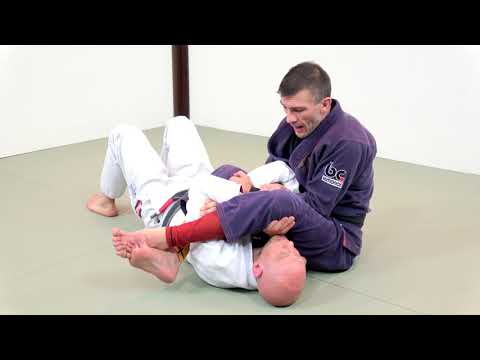
How to Perfect Your Armbar: The 180 Armbar Drill
0
Royler's Armbar·Ritchie Yip
https://www.infighting.ca/blog/brazilian-jiu-jitsu/ For more free BJJ tips, techniques and videos, check out our blog! …
Translation: royler's armbar
The Royler's Armbar is a technique demonstrated in Saulo Ribeiro's systematic BJJ methodology. [1]
Effective as part of a submission chain from side control. [1]
Gracie Jiu-Jitsu lineage. [1]
Used in UFC and professional MMA competition
No images yet for this technique.
Sign in to suggest an image.
Not yet documented
https://www.infighting.ca/blog/brazilian-jiu-jitsu/ For more free BJJ tips, techniques and videos, check out our blog! …
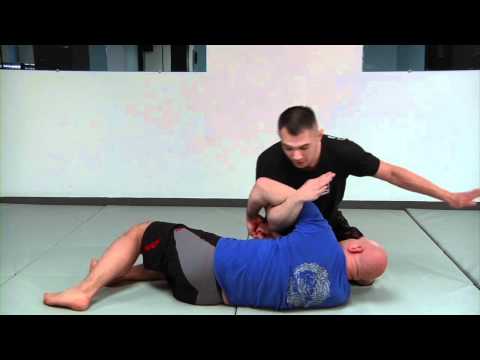
Rob Biernacki shows how to apply a super-tight armbar from mount. From The Submission Formula at https://www.grappleart…
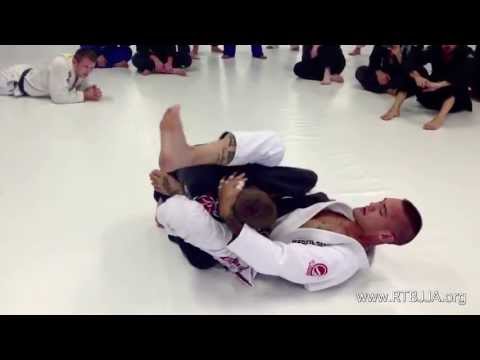
Improve your BJJ Game with these Arm Bar Techniques http://www.rtbjja.org Black Belt Piet Wilhelm demonstrates Armbar Te…
Royler's armbar, also called the 180 armbar, is a submission technique executable from multiple positions including cross-side control, knee-on-belly, and knee mount, though it is fundamentally a controlled arm-lock applicable from closed guard and mount as well. The core mechanics involve isolating one arm by trapping it between the attacker's bicep and forearm in an elbow-to-elbow pinch, then establishing positional dominance through hip placement and leg configuration. Ritchie Yip emphasizes the importance of the entry mechanics: the hand closest to the opponent's hip initiates the weave (over-under grip on the arm), while chest pressure secures the trapped arm to the body. The leg movement follows a characteristic J-pattern, where the shin circles slightly before sliding behind the opponent's spine, with the finishing position requiring the attacker's knees to point upward and knees squeezed together while controlling the opponent's thumb. Renato and Stephan Kesting both stress the critical importance of breaking the opponent's posture and alignment before committing to the finish. Kesting's submission formula approach highlights that attacking without destroyed alignment requires excessive work and reduces submission reliability. Renato emphasizes maintaining tight distance control using the legs and collar grips to prevent arm extraction, while chopping the leg perpendicular to the body rather than simply lifting it. All three instructors agree that proper body mechanics—including foot placement, hip positioning, and maintaining structural wedges—are essential for reliable finishing, with Kesting particularly noting that maximized force production from the attacker combined with eliminated force production from the opponent creates optimal submission conditions.
Synthesized from 3 instructors
No instructional courses yet for this technique.
Sign in to suggest a course.
Risk of injury to the person this technique is applied to
Submission technique requiring tap or risk of injury
Skill level needed to execute this technique reliably
Whether this technique is allowed under major competition rule sets
Jiu-Jitsu University (Ribeiro & Howell, 2008)
description, historyOrigin: sourced from Ribeiro, S
description, historyOrigin: sourced from Ribeiro, S
Good top pressure and arm control
Named after Royler Gracie — a specific armbar variation from the Gracie family's technical lineage. The Gracie family's systematic approach to armbars from every position is documented across multiple BJJ texts. (Gracie family technical lineage; BJJ instructionals)
The common mistake is placing your hand near your opponent's hand or by their arm, but instead you should place your palm on the floor near their hip to maintain proper control and structure.
Keep your body tight and avoid being loose—this prevents your opponent from stripping or pulling the arm out, and it also prevents telegraphing the position which gives them an opportunity to escape.
You should chop your body perpendicular to your opponent while pushing pressure on their hip with one leg, then bring your free leg over their head to complete the submission, keeping your kneecaps pointing upward.
Position your opponent in mid-range where you can isolate them—you can use your legs to grab the back of their neck or collar to bring them in close, which prevents them from creating space and escaping.
Royler's Armbar is a fast armbar transition from side control, named after Royler Gracie's signature execution. The technique emphasises speed and pressure over positional establishment.
The Royler's Armbar is a technique demonstrated in Saulo Ribeiro's systematic BJJ methodology.
IBJJF: legal — Legal at all belt levels, gi and no-gi; IJF: legal — Legal — elbow joint lock (kansetsu-waza), one of the permitted submission cat…; ADCC: legal — Legal — all submissions legal in ADCC; Unified MMA: legal — Legal submission technique; FIAS Sport Sambo: legal — Legal; FIAS Combat Sambo: legal — Legal
Danger rating 7/10. Submission technique requiring tap or risk of injury
The standard setup chain: Side control → Royler's Armbar attempt → Chain to next technique.
Standard counters include: Defend the initial grip / Create space / Bridge and escape.
Used in UFC and professional MMA competition
Top errors to watch for: Rushing the technique / Losing position during transition.
The Royler's Armbar is also known as Royler's Armbar, Royler Gracie Armbar, Quick Armbar.