BJJ Moves: Arm Bar From Guard by John Danaher
0
Walk-Around Armbar·BJJ Fanatics
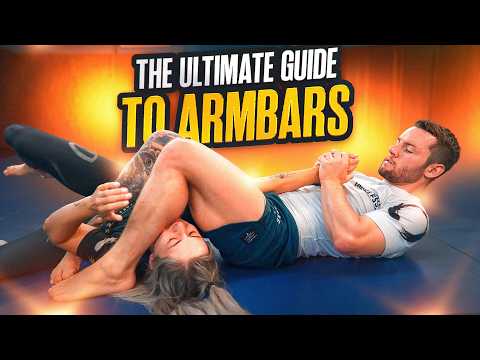
ARM BAR FROM GUARD BY JOHN DANAHER // In this BJJ Moves video, John Danaher demonstrates one of the best Jiu Jitsu Tech…
Translation: walk-around armbar
The Walk-Around Armbar is executed from side control by walking the legs around the opponent's head while maintaining arm control, transitioning into an armbar without needing to mount first. [1] This fluid transition exploits the opponent's defensive focus on preventing the mount. [1]
The Walk-Around Armbar is a technique demonstrated in Saulo Ribeiro's systematic BJJ methodology. [1]
Effective as part of a submission chain from side control. [1]
Gracie Jiu-Jitsu lineage. [1]
Used in UFC and professional MMA competition
No images yet for this technique.
Sign in to suggest an image.
Not yet documented
ARM BAR FROM GUARD BY JOHN DANAHER // In this BJJ Moves video, John Danaher demonstrates one of the best Jiu Jitsu Tech…
✅ #transparentlabs https://athlete.transparentlabs.com/jordan-teaches ✅ BJJ Beginner Course: https://bjjbeginnercourse…
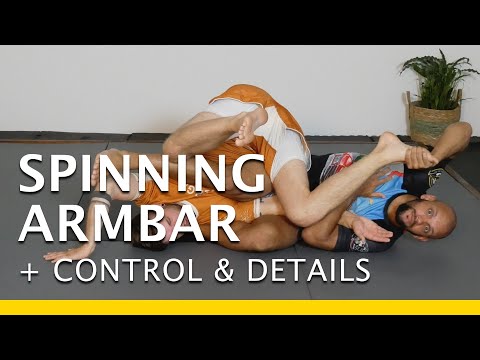
Two spinning armbar options by Charles Harriott We are joined once again by BJJ blackbelt and globetrotter instructor Ch…
The walk-around armbar is a positional variation executed primarily from closed guard that emphasizes rotation in the opposite direction from the classical armbar setup. Energia Martial Arts' Charles Harriott presents this as a fundamentally two-directional concept: while standard armbar entries involve rolling underneath the opponent, the walk-around inverts the practitioner over the top, with the shin positioned behind the opponent's head. This approach involves kicking the opponent's knee to create space, then either falling to the hip to finish or inverting fully to apply the armbar with momentum. Jordan Teaches Jiujitsu reinforces core armbar principles applicable to this variation, particularly the importance of controlling the opponent's elbow relative to the practitioner's chest and preventing defensive hand grips before they form. Harriott stresses that successful execution requires comfort with inversions and body awareness—the practitioner must maintain a "cannonball" position (compact, rounded) to avoid neck hyperextension. The technique exists on a spectrum from playful gym work to serious competition application; Harriott notes it works best when the opponent is starting on their knees rather than standing. BJJ Fanatics' John Danaher's foundational principles on head-elbow-hip relationships remain essential regardless of direction: the opponent's elbow must reach at least the practitioner's hip, ideally crossing the center line. All three instructors agree that body control and positioning mechanics matter more than specific grip configurations.
Synthesized from 3 instructors
No instructional courses yet for this technique.
Sign in to suggest a course.
Risk of injury to the person this technique is applied to
Submission technique requiring tap or risk of injury
Skill level needed to execute this technique reliably
Whether this technique is allowed under major competition rule sets
Jiu-Jitsu University (Ribeiro & Howell, 2008)
description, historyOrigin: sourced from Ribeiro, S
description, historyOrigin: sourced from Ribeiro, S
Good top pressure and arm control
The walk-around armbar transitions from side control by walking the legs around the opponent's head while controlling the near arm. A fundamental BJJ armbar entry that doesn't require jumping over the opponent's body. (Ribeiro, Jiu-Jitsu University; BJJ fundamentals)
According to Charles Harriott, you need to stay compact like a cannonball during the transition. If you extend, your face gets stuck on the floor and you risk getting stacked or injured. Instead, turn and get on your knees while using your shin to push the back of their head and force the roll.
John Danaher emphasizes that the relationship between your opponent's head, their elbow, and your hip determines your success. You want to bring their elbow to your center line (ideally with their forehead directly over their elbow) and ensure their elbow goes inside your hip at minimum.
Jordan from Jordan Teaches Jiujitsu prioritizes wrist control the most, as it prevents the opponent from turning their arm and allows you to finish from non-textbook angles. Control the wrist to keep their thumb pointing in the same direction as your hips.
Charles Harriott demonstrates two main spinning armbar options: one where you rotate to get your shin on the back of their head with a slight inversion, and another where you invert around the vertical axis instead of the horizontal axis to beat them to the finish.
The Walk-Around Armbar is executed from side control by walking the legs around the opponent's head while maintaining arm control, transitioning into an armbar without needing to mount first. This fluid transition exploits the opponent's defensive focus on preventing the mount.
The Walk-Around Armbar is a technique demonstrated in Saulo Ribeiro's systematic BJJ methodology.
IBJJF: legal — Legal at all belt levels, gi and no-gi; IJF: legal — Legal — elbow joint lock (kansetsu-waza), one of the permitted submission cat…; ADCC: legal — Legal — all submissions legal in ADCC; Unified MMA: legal — Legal submission technique; FIAS Sport Sambo: legal — Legal; FIAS Combat Sambo: legal — Legal
Danger rating 7/10. Submission technique requiring tap or risk of injury
The standard setup chain: Side control → Walk-Around Armbar attempt → Chain to next technique.
Standard counters include: Defend the initial grip / Create space / Bridge and escape.
Used in UFC and professional MMA competition
Top errors to watch for: Rushing the technique / Losing position during transition.
The Walk-Around Armbar is also known as Walk-Around Armbar, Walk Around Armbar, Transition Armbar.