Arm Bar Submissions..
0
Pankration Arm Lock·Byron Picado
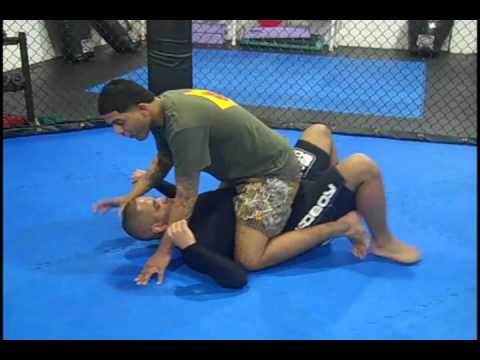
Arm Bar's, Coach Byron, MMA Class http://www.divorcioenmiami.com/category/divorcio-en-miami
Translation: pankration arm lock
The Pankration Arm Lock is an arm hyperextension technique documented from the ancient Greek pankration tradition, predating modern armbar variations by over 2,000 years. [1]
Documented across multiple grappling traditions. [1]
Proven in competition and cross-style challenge matches. [1]
Multi-style grappling tradition. [1]
Used in UFC and professional MMA competition
No images yet for this technique.
Sign in to suggest an image.
Arm Bar's, Coach Byron, MMA Class http://www.divorcioenmiami.com/category/divorcio-en-miami
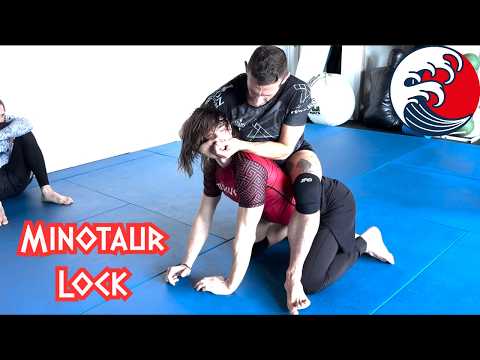
Tom Billinge takes us directly to classic, and mythological martial arts from the Grecian Peninsula. This lock was impl…
The Pankration arm lock encompasses several related submissions executed from different positions, as demonstrated by Byron Picado and Odyssey Pankration. Picado's instruction focuses on the arm bar from guard and mount positions, emphasizing fundamental mechanics: securing the opponent's arm across the attacker's body, controlling the shoulder with a forearm blade against the neck, posting a leg on the opponent's hip, and executing a hip-drive finish with knees pressed tightly together. Picado stresses that tight knee positioning prevents escape and allows the attacker's body to follow the opponent's defensive movement, particularly during mount position finishes. He also details an MMA-specific variation where punches may precede the submission if the opponent resists or attempts bench-press defense. Odyssey Pankration presents a distinct variation from turtle position, involving a single hook over the opponent's leg combined with an arm lock (chicken wing/seat belt grip) across the face and shoulder. Odyssey emphasizes the critical importance of establishing the leg hook first to prevent escape, applying pressure to the mid or lower back to restrict hip movement, and using the back of the hand (rather than palm) for facial control to maximize choking potential if needed. Both instructors agree on the principle of controlling the opponent's limbs and body positioning to prevent defensive actions, though they address different positional contexts—Picado from standing guard and mount, Odyssey from turtle position.
Synthesized from 2 instructors
No instructional courses yet for this technique.
Sign in to suggest a course.
Risk of injury to the person this technique is applied to
Grappling technique with joint/choke danger
Skill level needed to execute this technique reliably
Whether this technique is allowed under major competition rule sets
The Ultimate Guide to Grappling (Sattler, 2007)
description, historyOrigin: sourced from Sattler, J
description, historyOrigin: sourced from Sattler, J
Good body control and flexibility
Pankration appears in 310 passages across 23 books in our corpus. Ancient Greek pankration combined wrestling and striking — arm locks were applied standing and on the ground. Archaeological evidence shows arm locks on Greek pottery from the 5th century BC. (23 books; martial arts history texts)
Byron Picado emphasizes that you must keep your knees pitched in tight against your opponent's body. This is critical because when your opponent bumps up, your body follows the same direction—if they bump one way, you move that way too, maintaining control and preventing escape.
Byron Picado stresses that your thighs are what drive your opponent in, so you need to open the guard and screw your legs in tightly to bring them into you, ensuring you control your opponent's posture so they cannot post up on you.
Odyssey Pankration explains that hooking the leg first is important—if you don't trap the leg properly, your opponent will be free to turn out of the position, so securing that leg pin is essential before applying other pressure.
Odyssey Pankration notes that pressure on the mid-spine is important, and you should sit up higher rather than sitting back, keeping pressure on the mid or low back to maximize control and limit your opponent's options.
The Pankration Arm Lock is an arm hyperextension technique documented from the ancient Greek pankration tradition, predating modern armbar variations by over 2,000 years.
Documented across multiple grappling traditions.
IBJJF: legal — Legal at all belt levels, gi and no-gi; IJF: legal — Legal — elbow joint lock (kansetsu-waza), one of the permitted submission cat…; ADCC: legal — Legal — all submissions legal in ADCC; Unified MMA: legal — Legal submission technique; FIAS Sport Sambo: legal — Legal; FIAS Combat Sambo: legal — Legal
Danger rating 7/10. Grappling technique with joint/choke danger
The standard setup chain: Position → Pankration Arm Lock.
Standard counters include: Technique-specific counters.
Common variants: Standard Pankration Arm Lock.
Used in UFC and professional MMA competition
Top errors to watch for: Poor control / Rushing.
The Pankration Arm Lock is also known as Pankration Arm Lock, Ancient Arm Lock, Greek Arm Lock.