Arm Triangle Choke from Mount - ArmTriangle Kata Gatame BJJ Grappling Judo Basics for MMA
0
Arm Triangle — From North-South·Peter Mettler Martial Arts
Translation: Shoulder Hold / Head-and-Arm Choke — From North-South
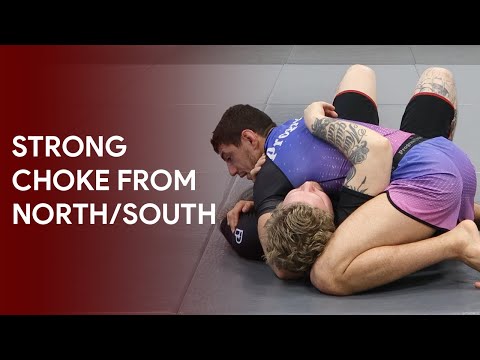
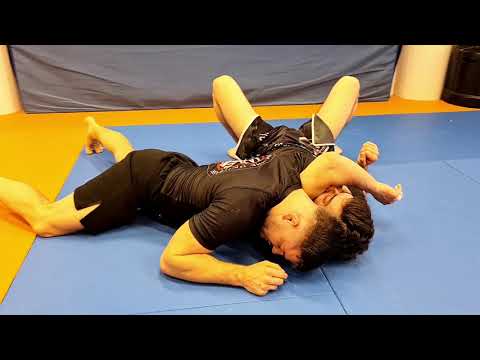
A head-and-arm choke applied from the north-south position. The attacker traps one of the opponent’s arms across their neck, drops the near-side shoulder beside the head, and sprawls chest and hips to seal the carotids. The angle removes bridging power and makes late escapes difficult. Often entered when the defender turns in or as a finish after sliding off from mount or side control.
Classic Judo kata gatame principle adapted to modern BJJ transitions, commonly chained after mount or side-control setups to maximize angle and remove bridging counters.
The north-south angle neutralises common hip-escape defences and increases compression through gravity-assisted chest pressure, making it effective against opponents who survive standard side-control finishes. [1]
The arm triangle from north-south was developed as an advanced BJJ transition, catching the arm during north-south transitions. [1]
North-south to arm triangle transitions appear in advanced BJJ competition at black belt level. [1]
No images yet for this technique.
Sign in to suggest an image.
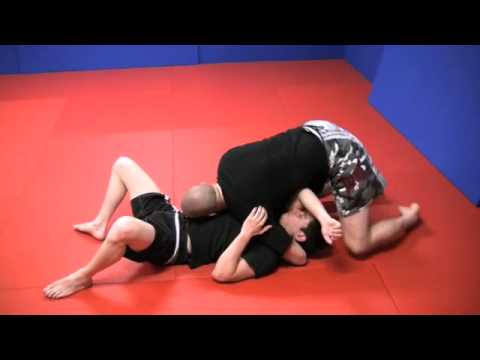
Mark Plavcan of Madison JiuJitsu and Twisted Fitness shows a sneeky Arm Triangle from N/S set up from side control. More…
Hey there, fellow BJJ enthusiasts! Join me as we dive into the intricacies of the Arm Triangle from North South position…
The arm triangle from north-south position is a head-and-arm choke executed from side control, where the attacker isolates the opponent's arm and creates a triangular compression around the neck using the arm, neck, and body. All three instructors agree on the fundamental mechanism: the attacker's neck and arm form a triangle that compresses the opponent's neck, requiring proper body positioning and hip control to finish effectively. WI Combat Sports emphasizes the critical importance of maintaining low hips throughout the transition, warning that lifting the hips allows the opponent to tuck their elbow and escape. The instructor details the progression from heavy cross-body positioning, sliding the knee under the trapped arm, reaching deep to grab one's own thigh, then using hip movement away from the opponent while keeping body weight compressed. Peter Mettler Martial Arts, though focusing on the mount position variation, provides complementary technical details applicable to north-south: maintaining 90-degree angles with the forearm and upper arm, keeping the elbow on the floor, and emphasizing compression over pulling force. Tarik BJJ specifically addresses north-south entry challenges, explaining how to use the legs and hip angle to create access to the opponent's elbow when it's initially tucked tight, and highlighting the importance of keeping ribs close to the opponent's head to prevent elbow escape. All three stress that the technique requires constant pressure and body positioning discipline rather than muscular force alone.
Synthesized from 3 instructors
No instructional courses yet for this technique.
Sign in to suggest a course.
Risk of injury to the person this technique is applied to
Direct vascular choke; rapid finish when angle and shoulder depth are correct.
Skill level needed to execute this technique reliably
Whether this technique is allowed under major competition rule sets
Kodokan Judo — Official Katame-waza Classification (肩固め Kata-gatame)
Japanese terminology sourced from Kodokan Judo — Official Katame-waza Classification (肩固め Kata-gatame)
Official Kodokan ground technique classification system
Established Japanese martial arts naming convention — native Japanese term (和語/漢語)
Japanese terminology sourced from Kodokan Judo — Official Katame-waza Classification (肩固め Kata-gatame)
hip flexibility, long legs relative to torso
longer limbs for easier figure-four lock around head and arm
hip adductors, hamstrings, quadriceps
If space remains, “walk the legs” around the head a few inches or switch to side-control finish without releasing the lock.
Pushing your shoulder into the opponent's jaw instead of positioning your forearm and upper arm at 90 degrees to their centerline. As Peter Mettler explains, shoulder pressure is uncomfortable but unlikely to force a tap, whereas proper 90-degree positioning creates real choking pressure.
Keep your hips glued to the mat and tight against their body throughout the technique. According to wicombatsports, if you lift your hips at any point, your opponent can tuck their arm underneath and escape the position.
Push against the chin rather than pulling the neck, since opponents can resist neck rotation fairly well but have much less defense against chin pressure. Peter Mettler emphasizes that pulling creates unwanted rotation on the neck, making the choke much weaker.
Bring your head down to the mat at the same time you secure the gable grip with your hands. wicombatsports notes that once your head is on the ground in this tight position, you're very close to finishing the move.
A head-and-arm choke applied from the north-south position. The attacker traps one of the opponent’s arms across their neck, drops the near-side shoulder beside the head, and sprawls chest and hips to seal the carotids.
Classic Judo kata gatame principle adapted to modern BJJ transitions, commonly chained after mount or side-control setups to maximize angle and remove bridging counters.
Danger: 9/10 | Direct vascular choke; rapid finish when angle and shoulder depth are correct.
The standard setup chain: Achieve Controlling Position → Isolate the Neck → Set the Grip → Apply Pressure.
Standard counters include: Tuck Chin — protect the neck by lowering the chin to prevent the choke from sinking / Two-on-One Grip Fight — use both hands to strip the choking grip before it locks / Turn Into — rotate toward the choking arm to relieve carotid pressure / Posture Up — straighten the spine and create distance to break the choking angle.
Common variants: North-south finish with walk-around head turn; Switch to side-control finish after locking; Hip-sprawl “lat shelf” finish for broad-shouldered opponents.
North-south to arm triangle transitions appear in advanced BJJ competition at black belt level.
Top errors to watch for: Arriving too high over the head / Letting the defender’s elbow slip back across the chest / Squeezing with arms only instead of using shoulder and chest pressure / Failing to block the near/far hip, allowing a spin-out.
The Arm Triangle — From North-South is also known as Kata Gatame — From North-South, North-South Arm Triangle, North-South Kata Gatame, NS Head-and-Arm Choke.