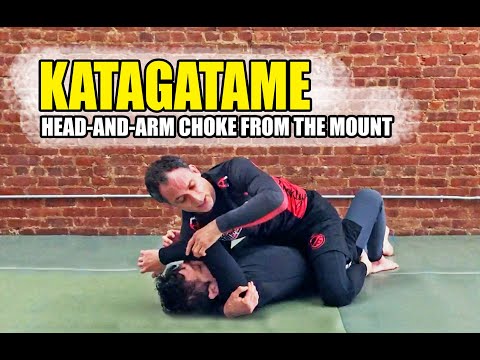
Katagatame (Head and Arm Choke) from Mount - No Gi BJJ / Jiu-Jitsu
0
Kata Gatame·Brian Glick
Katagatame: the head and arm choke from the mounted position isn’t only a powerful submission. It’s also a very robust m…
Translation: Shoulder Hold / Arm-and-Head Lock
Traditional in Judo (Kata Gatame) and later adopted in Brazilian Jiu-Jitsu for guard and top control submissions.
The arm triangle (kata-gatame) is one of the highest-percentage chokes from top position, using the opponent's own trapped shoulder as a compression point against the neck to create bilateral carotid occlusion. [1],[2] The technique works identically in gi and no-gi, making it a staple in both BJJ competition and MMA. [1] When applied from side control with correct sprawl pressure, defensive options are extremely limited. [2],[3]
No images yet for this technique.
Sign in to suggest an image.
Katagatame: the head and arm choke from the mounted position isn’t only a powerful submission. It’s also a very robust m…
🔥 FREE CONTENT 🔥 for Youtube Subscribers https://rogergracietv.com/yt/755-free-content
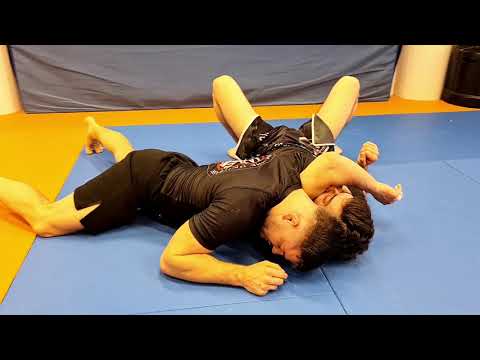
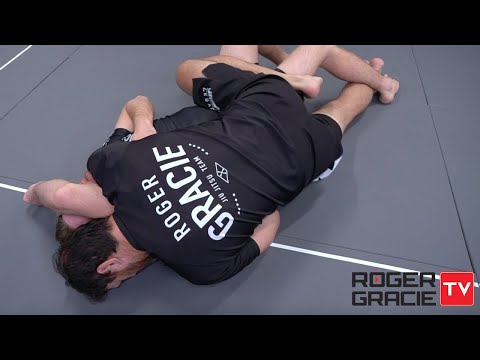
Kata Gatame (head and arm choke) from mount is a high-percentage submission that capitalizes on arm positioning to create a choke around the opponent's neck. All three instructors—Roger Gracie TV, Peter Mettler Martial Arts, and Brian Glick—emphasize the critical importance of elevating the opponent's elbow to shoulder line before establishing the choke. Roger Gracie and Brian Glick both stress using body mechanics rather than arm strength to raise the elbow, with Glick specifically detailing how to use chest pressure and hip movement to roll the arm up. Peter Mettler frames the technique as an "elbow explosion move" where the neck passes to the outside of the opponent's elbow. All three agree on hand positioning: the choking arm wraps deeply around the neck with the forearm behind it, while the second hand locks palm-to-palm for compression. Peter Mettler and Brian Glick emphasize maintaining a 90-degree angle with both forearm and upper arm relative to the opponent's centerline, and all three stress keeping the head low and creating minimal chest-to-chest contact by sliding off to the side. Roger Gracie and Peter Mettler detail the mount exit, prioritizing foot activation first to prevent half-guard entrapment. Brian Glick provides the most systematic breakdown of elbow positioning relative to the shoulder line as the foundational checkpoint. All instructors note the technique requires minimal force once properly positioned, relying on anatomical compression of the trachea and carotid arteries.
Synthesized from 3 instructors
No instructional courses yet for this technique.
Sign in to suggest a course.
Risk of injury to the person this technique is applied to
Can render unconscious quickly; requires careful training and tap awareness.
Skill level needed to execute this technique reliably
Whether this technique is allowed under major competition rule sets
Kodokan Judo — Official Katame-waza Classification (肩固め Kata-gatame)
Japanese terminology sourced from Kodokan Judo — Official Katame-waza Classification (肩固め Kata-gatame)
Official Kodokan ground technique classification system
Established Japanese martial arts naming convention — native Japanese term (和語/漢語)
Japanese terminology sourced from Kodokan Judo — Official Katame-waza Classification (肩固め Kata-gatame)
hip flexibility, long legs relative to torso
longer limbs for easier figure-four lock around head and arm
hip adductors, hamstrings, quadriceps
Every move, in any martial art, shares a few universal traits. Mix and match below to pinpoint the right tool — or compare equivalents across styles.
A head-and-arm choke applied from the guard position, where the attacker traps the opponent’s arm and head between their own arm and torso. The attacker pivots their hips and angles to the side to compress the opponent’s carotid arteries using the shoulder and opponent’s own arm. Effective when transitioning from failed triangle choke or armbar attempts.
A head-and-arm choke applied from the guard position, where the attacker traps the opponent’s arm and head between their own arm and torso. The attacker pivots their hips and angles to the side to compress the opponent’s carotid arteries using the shoulder and opponent’s own arm. Effective when transitioning from failed triangle choke or armbar attempts.
An arm triangle choke variation applied from the knee-on-belly position. The attacker drives the knee across the opponent’s torso to control posture, while isolating one arm against the opponent’s head. The top shoulder and chest compress the opponent’s trapped arm into the neck, while body weight and hip angle drive the choke. This setup combines positional dominance with immediate submission pressure.
A classic arm triangle choke variation applied from the mounted position. The attacker isolates the opponent’s arm against the head, driving shoulder pressure into the neck while lowering chest weight. From mount, the attacker can angle the body and slide off to the side if needed to maximize choke pressure. This position offers strong control with both submission threat and positional dominance.
A head-and-arm choke variation applied from side control. The attacker traps the opponent’s far arm across their neck while lowering the shoulder and chest beside the head, applying strong lateral compression. Side control creates a natural angle that increases choke tightness and prevents bridging defenses.
A flexion wrist lock involves forcing the hand downward toward the inner forearm (palmar flexion), applying pressure on the radiocarpal joint. Causes intense pain and injury risk.
A head-and-arm choke applied from the north-south position. The attacker traps one of the opponent’s arms across their neck, drops the near-side shoulder beside the head, and sprawls chest and hips to seal the carotids. The angle removes bridging power and makes late escapes difficult. Often entered when the defender turns in or as a finish after sliding off from mount or side control.
A head-and-arm choke applied from the north-south position. The attacker traps one of the opponent’s arms across their neck, drops the near-side shoulder beside the head, and sprawls chest and hips to seal the carotids. The angle removes bridging power and makes late escapes difficult. Often entered when the defender turns in or as a finish after sliding off from mount or side control.
Can transition from failed triangle or armbar attempts; commonly chained in positional sequences.
A common mistake is pushing your shoulder into the opponent's jaw, which is uncomfortable but not tight enough to finish. Instead, keep your forearm at 90 degrees to their centerline and ensure your bicep closes around their neck for a proper choke.
Rather than trying to muscle the arm up directly, use your hips and chest to roll their arm forward, which naturally brings the elbow up. This method is more effective than trying to lift with strength alone, especially against stronger opponents.
Keeping your hips low prevents your opponent from getting space to escape via elbow escape or bump you off. If your hips are high, there's too much space for your opponent to create opportunities to defend.
Push against your opponent's chin for a strong choke rather than pulling against their neck, as they can resist pulling fairly well. The key is compression of the neck rather than rotation.
A choke where the opponent’s arm and head are trapped against the attacker’s shoulder, restricting blood flow to the brain via carotid arteries. Can induce unconsciousness if held.
Traditional in Judo (Kata Gatame) and later adopted in Brazilian Jiu-Jitsu for guard and top control submissions.
Danger: 9/10 | Can render unconscious quickly; requires careful training and tap awareness.
The standard setup chain: Slide around opponent’s trapped arm, lock head → Control opponent’s arm, pivot to side → side control → Underhook arm, drive shoulder into neck → north-south.
Standard counters include: Tuck Chin — protect the neck by lowering the chin to prevent the choke from sinking / Two-on-One Grip Fight — use both hands to strip the choking grip before it locks / Turn Into — rotate toward the choking arm to relieve carotid pressure / Posture Up — straighten the spine and create distance to break the choking angle.
Common variants: Classic arm triangle (head-and-arm); Mounted arm triangle; Side control arm triangle; North-south arm triangle; From turtle to arm triangle roll.
The arm triangle is a frequent finish in UFC competition. Khabib Nurmagomedov, Jon Jones, and numerous other champions have finished fights with the arm triangle.
Top errors to watch for: Head placement too high or low / Insufficient shoulder pressure / Arm not fully trapped / Poor body alignment reduces choke effectiveness.
The Kata Gatame is also known as Kata Gatame, Arm Triangle, Side Headlock, Kata Gatame Choke.